On this page
The best AI YouTube video generator depends on what you start with. For Shorts built from an idea, a link or a proven viral format, use Revid (from $39/month). For a talking presenter, use HeyGen or Synthesia; for cinematic B-roll, Runway or Pika; to edit recordings you already have, Descript.
The tool is the easy choice. The harder one is whether YouTube will pay for what it makes: since July 15, 2025, YouTube's monetization policy calls repetitive, mass-produced videos "inauthentic content", and AI videos built on generic templates without your own insight are not allowed to monetize. Since May 2026, YouTube also labels undisclosed photorealistic AI on its own. Pick the tool that carries your idea, not the one that pumps out the most videos.
You would not be early. In Wyzowl's 2026 survey (published December 2025), 63% of video marketers said they had used AI video tools to create or edit marketing videos, up from 51% a year earlier (more in our short-form video statistics).
The 12 best AI YouTube video generators compared
| Tool | Best for | Starting price | Free option |
|---|---|---|---|
| Revid | Shorts from an idea, link or viral format, published to YouTube | $39/month ($32 billed yearly) | Free sign-up with free credits to try video creation; regular use needs paid credits |
| Runway | Cinematic clips and B-roll | $15/month | 125 one-time credits, watermarked |
| Pika | Short effect-driven clips | $8/month billed yearly | No monthly credits, no commercial license |
| HeyGen | Avatar presenters and translation | $29/month ($24 billed yearly) | 3 watermarked videos a month, up to 1 minute |
| Synthesia | Training and corporate explainers | $29/month | Up to 10 minutes a month, 9 stock avatars |
| Kapwing | Browser editor with AI drafts | See pricing page | Watermarked exports |
| VEED | Editing your own footage, subtitles | About $10 to $24/month | Watermark, 720p |
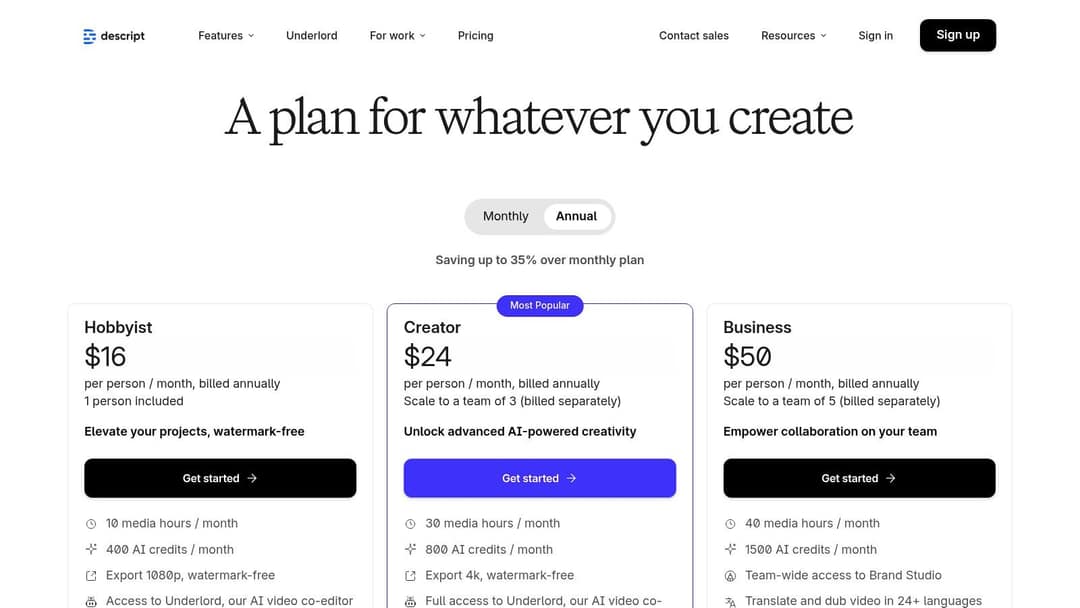
| Descript | Editing recordings by transcript | $24/month ($16 billed yearly) | 60 media minutes a month, 720p |
| InVideo | Prompt-to-video with chat editing | $20/month per seat | Watermark, weekly limits |
| Pictory | Blog posts and webinars to video | $29/month | Free trial only |
| Canva | Design suite with short AI clips | €110/year (Pro) | Up to 20 AI uses; no video clip generation |
| Lumen5 | Blog posts to branded videos | See website | Free plan |
Prices come from each vendor's pricing page as summarized in Revid's fact-checked tool comparisons, checked in August and September 2026. They change often, so confirm on the vendor's page before you subscribe.
Which AI YouTube video generator fits your channel?
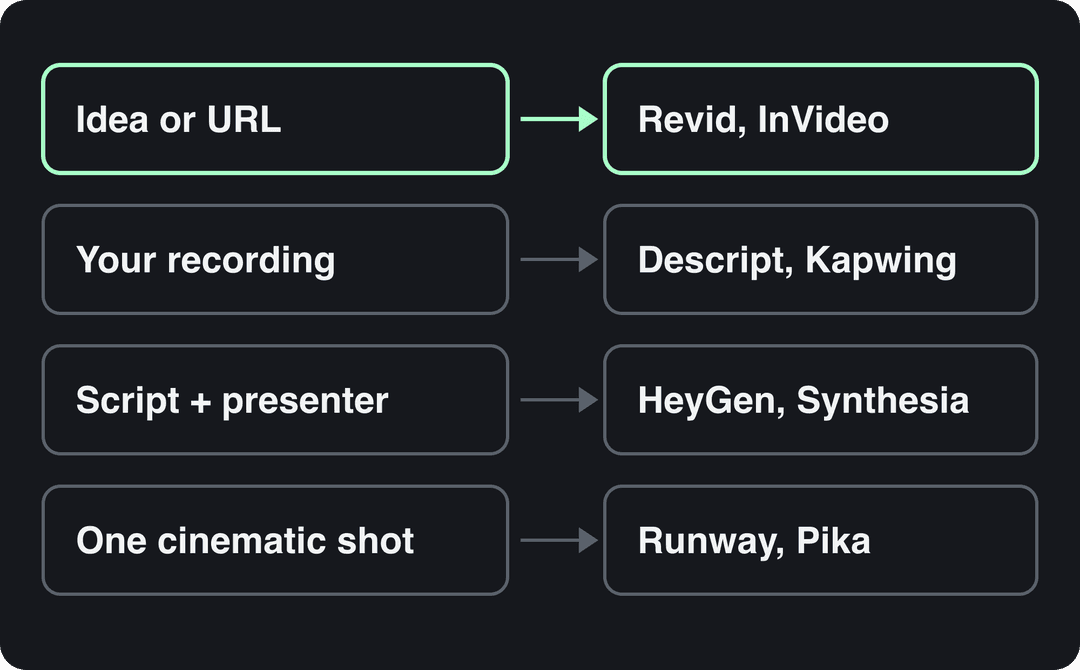
Start from what you already have. The input decides the category of tool, and the category matters more than any single feature.
- An idea, a topic or an article: Revid, InVideo or Pictory write the script and assemble scenes, voice and captions for you.
- A long recording (podcast, webinar, stream): Descript, Kapwing or VEED edit it; Revid can also cut a long YouTube video into Shorts.
- A script that needs a presenter: HeyGen or Synthesia.
- One striking shot (an intro, B-roll, a music visual): Runway, Pika or Canva.
- A blog post you want as a long-form 16:9 explainer: Pictory, Lumen5 or InVideo.
Two YouTube rules shape the choice. Square or vertical videos up to 3 minutes uploaded since October 15, 2024 are classified as Shorts, so a vertical-first tool covers the Shorts shelf. And generative models make clips a few seconds long, so a 10-minute video from Runway or Pika means stitching many clips by hand; tools that assemble scenes around a script do that for you. For a channel that never shows a face, see our faceless AI video generator picks.
The 12 AI YouTube video generators, reviewed
1. Revid: best for YouTube Shorts from an idea or a viral format
Revid is an AI video platform that turns an idea, a link or a proven viral format into finished short-form videos and publishes them to TikTok, Instagram and YouTube. It covers the whole Shorts loop in one product: research, script, scene visuals, voice-over, captions, music, a timeline editor and scheduled publishing.
The difference is where a video starts. Most generators begin from a blank prompt; Revid can begin from a library of about 2.77 million real short-form videos and posts with their public engagement data, including 73,227 YouTube posts (snapshot of September 15, 2026). Open a Short that already worked in your niche, choose "Make it about your topic" or "Same energy, new script", and Revid keeps the hook style, structure and pacing while writing an original script and new visuals. When you start from a prompt in automations and several tools, it first retrieves transcripts of related TikToks with more than 10,000 likes as references.
Each scene can use Seedance 2.5, MiniMax Hailuo H3, Wan 3.0 or Google Veo 3, alongside stock footage and AI images, with 1,000+ AI voices in 70+ languages, 30 caption styles and export up to 4K at 30 or 60 fps. The YouTube clip maker turns a long YouTube video into vertical Shorts, the channel watcher tracks YouTube and TikTok channels daily (5 on Growth) to spot their outlier videos, and Auto-Mode workers create a fresh video every day from a prompt or a content source.
Pricing: sign-up is free with no credit card, new accounts get free credits to try video creation, a free account can search the viral video library, and deep analysis of any video is free up to 60 a day. Regular video creation uses the credits of a paid plan: Growth costs $39/month ($32/month billed yearly) for 2,000 credits, and a 30-second video with Pro AI visuals and a voice-over costs about 40 to 80 credits. You see the estimate before generating.
To make a YouTube Short with Revid:
- Open the AI YouTube Shorts generator and paste an idea, a script or a link, or start from a Short in the library (here is how remixing viral videos works).
- Rewrite the hook and any line that needs your own angle. That is what makes the video yours, and it is what YouTube's originality rules look for.
- Pick a voice, a caption style and, for AI footage, a model per scene.
- Fix any scene in the timeline editor and export in 1080p or 4K.
- Publish or schedule it straight to YouTube.
- Best for: founders, small businesses and faceless channels publishing Shorts several times a week.
- Watch out: it is built for short-form. For long-form film work edited shot by shot, or for editing only your own footage by hand, a professional editor fits better.
2. Runway: best for cinematic clips and B-roll
Runway is a model lab. Its Gen-4.5 model is among the highest-rated for video generation quality, and Aleph adds shot-level control such as relighting and object removal. Use it for a cold-open shot, B-roll for a documentary or an abstract music visual that you cut into a video edited elsewhere.
It makes clips, not finished videos: script, voice, captions and assembly are up to you, and credits are spent per generation, so budget for retries. A developer API and MCP server exist if you want to build on the models directly.
- Best for: creators and studios who want maximum control over individual shots.
- Watch out: no script, voice-over or publishing in one flow.
- Price: from $15/month (Standard); the free plan has 125 one-time credits, watermarked, on select models. See Runway's pricing page and our Revid vs Runway comparison.
3. Pika: best for short effect-driven clips
Pika is known for effects nothing else has: Pikadditions inserts AI characters and objects into footage you filmed, Pikaswaps replaces elements, and Pikaffects applies stylized transformations. Generations take 1 to 2 minutes and paid credits roll over, which suits quick reaction clips, intros and visual gags inside Shorts.
- Best for: Shorts creators who want a signature visual effect on their own footage.
- Watch out: the free account has all models and no watermark but gives 0 monthly credits (you buy one-time packs) and no commercial license, so a monetized channel needs a paid plan.
- Price: from $8/month billed yearly. Details on Pika's pricing page.
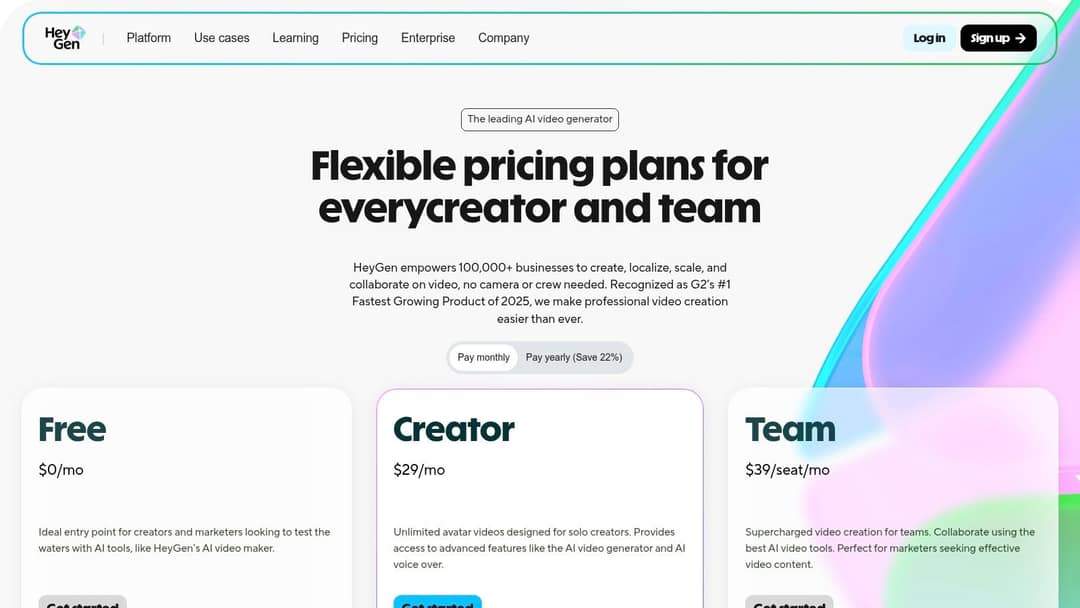
4. HeyGen: best for avatar presenters and translated channels
HeyGen makes some of the most realistic avatars and digital twins available, and its video translation lip-syncs a video into 175+ languages. For YouTube, that fits tutorials, explainers and channels that want a consistent presenter without filming, or a second channel in another language.
- Best for: faceless tutorial channels and creators translating their catalog.
- Watch out: an avatar presented as a human expert giving health, legal, financial or political advice cannot be monetized on YouTube.
- Price: Creator from $29/month ($24 billed yearly); the free plan gives 3 watermarked videos a month, up to 1 minute each. See HeyGen's pricing and Revid vs HeyGen.
5. Synthesia: best for training and corporate explainers
Synthesia is built for corporate training and internal communication: polished avatar presenters (Express-2 adds full-body gestures), 140+ languages, a slide-based workflow, SCORM and LMS export, and SSO. When a policy or product changes, you edit the script and re-render instead of reshooting.
- Best for: company channels with software tutorials, onboarding and how-to series.
- Watch out: the output looks like a presentation, which rarely holds attention in the Shorts feed.
- Price: from $29/month; the free plan covers up to 10 minutes of video a month with 9 stock avatars, and logo removal is paid. See Synthesia's pricing options.
6. Kapwing: best for teams editing in the browser
Kapwing combines a browser video editor with AI generation. A prompt or script becomes a draft project with stock B-roll, subtitles, voice-over and music, which you then edit on a normal timeline with brand kits, translation and dubbing. It suits teams producing listicles, tutorials and marketing videos in one tab.
- Best for: small teams who want AI drafts plus manual control.
- Watch out: AI features use credits on paid plans, and free exports are watermarked.
- Price: tiers change, so check Kapwing's pricing page.
7. VEED: best for editing your own footage with AI help
VEED is a full manual editing toolbox (multi-track timeline, screen recording, brand kits) with some of the best-known auto-subtitles and translation in the category. AI dubbing, eye-contact correction, 30+ stock avatar presenters and Seedance clip generation inside the editor cover the gaps when you need them.
- Best for: creators who film themselves and want subtitles, translation and quick fixes.
- Watch out: it edits videos well but does not write and assemble a full video from an idea.
- Price: entry plans run roughly $10 to $24/month; the free plan adds a "Made with VEED" watermark and exports in 720p. See VEED's pricing.
8. Descript: best for podcasts, interviews and screen recordings
Descript lets you edit a recording by editing its transcript: delete a sentence and the video cut follows. Underlord, its AI co-editor, handles rough cuts, Create Clips pulls short clips from long recordings, and Studio Sound plus filler-word removal clean up spoken audio.
- Best for: podcasters, interview channels and tutorial makers who record first.
- Watch out: media hours and AI credits are separate allowances, and heavy generation uses up credits quickly.
- Price: $24/month, or $16/month billed annually, with 10 media hours; the free plan gives 60 media minutes a month, 100 one-time AI credits and 720p export. See Descript's pricing.
9. InVideo: best for prompt-to-video with chat editing
InVideo turns a prompt into a full draft (script, scenes, stock footage, voice-over, music) and lets you change it by typing commands to a chat-style agent instead of using a timeline. It draws on a 16M+ stock library, with metered iStock assets on paid plans, plus avatars and voice clones from the entry tier.
- Best for: marketers producing listicles, explainers and ads quickly.
- Watch out: editing by chat is fast for broad changes but clumsy for fixing one scene by hand; the free plan is watermarked with weekly limits.
- Price: from $20/month per seat (Starter). See InVideo's pricing and Revid vs InVideo.
10. Pictory: best for turning blog posts and webinars into videos
Pictory turns blog posts, scripts and URLs into videos at volume and auto-clips highlights from Zoom, Teams and webinar recordings. It pairs your text with a 12M+ licensed stock library from Getty Images and Storyblocks, adds captions and a voice-over (ElevenLabs voices on premium plans), and offers an enterprise API and MCP server.
- Best for: content marketers repurposing articles and webinars.
- Watch out: the result has a stock-footage look, and there is no permanent free tier, only a free trial.
- Price: from $29/month. See Pictory's pricing.
11. Canva: best for channel art plus short AI clips
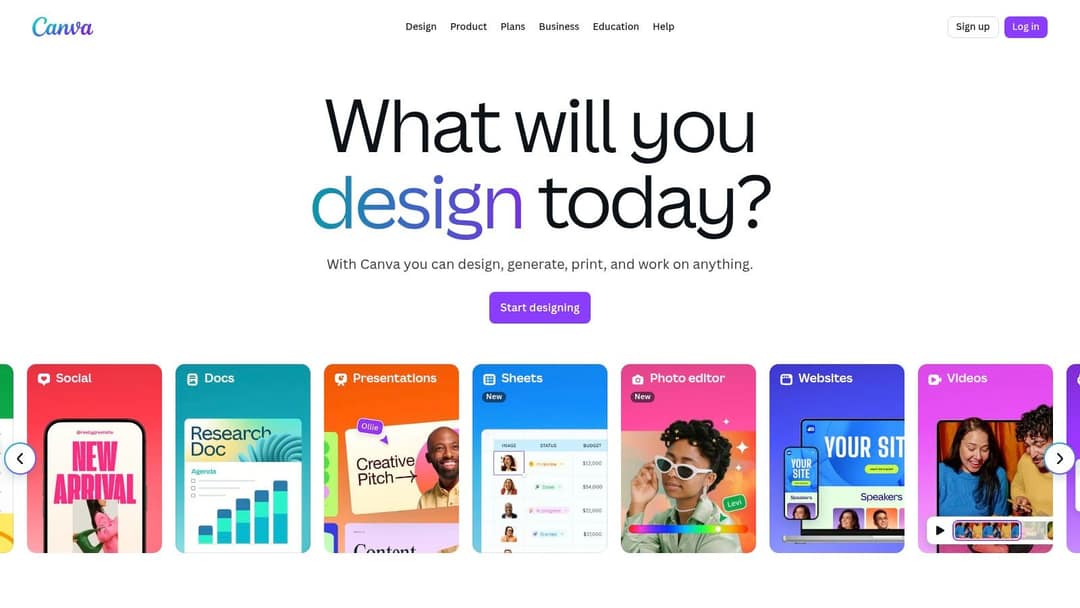
Canva handles every design job around a video: thumbnails, channel art, end screens and promo graphics, with brand kits and team collaboration. On paid plans, Create a Video Clip generates short Veo 3 clips with synchronized audio that you drop into your designs.
- Best for: creators who want one tool for thumbnails, graphics and the odd AI clip.
- Watch out: video generation is a side feature, not a full video pipeline, and Create a Video Clip is not on the free plan.
- Price: Pro from €110/year; the free plan has 1.6 million+ templates and up to 20 AI uses. Visit Canva.
12. Lumen5: best for branded videos from blog posts
Lumen5 reads a URL or pasted text and builds a storyboard, pairing each line with stock photos, clips and music, applying your brand kit and adding an AI voice-over. It is a repurposing tool for marketing and communications teams, not a generative one.

- Best for: marketing teams turning a blog into a regular video series.
- Watch out: visuals are stock, so the result looks like many other explainers.
- Price: there is a free plan; check current paid tiers on Lumen5's website.
Can you monetize AI-generated YouTube videos?
Yes, if the video shows your creative vision and gives viewers educational or entertainment value. YouTube's policy explicitly allows AI and automated tools, for example AI to edit a script or create a background visual. On July 15, 2025, it renamed its "repetitious content" policy to "inauthentic content" to make clear it covers repetitive or mass-produced videos.
| Can monetize | Cannot monetize |
|---|---|
| An AI-assisted script you rewrote with your own angle | Generic or template AI videos that look mass-produced, with no original insight |
| AI B-roll or backgrounds serving a clear story | Unrelated or inconsistent AI clips stitched together to shock, or realistic visuals faking events |
| An avatar presenting your own tutorial | AI personas presented as human experts giving health, legal, financial or political advice |
| Your commentary and analysis on a topic | Reading out text you didn't write (website text, news feeds) or mostly non-verbal reactions |
The reused content policy applies to the whole channel, not one video, so a batch of read-aloud news Shorts can cost a channel its monetization. Ad revenue is also only one income line: this guide to monetizing online content covers courses, memberships and other models that don't depend on YouTube's thresholds.
Do you have to label AI videos on YouTube?
Only realistic ones. Use the "AI use" setting in YouTube Studio when a video makes a real person appear to say or do something, or shows a realistic scene that didn't happen. You don't need to disclose non-realistic content or minor uses such as AI-written scripts, titles, thumbnails, captions, beauty filters or cloning your own voice for a voice-over.
Disclosing does not by itself limit a video's audience or its eligibility to earn. Since May 2026, YouTube labels undisclosed videos with significant photorealistic AI automatically (below the player on long-form, as an overlay on Shorts), and the label is permanent for content made with Veo or Dream Screen or carrying fully generative C2PA metadata. Creators who keep failing to disclose risk labels, removal or YPP suspension.
What does a channel need to join the YouTube Partner Program?
Today, ad revenue sharing needs 1,000 subscribers plus either 4,000 public watch hours in the last 12 months or 10 million qualified Shorts views in the last 90 days. Watch hours from the Shorts Feed don't count toward the 4,000 hours. From February 1, 2027, new applicants need 8,000 watch hours in 365 days or 20 million qualified Shorts views in 90 days; channels already in YPP are not affected.
One more trap for AI Shorts with music: any Short longer than one minute with an active Content ID claim is blocked globally and cannot be monetized. Use music you have the rights to, or keep claimed tracks out of longer Shorts.
Prompt to try
Make a 40-second YouTube Short for a personal finance channel on why most people quit budgeting in week two. Open with the hook "Your budget didn't fail, your categories did." Give three practical fixes with my own angle, use fast-paced stock footage, bold captions and a calm, confident voice.
Start with one format, not twelve tools
Pick the input you have most of (ideas, recordings or articles), choose one tool from that row, and publish a consistent format for a few weeks before you compare anything. The audience retention graph in YouTube Studio tells you more about a tool than any feature list. If you plan content in Notion, this guide to content-creation tools in the creator economy shows how a video generator fits next to your planning and scripting stack.
FAQ
Is Revid AI free?
Partly. Sign-up is free with no credit card, new accounts get free credits to try video creation, and a free account can search Revid's viral video library and run deep analysis on up to 60 videos a day. Regular video creation uses the credits of a paid plan, starting with Growth at $39/month ($32/month billed yearly) for 2,000 credits.
What is Revid AI?
Revid is an AI video platform that turns an idea, a link or a proven viral format into finished short-form videos and publishes them to TikTok, Instagram and YouTube. It was founded in Paris in 2023 as Typeframes and renamed Revid in April 2024.
What is the best free AI YouTube video generator?
None of the 12 is free for regular, monetizable publishing. To test without paying, Revid gives new accounts free credits to try video creation, Descript's free plan gives 60 media minutes a month at 720p, Synthesia's covers up to 10 minutes of avatar video a month, and Pika's free account has no watermark but no monthly credits and no commercial license.
Can AI make a full long-form YouTube video?
Yes, with tools that assemble stock or avatar scenes around a script, such as Pictory, InVideo, Lumen5, HeyGen or Synthesia. Generative models produce short clips, so a long cinematic video from Runway or Pika means editing many clips together, and Revid is strongest for Shorts.