How to Make a Highlights Video: 4 Steps, Lengths and Specs (2026)
Make a highlights video in four steps: set the goal, pull your 5 to 10 best moments, order them from hook to climax, then caption and export for each platform. Includes specs, music rules and Revid's TikTok data on length.
On this page
To make a highlights video, set one goal and one platform, pull your 5 to 10 strongest moments (by hand or with an AI clipper), order them as hook, build-up, climax and outro, then add captions, licensed music and a 9:16 export. For social feeds, 30 to 90 seconds is usually enough.
The most common mistake is cutting clips in the order they happened. Lead with your best moment and let the footage do the talking: in Revid's analysis of 176,367 TikToks with 1,000+ likes posted between October 2025 and October 2026, videos with under 40 characters of speech had a 123K median and 20.2% passed 1 million views, against 68K and 11.9% for videos with talking throughout. The sample only holds videos that already did well, so treat it as a pattern, not a cause (the full method is in our study of what makes a TikTok go viral).
Step 1: Decide the goal, audience and platform
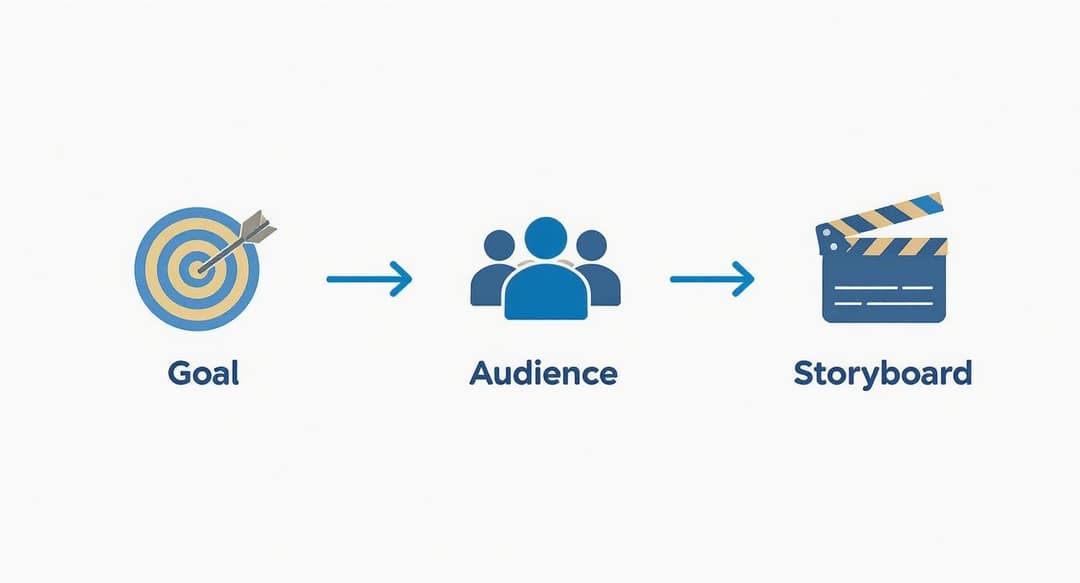
Every editing choice depends on three answers you should write down before opening any software: why the video exists, who watches it, and where it gets posted. A gaming montage for Twitch followers, a recruiting reel for college coaches and a webinar recap for LinkedIn use the same clips-and-cuts method but need different pacing, music and length.
If your highlights come from live streams, quality starts before you hit record. Check what you need to stream on Twitch so the source footage is sharp enough to crop and reframe later.
| Planning stage | What to do | Why |
|---|---|---|
| Goal | Write one sentence: "This video gets coaches to request full game film." | Every clip either serves that sentence or gets cut. |
| Audience | Name what they want to see: skill, fails, takeaways, emotion. | Gamers want plays and reactions; a business crowd wants quick insights. |
| Platform | Pick the main destination first. | It sets the shape, length and tone. |
| Hero shots | List 5 to 10 must-have moments with timestamps. | This list is the spine of the video. |
| Order | Arrange the hero shots into hook, build-up, climax, outro. | Gives the video a story instead of a pile of clips. |
Do not keep only the loudest moments. A quiet, funny or emotional clip between two big plays gives contrast and makes the big plays hit harder.
Step 2: Find your best moments (by hand or with AI)
Scrubbing hours of footage is the slowest part of the job. Two ways to do it:
- By hand: watch at higher playback speed, drop a marker every time you react, then review only the markers. Best when footage is short or the key moments are visual (a goal, a trick shot) with no talking.
- With an AI clipper: upload the file or paste a link, and the tool proposes clips from what is said and what happens. Best for podcasts, webinars, streams and anything over an hour. RichlyAI's roundup of AI video generators lists more options if you want to compare.
What counts as a highlight depends on the footage:
| Footage | What to pull |
|---|---|
| Gaming stream | Clutch plays, big fails, genuine reactions, chat-worthy moments |
| Sports game | Scoring plays, defensive stops, the moment the game turned |
| Podcast or webinar | One-sentence takeaways, strong opinions, stories with a punchline |
| Event or trip | Arrivals, peaks, reactions, the moment everyone remembers |
AI suggestions are a first pass, not the final cut. Check that the play that mattered most made the list, trim clips that start too early, and add any moment the tool missed.
How to make a highlights video with Revid
Revid turns long footage into short vertical clips and finishes them in the same place:
- Open the long video to short video converter and upload your file, or use the YouTube clip maker and paste a YouTube link. With the YouTube clip maker you can name a topic so the AI picks highlights about it.
- Review the suggested clips, then trim, reorder or replace them in the timeline editor.
- Pick one of the 30 caption styles; captions are generated automatically in 100+ languages.
- Export in 720p, 1080p or 4K at 30 or 60 fps, or publish directly to TikTok, Instagram and YouTube.
For game footage, the AI sports highlights generator works from raw match video, and the gaming clip generator adds a voiceover and subtitles to stream clips. If chopping your own long recordings into many clips is your only need, a dedicated clipping tool may fit better; our OpusClip alternatives comparison covers them.
Step 3: Order the clips into a story
A highlights video is a story told in seconds. Use this four-part structure:
- Hook: your most surprising or impressive clip, first. No logo, no intro card.
- Build-up: two or three moments that add context or raise the stakes.
- Climax: the single best moment you have. If your hook was the best, use the second best here and show the hook again from another angle.
- Outro: a short payoff and one call to action ("Full game in bio", "Follow for the next match").
Decision rule: if a clip would make you reach for the skip button on someone else's video, cut it, even if it took effort to film.
Step 4: Edit for pace, text and sound
Pacing is the rhythm of the video. Stack quick cuts for a run of fast plays, then let one longer clip breathe before the climax. All fast feels like noise; all slow loses people.
- Transitions: hard cuts for fast sequences. Save a fade or a quick zoom for a real change of scene or tone.
- Text overlays: one or two words that tell viewers why a clip matters ("Game winner", "Key takeaway", "Watch the left side").
- Captions: many people watch with the sound off, so caption every spoken word. The AI caption generator does it automatically.
- Sound: music sets the energy, and small sound effects (a whoosh on a fast move, a hit on an impact) make edits feel finished. Duck the music under any speech.
The visuals tell the story, the text explains it, the audio amplifies it. If one of the three fights the others (music drowning a quote, text covering the action), fix that before export.
How long should a highlights video be?
For social feeds, aim for 30 to 90 seconds. A recruiting reel or a full-season recap can run up to two minutes, but rarely needs more. Shorter is fine when you only have three great moments: padding with average clips hurts more than a short video does.
Length matters less than what fills it. In Revid's 12-month TikTok study, every length bucket from under 15 seconds to 10 minutes had a median between 58K and 76K views. Posts of 61 to 90 seconds reached 70K, while clips under 15 seconds had the lowest median (58K) but the most shares per view (1.41 per 100). For a highlights video, that means a tight 15-second cut is a good share asset and a 60 to 90 second recap is a good watch asset.
Length alone barely moves views: every bucket lands between 58K and 76K median views (the 790 videos over 10 minutes are a small, unusual group). Clips under 15 seconds get shared the most per view.
Source: Revid analysis of 176,367 TikToks with 1,000+ likes posted between Oct 1, 2025 and Oct 16, 2026 (61,203 creators)
Show the data
| Median views | Share that passed 1M views | Shares per 100 views | |
|---|---|---|---|
| Under 15 s | 57.6K | 11.6% | 1 |
| 16 to 30 s | 64.9K | 12.3% | 1 |
| 31 to 60 s | 61.8K | 11.8% | 1 |
| 61 to 90 s | 70.5K | 12.2% | 1 |
| 91 s to 3 min | 63.4K | 11.1% | 1 |
| 3 to 10 min | 76.4K | 12.4% | 1 |
| 10 min+ | 129.6K | 13.8% | 0 |
Outside short-form feeds, attention still drops with length: Vidyard's 2024 benchmark data shows 65% of viewers stay engaged to the end of a business video under 1 minute, against 20% for videos over 20 minutes (more sourced numbers on our short-form video statistics page).
What size and length limits apply on each platform?
Each platform has its own shape and limits, so export a version for each instead of posting one file everywhere.
| Platform | Shape and specs | Length limit | Watch out for |
|---|---|---|---|
| TikTok | 9:16 at 1080x1920 recommended | Uploads up to 60 minutes (10 minutes with the in-app camera) | Keep text clear of the bottom caption area |
| Instagram Reels | 1.91:1 to 9:16, at least 30 FPS and 720 px | Up to 20 minutes | Reels over 3 minutes are not recommended to non-followers |
| YouTube Shorts | Square or vertical | Up to 3 minutes | A Short over one minute with a Content ID claim is blocked globally |
| YouTube long-form | 16:9 | 15 minutes by default, longer for verified accounts | Use for full recaps and season highlights |
| 1080p .mp4, H.264 or H.265, 24 to 60 FPS | No length limit (every new video is a reel) | Reels that only stitch clips or add borders to reposts are treated as unoriginal | |
| X | 1:3 to 3:1, 720x1280 recommended for portrait | 20 minutes (125 for Premium) | Vertical and square both work |
| 1:2.4 to 2.4:1 | Up to 15 minutes | Vertical posts can surface in the mobile video feed |
Most highlight footage is shot in landscape (game broadcasts, stream captures, webinar recordings). Converting it to vertical keeps only the middle of the frame, so check every clip after the crop: action at the edges of a 16:9 shot disappears.
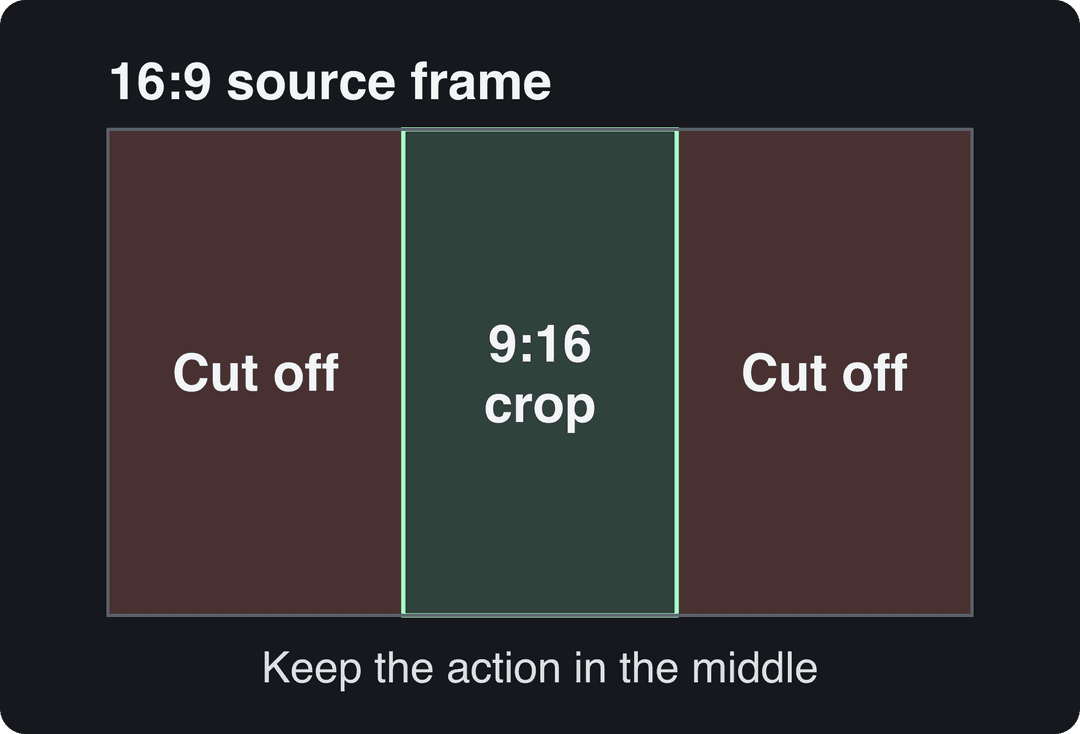
The video resizer converts a clip to 9:16, 4:5, 16:9 or 1:1. For clips where the action moves across the frame, reframe those shots by hand or use a split layout instead of a fixed center crop.
Can you use copyrighted music or footage?
Not without a license. A trending song you did not license can get your video muted, blocked or demonetized, and footage you do not own (TV broadcasts, someone else's stream) carries the same risk.
Safe options:
- Paid libraries: Epidemic Sound and Artlist license large catalogs of tracks for social video.
- Free: YouTube's Audio Library, plus the licensed sounds inside TikTok and Instagram when you post from the app.
- Your own footage: for sports and events, film it yourself or get written permission from whoever owns the recording.
Captions, cover and call to action
The packaging decides whether anyone presses play.
- Caption: add what the video does not show: the score, the stakes, a question. Keep it short; in Revid's TikTok data, captions of 41 to 80 characters had the best median views.
- Hashtags: Instagram allows up to 5 per post. On TikTok, Revid's data found 3 to 4 hashtags did best and 9 or more did worst.
- Cover or thumbnail: pick a frame with one clear subject and strong contrast that teases the climax without showing it. Instagram recommends 420x654 px Reel covers, and its help page says the cover can't currently be edited after upload, so set it before posting. Verified YouTube accounts can upload custom Shorts thumbnails from YouTube Studio on a computer (9:16 recommended).
- Call to action: one ask only, matched to the goal from step 1.
Is it worth cutting long videos into highlights?
Yes, if you already have the footage. One stream, game or webinar can feed a week of short posts, and each one works as a door to the full version. Video is now standard practice: 91% of businesses use it as a marketing tool, according to Wyzowl's 2026 survey. For wider context, see Vidico's video marketing statistics roundup and OnlySocial's social media statistics roundup, and check any figure against its original source before quoting it.
FAQ
How do I make a highlight video for free?
Use a free editor such as CapCut, whose free tier includes the full editor, 1080p export and auto-captions, and pair it with free music from YouTube's Audio Library. Revid sign-up is free and new accounts get free credits to try video creation, no credit card needed; regular creation then uses the credits of a paid plan, from $39/month.
Can AI make a highlights video automatically?
Yes, AI clipping tools find likely highlights from speech and on-screen action and cut them into vertical clips. Always review the picks: they are fast at finding talking-point moments but can miss a purely visual play.
How many clips should a highlights video have?
Start from 5 to 10 hero shots and cut down from there. Fewer strong clips beat more average ones.
How do I make a sports highlight video for recruiters?
Put your best play first, keep the whole reel under two minutes, and mark yourself on screen before each play so coaches know who to watch. End with your name, position and contact details as text.
Is a highlights video the same as a highlight reel?
Mostly, yes: both compress long footage into the best moments. "Highlight reel" is more often used for portfolios and recruiting; our guide on how to make a highlight reel covers that format in detail.