On this page
The best YouTube niche ideas for 2026 are ASMR, restoration videos, legal explainers, personal finance for a specific audience, sustainable living, regional cooking, urban exploration and animation. Each pairs steady search demand with a repeatable format, and most can be run without showing your face. Pick the one that matches a skill you already have.
That last point matters more than most guides admit. In Revid's analysis of 176,367 TikToks with 1,000+ likes posted between October 2025 and October 2026, faceless videos had a median of 114K views and 17.4% passed 1 million, against 67K and 12.7% for videos with one person on camera. It is TikTok data, and it only compares videos that already did well, but it shows that a face is not the price of entry. The method and every chart are in Revid's study of what makes TikToks go viral.
Faceless videos earned a median of 114K views, against 67K for videos with one person on camera, and passed 1M views 38% more often.
Source: Revid analysis of 176,367 TikToks with 1,000+ likes posted between Oct 1, 2025 and Oct 16, 2026 (61,203 creators)
Show the data
| Median views | Share that passed 1M views | |
|---|---|---|
| Animals | 147.4K | 24.1% |
| Faceless | 113.9K | 17.4% |
| Groups of people | 96.1K | 16% |
| Objects or products | 70.8K | 13.2% |
| One person on camera | 67.4K | 12.7% |
The 8 YouTube niche ideas at a glance
| Niche | Startup cost | Competition | Face needed? | Main income | Pick it if you |
|---|---|---|---|---|---|
| ASMR | Low to medium (mic, quiet room) | High | No, hands only works | Ads on long sleep videos, memberships | Can record clean audio patiently |
| Restoration | Medium to high (workshop, tools) | Medium | No | Ads, tool and material sponsors | Already fix things |
| Legal explainers | Low | Medium | Optional | Ads, sponsors, speaking and consulting | Have legal training or strong research habits |
| Personal finance for one audience | Low | High overall, lower per audience | Optional | Affiliates, courses, sponsors | Belong to or know that audience well |
| Sustainable living and zero waste | Low to medium | Medium | Usually | Brand deals, affiliates | Live the habits you show |
| Regional cooking | Medium (ingredients) | High overall, lower per cuisine | No, hands and stove | Ads, cookbooks, classes | Know a cuisine from home or training |
| Urban exploration | High (travel, safety gear) | Medium | Optional | Ads, prints, sponsors | Love history and can work legally and safely |
| Animation | Low to high, depending on tools | High | No | Ads, merch | Can write stories or explain ideas visually |
What makes a good YouTube niche?
Before you commit, check that a niche has these five features:
- People search for it. Type the topic into YouTube search and look at the autocomplete suggestions. If they are specific ("how to restore a rusty axe head"), demand is real.
- A repeatable format. You need one video structure you can make every week: a before-and-after, a case breakdown, a recipe.
- More than one way to earn. Ads alone are slow. Sponsors, affiliate links, memberships or a product make a niche sustainable.
- A cost you can keep paying. Urban exploration needs travel; legal explainers need a laptop. Match the niche to your budget for a year, not a month.
- An angle the leaders skip. If the top five channels all do the same thing, your opening is the audience or format they ignore.
A quick test: if you cannot list 20 video titles in one sitting, the niche is too narrow or you do not know it well enough yet. For more ways to generate titles, see these YouTube channel ideas for growth.
1. ASMR: is the ASMR niche still worth starting?
Yes, if you pick a sub-niche. ASMR (autonomous sensory meridian response) videos use soft sounds, whispering and slow hand movements to relax viewers or help them sleep. The broad niche is crowded, with established channels such as Gibi ASMR, ASMR Darling and Gentle Whispering ASMR, which helped popularize whisper-only sessions.
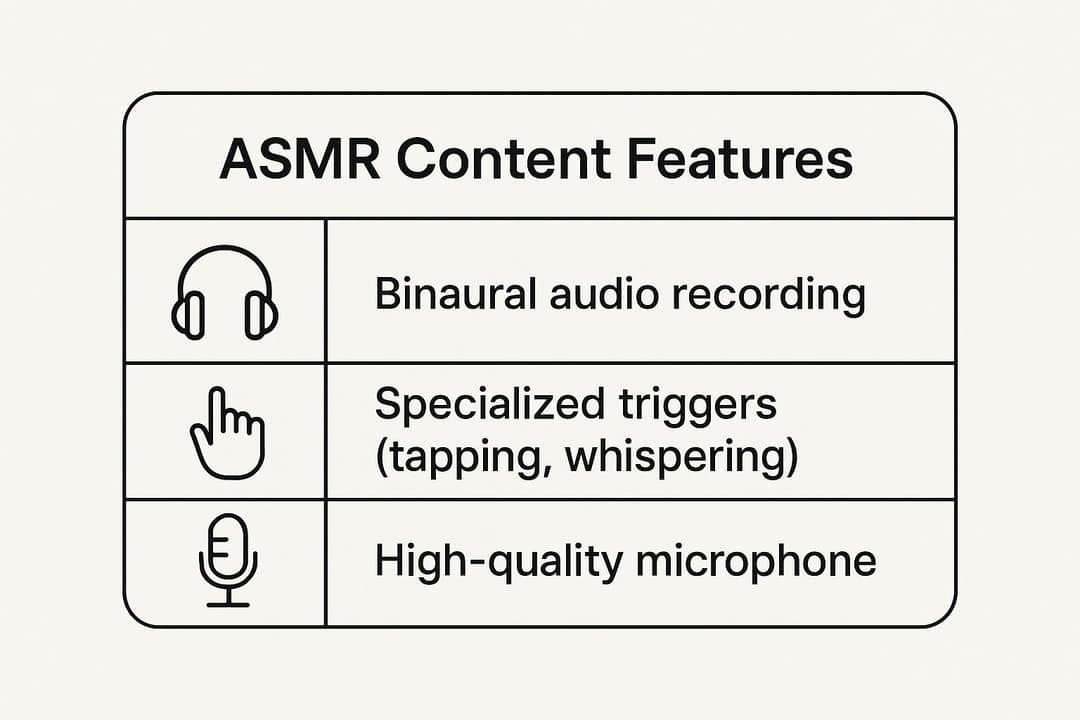
Where a new channel can still win:
- Pair ASMR with another niche: restoration ASMR, cooking ASMR, keyboard building, library or bookshop sounds.
- Go no-talking. Trigger-only videos travel across languages, so your audience is not limited to English speakers.
- Make long sleep videos. Hour-long uploads build watch hours toward the YouTube Partner Program threshold far faster than short clips.
Gear: start with a USB condenser mic (the Yeti is a common first choice) and upgrade to a binaural mic such as the 3Dio Free Space when your audience grows. A quiet room matters more than an expensive mic: kill fans, fridges and traffic noise first.
First videos to make: "ASMR: restoring a rusty pocket knife (no talking)" or "Page-turning library ASMR for sleep." Put "ASMR" and the trigger name in every title, because viewers search by trigger.
For Shorts, you can also generate macro "satisfying" clips (slicing, pouring, textures) with an AI ASMR video generator. If a clip looks realistic, turn on the AI use disclosure in YouTube Studio: YouTube requires it for realistic AI content, and disclosure alone does not limit reach or earnings.
2. Restoration videos
Restoration channels film the revival of rusty tools, old electronics, watches or furniture, usually in close-up and with little or no narration. The before-and-after payoff hooks viewers, and the lack of speech makes the videos watchable worldwide. Well-known examples include My Mechanics, Odd Tinkering and Hand Tool Rescue.
- Competition: medium. The format is popular, but every object is a new video, so search competition per item is low.
- Cost: a basic workshop, good lighting and a camera that focuses close up. Each project also costs materials.
- Income: ads plus sponsorships from tool, abrasive and coating brands, which fit the content naturally.
Tips:
- Start with cheap, fast items (hand tools, wooden boxes) so you can publish weekly while you learn.
- Light the bench well and shoot macro close-ups: texture is what makes restoration satisfying.
- Keep the mistakes in. A stripped screw or a failed weld builds trust and suspense.
- Line up several projects before your first upload so the schedule never stalls.
- Cut a 30 to 60 second reveal of each project as a Short that points to the full video.
First video: "Restoring a 1950s hand drill found at a flea market." Name the object and its age in the title: that is what people search.
Prompt to try
Make a 45-second faceless YouTube Short explaining how to file a small claims case, step by step. Open with the hook: "Most people never realize they can take someone to court without hiring a lawyer." Use simple flowcharts and highlighted document visuals with a calm, clear voice-over and bold captions. End with a line saying this is general education, not legal advice.
3. Legal explainers and case analysis
Legal channels translate court rulings, lawsuits and new laws into plain language. LegalEagle (Devin Stone) reviews rulings and courtroom scenes from films; Emily D. Baker, a former prosecutor, connects pop-culture cases to criminal procedure. The niche fills a real gap: people follow legal news but cannot read the filings.
Formats that work:
- Case breakdowns: "What the ruling in [case] actually means for you."
- Process guides: "How to file a small claims case, step by step."
- Comparisons: US versus EU privacy law, common law versus civil law.
- Hypotheticals: "What would happen if your landlord did this?"
This niche does not need your face. In Revid's TikTok data, faceless tutorials had a median of 156K views (22.1% past 1 million) against 52K (10%) for on-camera tutorials, so flowcharts, highlighted documents and a clear voice-over are a valid format. Finance, insurance and legal advertisers tend to target this audience, but YouTube publishes no standard RPM, so judge income from your own analytics.
Rules to follow: say clearly that you give general education, not legal advice; specialize (immigration, intellectual property, tenant law) to stand out; and follow primary sources such as court opinions and SCOTUSblog rather than other YouTubers.
4. Personal finance for a specific audience
General personal finance is saturated. Finance for one audience is not: new immigrants building credit, freelancers handling taxes, nurses planning retirement, single parents budgeting. The narrower the audience, the more each video feels written for the viewer.
Examples of channels built on an audience: The Financial Diet and Her First 100K (mainly women), Nate O'Brien (young adults, minimalism and investing) and The Money Guy Show (professionals building wealth).
How to build it:
- Map the audience's milestones: first paycheck, first apartment, wedding, first child, retirement. Each milestone is a series.
- Name the series concretely: "Your First $5,000 Emergency Fund" or "Buying a Home as a New Immigrant."
- Bring in specialists (accountants, financial planners, immigration lawyers) for credibility.
- Run challenges such as a 30-day savings sprint, and give viewers a place to report back (comments, a Discord server).
- Disclose your credentials and limits, and separate general guidance from personal advice.
Monetization comes from affiliate links to tools your audience needs, courses, memberships and sponsors. The trade-off: a smaller total audience and a duty to keep figures current every tax year.
5. Sustainable living and zero waste
Sustainability channels show how to cut waste and spending: plastic-free swaps, DIY cleaners, composting, mending and minimalist homes. Shelbizleee, Sustainably Vegan and Sedona Christina are established examples. Bea Johnson, author of the book that launched the modern zero waste movement, shares her method and resources on Zero Waste Home, a useful reference for anyone starting out.
What makes these videos work is proof. Weigh a week of trash, show the receipts, compare a shampoo bar against the bottle it replaced. Viewers trust numbers they can see more than claims.
Series ideas:
- "5 Sustainable Swaps in 5 Days"
- "Zero Waste Kitchen Makeover on a budget"
- Honest product tests: bamboo toothbrushes, beeswax wraps, refill stores
The main risk is greenwashing: if you promote an eco-brand, check its claims and disclose the partnership. Balance aspirational content with cheap, practical swaps, or you lose viewers who cannot afford the aesthetic.
6. Regional cooking tutorials
"Cooking" is one of YouTube's most crowded categories. "Home-style Sichuan cooking" or "South Indian coastal dishes" is not. Channels like Maangchi (Korean), Pailin's Kitchen (Thai), Chinese Cooking Demystified and Cooking with Dog (Japanese, narrated as the host's poodle) show that one cuisine, taught with context, builds a loyal audience.
Tips:
- Narrow to a region, not a continent.
- Offer substitutions for ingredients viewers outside the region cannot find, and say where to buy the real thing.
- Tell the story behind the dish: the festival it belongs to, the family version you grew up with.
- Build playlists from basics to advanced, so viewers binge in order.
- Title with the dish name: "Authentic kimchi jjigae (Korean kimchi stew)." People search by dish.
Hands-and-stove filming works fine if you prefer to stay off camera. Add translated subtitles with a video subtitle generator to reach viewers who search in other languages.
7. Urban exploration and abandoned places
Urbex channels document abandoned hospitals, factories, malls and theme parks, then tell the story of why they closed. The Proper People, Exploring With Josh and Dan Bell (known for his Dead Mall Series) show the range, from polished adventure to slow documentary.
This niche has the highest real-world risk on the list:
- Legal: check ownership and local trespass laws, and ask for permission where you can. Many of the best videos come from owners or historical societies who let creators in.
- Safety: unstable floors, asbestos and sharp debris. Never go alone; bring boots, gloves, a hard hat and a headlamp.
- Ethics: do not reveal locations that invite vandalism, and leave everything as you found it.
The payoff is content nobody can copy: each location is yours. Research the history in local archives and newspapers so the story carries the video, not just the decay. Cut trailers for Shorts and other platforms with a YouTube clip maker.
8. Animation: what the top animation YouTube channels do
Animation covers three different businesses, and the top animation YouTube channels each pick one:
| Type | Example channels | What it needs |
|---|---|---|
| Storytime animation | Jaiden Animations, TheOdd1sOut | Funny personal stories, a recognizable character |
| Animated explainers | Kurzgesagt (In a Nutshell) | Research, scripts, a consistent visual style |
| Kids content | Cocomelon | Songs, bright characters, high volume |
Hand-drawn animation is slow, which is exactly why the competition in each sub-niche is lower than it looks. AI tools now cut the cost: an AI cartoon video generator turns a script into an animated video with voice-over and captions, which you can then edit scene by scene. Two rules apply. YouTube does not monetize AI content made from generic templates that looks mass-produced, so keep a recurring character, your own writing and a consistent style. And if you make kids content, you must mark videos as made for kids in YouTube Studio, which turns off comments and personalized ads on them.
What is the most viral niche on YouTube?
Kids content. Tubular Labs' 2025 year-in-review found that 8 of the 10 most-viewed videos across all social video platforms in 2025 were kids' YouTube Shorts. Viral is not the same as profitable, though: made-for-kids videos earn less per view, and AIR Media-Tech's 2026 analysis of 274 channels found Shorts RPM was 3% to 14% of long-form RPM in almost every niche.
If you mean the most viral format rather than topic, Revid's TikTok data points the same way across niches. Among the 176,367 TikToks in the study, challenges had the highest median views (182K, 25.6% past 1 million), followed by comedy (155K) and reactions (105K), while tutorials sat at 62K. These are TikTok numbers and they show what high performers have in common, not what causes views, but they are a useful guide for Shorts: wrap your niche in a challenge or a comedic angle and you borrow the strongest formats.
Challenges and comedy passed 1M views about twice as often as tutorials and storytelling, which are the most common formats.
Source: Revid analysis of 176,367 TikToks with 1,000+ likes posted between Oct 1, 2025 and Oct 16, 2026 (61,203 creators)
Show the data
| Median views | Share that passed 1M views | |
|---|---|---|
| Challenge | 182.3K | 25.6% |
| Comedy | 154.8K | 22.1% |
| Reaction | 104.8K | 16% |
| Dance | 83.8K | 15.5% |
| Storytelling | 66.1K | 12.2% |
| Lip Sync | 61.7K | 12.3% |
| Tutorial | 61.9K | 12.1% |
Decision rule: if you want reach fast, build Shorts around a challenge or comedy format in your niche; if you want income, use those Shorts to feed long-form videos, where ad revenue per view is much higher.
Which YouTube niches are trending in 2026?
Three shifts shape which niches grow this year:
- Shorts keep taking share. YouTube said in August 2026 that it sees over 200 billion daily Shorts views, and Tubular Labs found 77% of global YouTube views in 2025 came from videos under a minute long (more in these YouTube Shorts statistics). Niches with a visual payoff in seconds (restoration, ASMR, cooking, animation) fit that feed best.
- Series are now a feature. In September 2026 YouTube began rolling out Shorts series, which organize Shorts into seasons and episodes. Story-driven niches like animation, urbex and restoration projects benefit most.
- Faceless and AI-assisted channels are maturing. YouTube allows AI tools when the result shows your creative vision, and since May 2026 it auto-labels undisclosed photorealistic AI. Channels with a clear point of view are growing; template channels are being demonetized. For niches built for this model, see the best faceless YouTube niches.
Timing also matters for monetization. Today, YouTube Partner Program ad revenue needs 1,000 subscribers plus 4,000 watch hours in 12 months or 10 million Shorts views in 90 days. From February 1, 2027, new applicants need 8,000 watch hours in 365 days or 20 million Shorts views in 90 days. If you are close to the current bar, push to apply before then.
To spot rising topics yourself, use this guide on how to find trending niches.
How to test a niche before you commit
- Write 20 titles for the niche. If you stall, pick another.
- Study the outliers. Open the top channels, sort their videos by popular, and note which topics and formats beat the channel's average.
- Publish three test videos (or a batch of Shorts) in different formats from the same niche.
- Read the signals in YouTube Studio: retention, returning viewers and which video brought subscribers.
- Double down on the winning format, not just the winning topic.
How to test a niche with Revid
- Search Revid's library of about 2.77 million real short-form videos by topic and engagement tier to see which formats already perform in your niche.
- Open a video and run Deep analysis (free, up to 60 a day) to get its hook, timed structure and three ways to adapt it to another niche.
- Turn your idea or script into Shorts with the AI YouTube Shorts generator: script, AI visuals, voice-over and captions, editable on a timeline.
- Publish or schedule straight to YouTube and compare each post's views, likes and comments in one place.
Sign-up is free and new accounts get free credits to try video creation, no credit card needed; regular creation then uses the monthly credits of a paid plan, from $39/month.
FAQ
Is there a lot of competition on YouTube?
Yes. Alphabet said that as of March 2026 over ten million channels were publishing Shorts each day. Competition is concentrated in broad topics, so new channels get in by serving a narrower audience or using a format the leaders ignore.
Can a faceless or AI-made YouTube channel be monetized?
Yes, if the videos show your creative vision and give real educational or entertainment value. YouTube blocks mass-produced template AI content, incoherent AI clip compilations, and AI personas posing as experts on health, legal, financial or political topics.
Should a new channel post Shorts or long-form videos?
Both. AIR Media-Tech's study of 18,000 channels found the best results when Shorts made up 25% to 40% of a channel's uploads: Shorts bring discovery, and long-form videos earn far more per view.
How many subscribers do you need to make money on YouTube?
For ad revenue, 1,000 subscribers plus 4,000 watch hours in 12 months or 10 million Shorts views in 90 days, rising for new applicants on February 1, 2027. A lower tier at 500 subscribers gives access to fan funding and YouTube Shopping, but not ad revenue.
Can you change your YouTube niche later?
Yes, but do it gradually. Blend the new topic into your current format for a few videos so your existing viewers come along, then shift fully once the new videos hold their own.