How to Add Captions to a Video with Revid AI (4 Steps, 2026)
Upload your video to Revid's AI caption generator, generate, fix any word in the editor's Script panel, then export or publish. Here is the current 4-step process, with placement rules for vertical video.
On this page
To add captions to a video with Revid AI, open the AI caption generator, upload your video or audio file and click Generate video. Revid transcribes the speech in any of 100+ languages, syncs the captions and opens the editor, where you fix words in the Script panel and export in 720p, 1080p or 4K.
The step most people skip is placement. Captions dead center can cover the face you are filming, and captions pushed to the very bottom of a vertical video disappear behind the TikTok, Reels or Shorts buttons and username. Step 3 covers the edit, and the placement section shows where captions belong.
The clip below is a captioned version of the Lion King song Hakuna Matata, made entirely in Revid with the steps in this guide.
What you need before you start
- A video or audio file with speech or lyrics in it.
- A Revid account. Sign-up is free and new accounts get free credits to try video creation, with no credit card needed. Regular creation then uses the monthly credits of a paid plan, from $39/month (see Revid plans and credits).
Step 1: Open the caption tool and upload your video
The dashboard changed in 2026. The old "Create new Video" button and the row of tools above the form are gone.
- Go straight to the AI caption generator, or click Create at the top of the sidebar (shortcut C).
- The Create page asks "What do you want to make?". The caption tool is not one of the main tabs, so open More tools (or All tools in the sidebar) and pick the caption tool.
- Upload the video or audio file you want to caption.
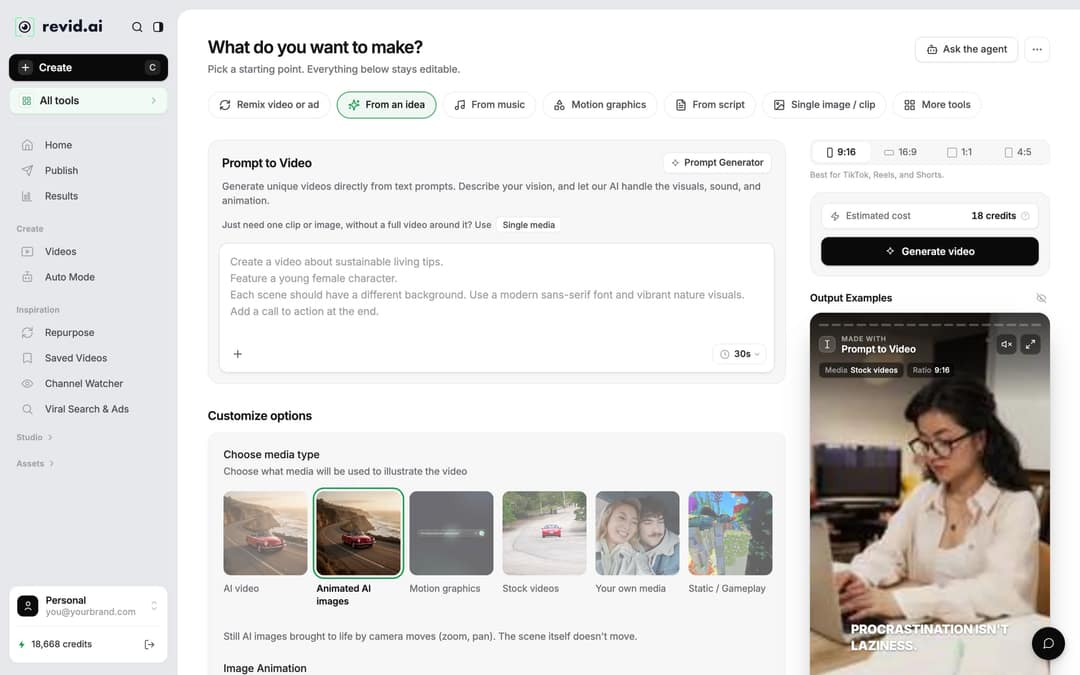
On the Create page, the audio to video converter is the From a link or audio option.
Step 2: Generate the captions
- Check the language. Under Advanced options > Language & Localization > Language, the default is Automatic. Pick the spoken language yourself when the audio has strong accents, mixes languages or uses a lot of jargon.
- Look at Estimated cost next to the button. It shows the credits the video will use before you spend anything.
- Click Generate video. When the build finishes, the project opens in the editor.
If a build fails, Revid refunds its credits automatically.
Step 3: Fix the text and the style in the editor
Auto-captioning handles clear speech well. Names, brand terms and technical words are where any transcription slips, so give the video one full watch with captions on.
- Click Script in the left rail. Every caption segment is listed with its number, an editable text box and its start time ("Starts 0:01.7 · 1.0s"). If the project has a transcript, the panel shows Script, Transcript and Edit captions tabs.
- Click into any segment and correct the word or punctuation. You will see the toast "Caption updated. Re-generate voice if timing changed." That only matters for videos with an AI voiceover. On your own recording, the text fix is all you need.
- Use the eye icon on a segment to hide a caption you do not want on screen.
- Open Captions in the left rail to change the look. Revid has 30 caption styles to start from.
- Click Safe zones above the preview to check that no line sits under the app buttons.
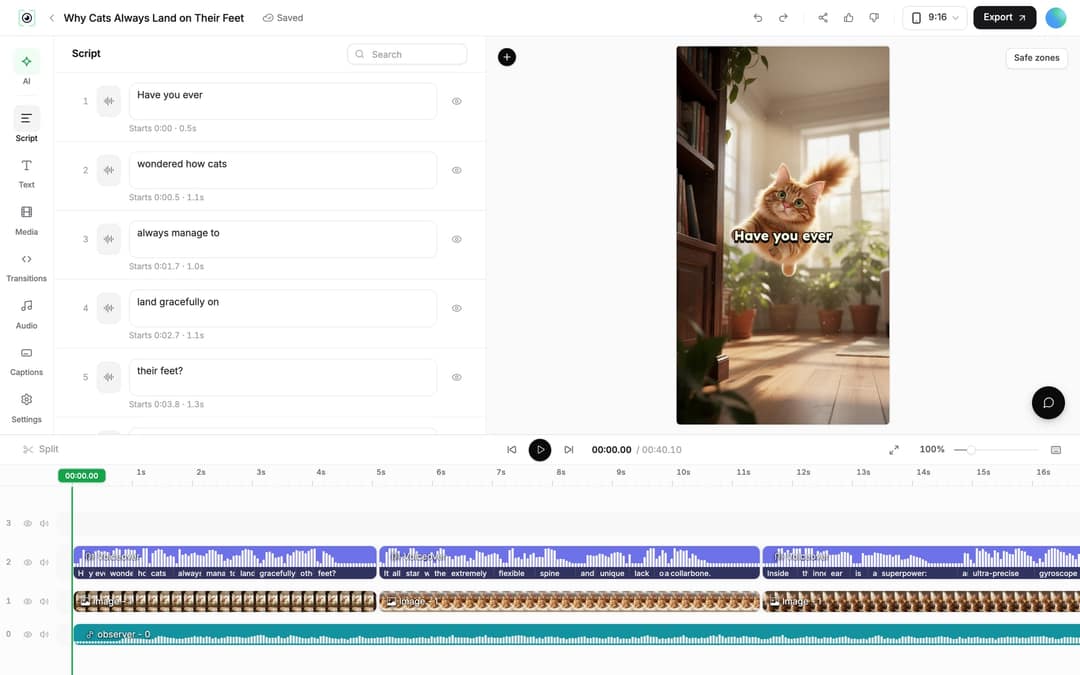
To cut a section of the clip, drag a clip's edge on the timeline, or press S to split at the playhead and delete the piece. If your video has an AI voiceover and you changed the words, regenerating the voice is covered in editing the transcript and regenerating voice.
Step 4: Export or publish your captioned video
- Click the button at the top right. It reads Export on paid plans and Export / Publish otherwise.
- Choose 720p, 1080p or 4K at 30 or 60 fps. A 4K export costs 10 credits.
- To post without downloading, open Publish (on the project card or in the export flow). In the Publish Video dialog, choose your accounts under Publish to, then click Publish to post now or Add to queue to schedule.
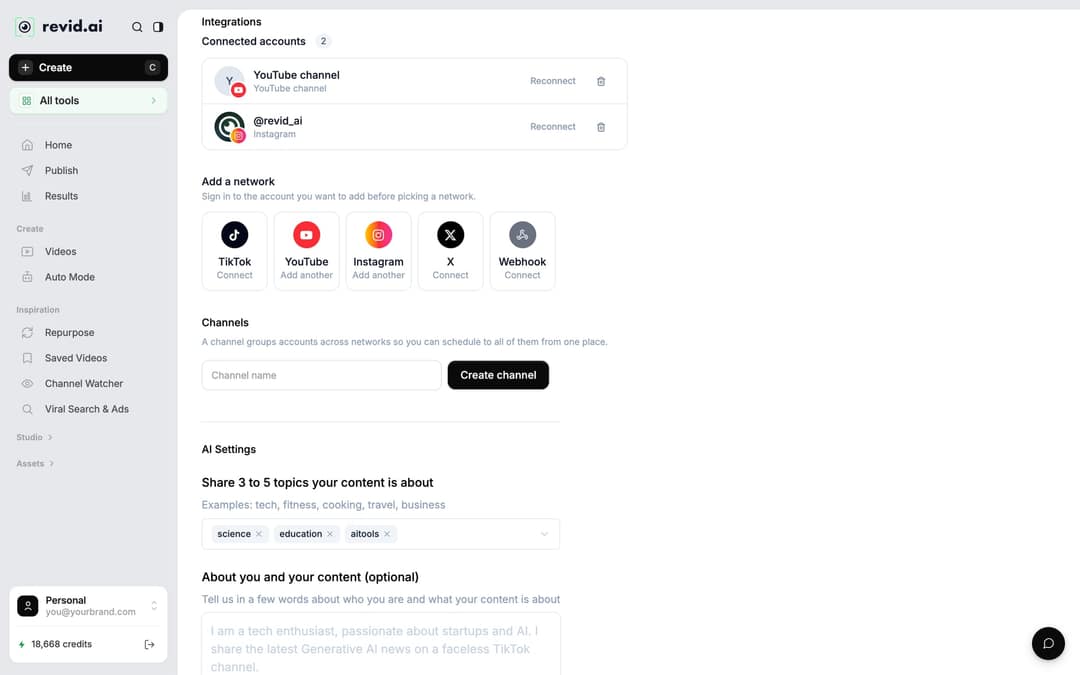
Publishing needs connected accounts. Connect them in Settings > Integrations, under Add a network: TikTok, YouTube, Instagram (business or creator account), X, or a Webhook for Zapier or Make. The full walkthrough is in linking your social accounts to Revid.
Where should captions go on a vertical video?
On TikTok, Reels and Shorts, the app lays the username, post text and buttons over the bottom and right edge of a 9:16 frame. Captions belong in the clear area between the subject and that overlay.
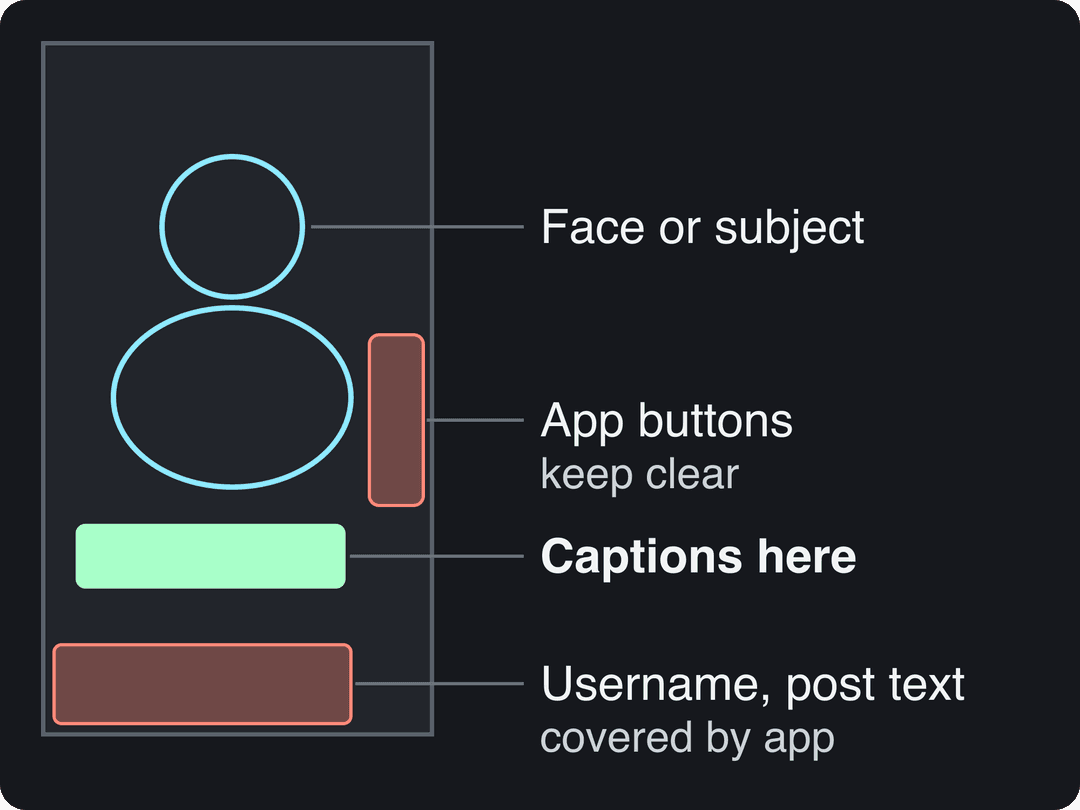
| Your video | Best caption position | Why |
|---|---|---|
| Talking head, face in the upper half | Lower third, raised above the username | Keeps the face and the text both visible |
| Product shot or action in the center | Top or lower third | Middle captions hide what people came to see |
| Text-only or lyric video | Middle | The captions are the main visual |
Before exporting, check the frame with the free TikTok safe zone checker. Use it for Reels and Shorts too, since all three apps cover the same corner of the screen.
Tips for readable captions
- Keep lines short. One short phrase at a time reads faster on a phone than a full sentence.
- Use strong contrast. Light text with an outline or shadow stays readable on any background.
- Write for sound off. Many people scroll muted, so the captions should carry the whole message on their own.
- Fix names first. A misspelled brand or guest name is the error viewers notice most.
- Have translations reviewed. When you add subtitles in another language, ask a native speaker to check idioms.
If your source is a podcast episode, see how to turn podcast audio into a subtitled video. For a broader comparison, read our roundup of the best captions apps for videos.
FAQ
Is Revid's caption generator free?
You can start for free. Sign-up costs nothing and new accounts get free credits, with no card needed. Regular creation then uses credits from a paid plan starting at $39/month, and the live prices are on the pricing page.
What is the difference between captions and subtitles?
Captions transcribe the speech in the same language as the audio. Subtitles usually translate it into another language. Revid generates captions in 100+ languages, and its translator turns a finished project into another language.
Can Revid translate a captioned video into another language?
Yes. On the project card, choose Translate to open the AI video translator. Pick a Target language from 74 options, and turn on Use another voice if you want a different voice. It keeps the edit, media, timing and captions, and costs 10 credits per 500 characters of speech.
How accurate are Revid's automatic captions?
They are accurate for clear speech. Still read through proper names, brand terms and technical words in the Script panel before exporting, since that is where errors usually appear.
Can I change the caption style after generating?
Yes. Open Captions in the editor's left rail and pick one of the 30 styles, then check the result against the safe zones before you export.