7 Best Faceless YouTube Channels to Study in 2026
Discover the best faceless YouTube channels of 2026, with format breakdowns, production tactics, and takeaways you can copy for your own faceless videos.
On this page
Faceless YouTube channels rarely win on novelty. The channels that last are built on systems, not personalities: a consistent voice, a repeatable visual language, and a narrow promise that gives viewers a reason to come back.
This list breaks down seven channels by the production choices behind them. For each one you'll get the format, the voice and visual system worth copying, the research workflow that feeds it, and the constraint that makes the model harder to run than it looks.
Read for mechanics you can execute solo, on your time and budget. Subscriber counts won't transfer. Decisions will.
- Subscribers needed for YouTube Partner Program ad revenue
- 1,000
- YouTube Partner Program
- Valid public watch hours in 12 months, one route to ad revenue
- 4,000
- YouTube Partner Program
- Valid Shorts views within 90 days, the other route to ad revenue
- 10M
- YouTube Help, October 2026
- Drop in trust when viewers perceive content as AI-generated
- 50%
- Raptive survey of 3,000 U.S. adults
1. Kurzgesagt – In a Nutshell
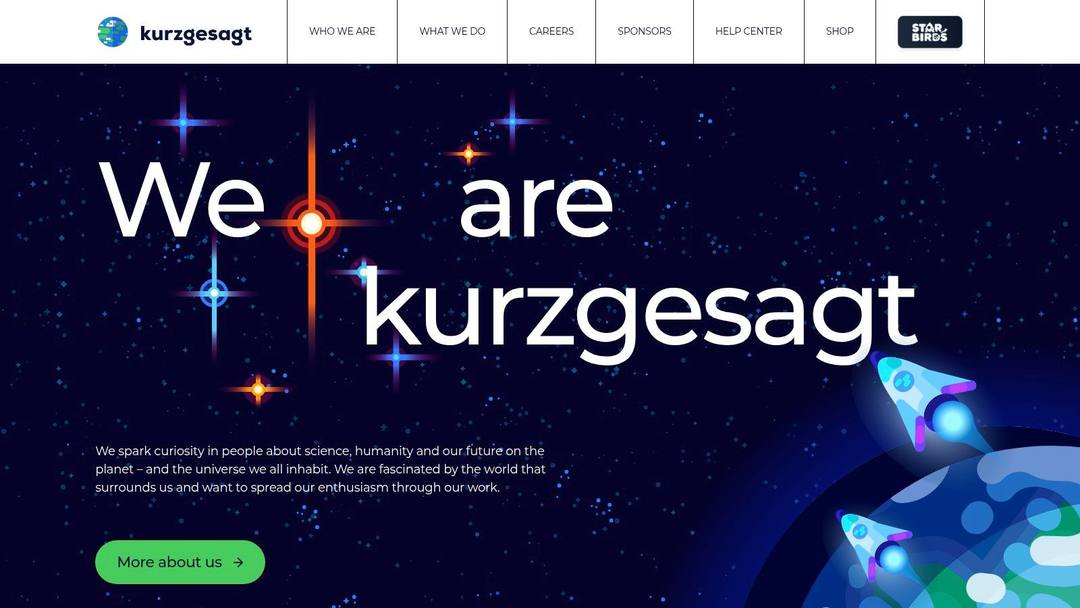
Kurzgesagt turns biology, space, technology, and the future of humanity into scripted, illustrated explainers. There's no presenter. A calm narrator, flat vector animation, and a tightly structured argument carry every video, and the look is so consistent that viewers recognize a thumbnail before they read the title.
What to copy
- Fixed visual grammar: The same shapes, colors, and character style repeat across unrelated topics, so production decisions don't reset each episode.
- Sourcesheets as a habit: The channel states a process involving research, primary sources, and expert consultation, then publishes sourcesheets that make that work visible.
- One question per video: Complex subjects get narrowed into a single accessible narrative instead of a lecture.
That transparency is the transferable part for a solo creator. You don't need their animation team, but you can keep a simple source log for every claim, link it in the description, and reuse a small set of illustrated scenes, icons, and transitions until they become your signature.
The constraint is obvious. High quality animation and expert checked research take substantial time, skill, and budget, and a new creator who tries to match this standard frame by frame will publish too slowly. Copy the research workflow and visual consistency at a simpler level, perhaps with templated motion graphics, and let evergreen topics do the long term work.
Prompt to try
Create a 60-second faceless explainer that answers one question: why do plants grow toward light? Open with the hook "Your houseplant is quietly chasing the sun." Use calm narration over flat vector-style animated scenes in a fixed color palette, and end on one clear takeaway.
2. Wendover Productions
Wendover Productions explains how the world works, covering travel, economics, geography, marketing, and logistics. The format is documentary style narration supported by maps, footage, and motion graphics. The subject is always a system, an airline route, a shipping chokepoint, a pricing quirk, rather than the person explaining it.
That systems focus is why the channel works faceless. Viewers aren't following a host, they're following a process from start to finish, and maps or diagrams often explain spatial relationships faster than a talking head ever could. The pacing stays measured, the script carries the logic, and visuals arrive exactly when the narration needs proof.
If a viewer can't sketch your video's process after watching, your visuals were decoration, not explanation.
For a solo version, build each episode around one diagram you can animate: a route, a supply chain, a before and after map. Write the script first, mark every sentence that needs visual evidence, then source footage only for those moments. Stock alone won't cut it here. The constraint is research time. Strong scripts and fact checking are the product, so budget more hours for reading and verification than for editing, and pick topics where primary documents, company filings, or official statistics are easy to find.
3. ColdFusion
ColdFusion tells documentary style stories about technology, science, and business, with a focus on the human and societal impact behind companies and inventions. There's no face and rarely any hurry. A distinctive narrated voice, polished pacing, and carefully chosen footage turn a product launch or corporate collapse into a narrative with tension.
The copyable choice is tone as Glue. Subjects jump between industries, but the storytelling structure doesn't: set up the stakes, follow the decisions, land on what changed. That consistency lets one channel cover many topics without feeling random, which matters if you're picking from faceless YouTube channel ideas that can drive income and don't want to lock into one narrow beat too early.
Where it gets expensive
Research, writing, and editing all stack up, because narrative pacing can't be faked with a slideshow. Every cut has to match a beat in the story, and archival material needs sourcing and rights checks. Some tech subjects also date quickly, so a video built on today's product cycle may need updating or lose search value.
My take for solo creators: steal the three act script template and the restrained music bed, but shoot for shorter stories. One company decision, one turning point, one consequence. You'll finish episodes, and finishing is what builds a library.
Prompt to try
Make a 60-second map-led explainer on why the Strait of Malacca matters to global shipping. Hook: "One narrow strip of water carries a huge share of the world's trade." Use animated maps with highlighted routes and labels, measured documentary narration, and move from the question to the geographic cause to the consequence.
4. RealLifeLore
RealLifeLore asks question driven questions about geography, history, economics, and science, then answers them with narration led almost entirely by maps. Why a border sits where it does, why a country is richer than its neighbor, what happens if a strait closes. The map isn't support material here, it's the main character.
That gives the channel an enormous topic pool, because every place on Earth generates comparisons, disputes, and what if scenarios. A solo creator can replicate the core kit cheaply: a map tool, a consistent color scheme for highlighting regions, arrows and labels that appear in a fixed order, and a script that always moves from the question to the geographic cause to the consequence.
- Question titles: Each video promises one answerable puzzle, which gives viewers a clear reason to click.
- Comparisons on screen: Side by side territories, populations, or routes make abstract scale concrete.
- Historical and current range: The same format handles an old empire or a current trade route.
The risk is repetition and accuracy. Geopolitical and economic topics demand careful sourcing and context, and borders or statistics stated loosely will draw corrections fast. Visually, endless similar maps blur together unless your scripts keep raising the stakes. Vary the question type, not just the country, and cite your sources in the description so skepticism works for you instead of against you.
5. Lofi Girl
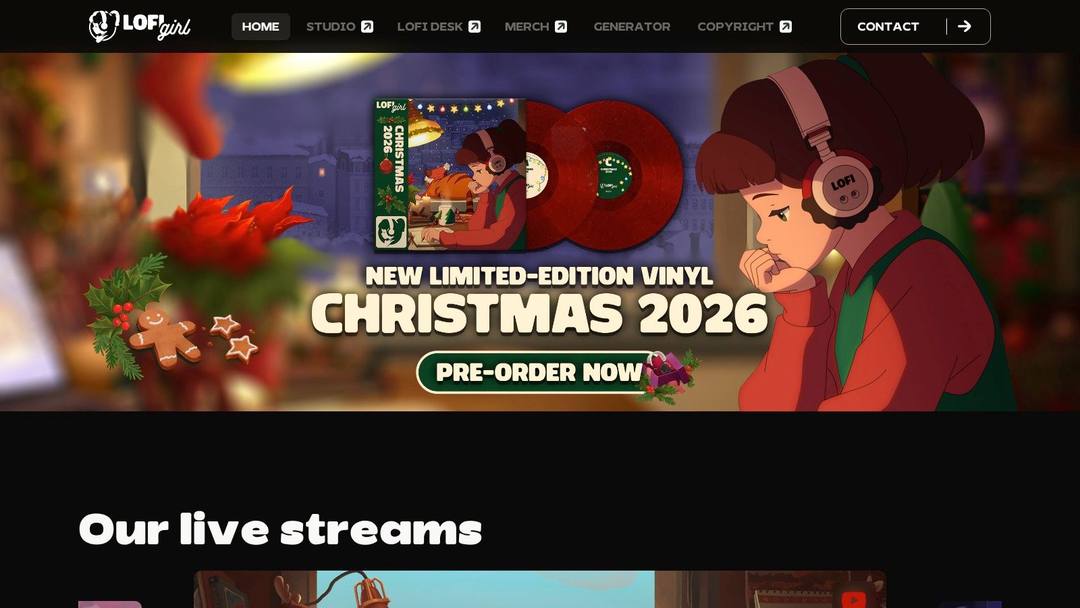
Lofi Girl has no narration, no host, and barely any motion. A recurring animated character sits at a desk while curated beats play through long running radio streams and playlists built for studying, relaxing, or sleeping. The official site describes a broader music and creator ecosystem, which tells you this stopped being just a channel a long time ago.
The format is instantly understandable and designed for return visits rather than single clicks. Viewers don't finish a Lofi Girl video, they inhabit it for an afternoon. That background listening behavior is the model: one recognizable visual motif, consistent across long sessions, with audio doing all the work a presenter would normally do.
Practical rule: If your video is meant to play for hours, design the loop and the mood first. Content variety matters less than never giving the listener a reason to leave.
For solo creators, the barrier isn't editing. It's rights and catalog. Music licensing is essential, and building a distinctive library plus a visual brand people attach to takes real investment. This format also won't suit you if you want spoken storytelling. But if you produce original music or can license it cleanly, a single well crafted animated scene and scheduled long form uploads can carry a channel with almost no per video production.
6. WatchMojo
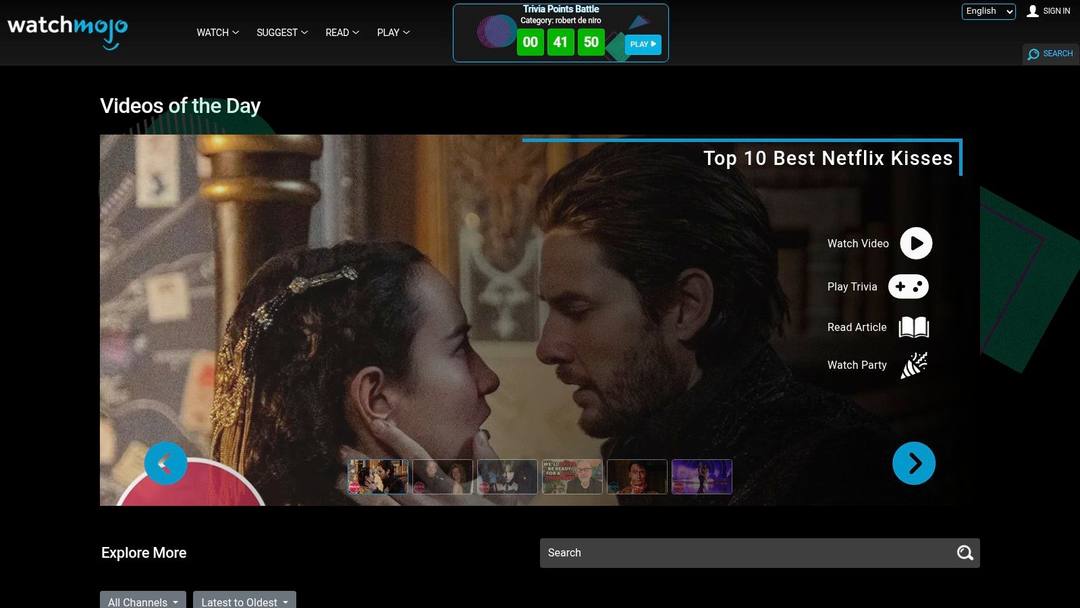
WatchMojo built a large entertainment brand on one repeatable move: the countdown. Voiceover, clips, and a ranked list about pop culture, people, places, or trends, published in recurring series viewers recognize instantly. The company describes distributing video across multiple platforms, so the format is clearly built to travel.
For a solo creator, the attraction is planning. A fixed episode structure means you can batch research, write to a template, and know exactly how long each segment runs before you record a word. Entertainment topics also supply endless raw material, so you'll never run out of episode ideas.
Endless supply is also the trap. Crowded subjects make original research and a distinctive point of view essential, because a ranking anyone could assemble adds nothing. YouTube evaluates reused content across the entire channel and can remove monetization when it cannot clearly tell that the creator made the content, even with permission to use source material, per YouTube's channel monetization policies. Clip heavy videos also carry constant licensing and copyright exposure.
So copy the structure, not the sourcing. Rank things you can film, screen record, or chart yourself, and make your commentary the reason the list exists. A list with an argument beats a list with better clips.
7. Daily Dose of Internet
Daily Dose of Internet curates short, interesting moments from online videos and stitches them together with brief, friendly narration. The official site includes video related features and audience submissions, which hints at the engine here: sourcing. Curation and pacing are the creative product, not presentation.
The premise lands in seconds, and short segments make each video easy to sample and hard to leave, since the next clip is always moments away. The narration stays light, adds just enough context, and gets out of the way. For a solo creator, that's a useful lesson in restraint. Your voice doesn't need to dominate to give a channel identity.
The risk you can't edit around
Clip based formats carry significant permissions and copyright risk, and the whole pipeline depends on continually finding material that's both suitable and usable. A Raptive survey of 3,000 U.S. adults found that perceived AI-generated content reduced trust by 50%, according to The Current's reporting on advertiser and creator concerns, which matters if you're tempted to automate curation and voiceover entirely.
If you try this model, build a permissions workflow first: track every source, keep written approvals, and add meaningful editorial value through selection, ordering, and commentary. Reposting with a robot voice isn't a format, it's a liability.
The index leans toward videos that surface in hashtag and keyword searches, so its view counts run high: compare the groups, not the absolute numbers.
Source: Revid TikTok index: 2,377,477 TikToks with AI labels per video, snapshot of Sep 15, 2026. Median views estimated from view buckets.
Show the data
| Median views | Share past 1M views | |
|---|---|---|
| AI generated | 151.7K | 19.5% |
| Animation/Cartoon | 121.3K | 14.2% |
| Mixed | 87.3K | 11.4% |
| Real shot | 67.3K | 9.5% |
How the seven faceless channels differ in format, subject, and production demands
| Item | Format | Main Subject Area | Key Production Consideration |
|---|---|---|---|
| Kurzgesagt – In a Nutshell | Animated educational explainers | Biology, space, technology, and humanity's future | High-quality animation and research require substantial time, skill, and budget |
| Wendover Productions | Narrated documentary-style explainers | Travel, economics, geography, marketing, and logistics | Strong scripts, fact-checking, and supporting visuals require significant effort |
| ColdFusion | Narrated documentary-style storytelling | Technology, science, and business | Research, writing, and editing can be time-consuming |
| RealLifeLore | Narrated, map-led explainers | Geography, history, economics, and science | Careful sourcing and varied visuals help prevent inaccuracies and repetition |
| Lofi Girl | Music streams and long-form playlists | Study, relaxation, and sleep music | Music rights and licensing are essential |
| WatchMojo | Voiceover-led countdown videos | Pop culture, people, places, and trends | Clip licensing and a distinctive point of view are important |
| Daily Dose of Internet | Narrated online clip show | Interesting moments from online videos | Permissions, copyright, and meaningful editorial context are essential |
The index leans toward videos that surface in hashtag and keyword searches, so its view counts run high: compare the groups, not the absolute numbers.
Source: Revid TikTok index: 2,377,477 TikToks with AI labels per video, snapshot of Sep 15, 2026. Median views estimated from view buckets.
Show the data
| Median views | Share past 1M views | |
|---|---|---|
| Animal-focused | 273.2K | 36.3% |
| Faceless | 199.4K | 29.7% |
| Object-focused | 143.1K | 24.9% |
| Group-focused | 140.3K | 23.7% |
| Person-focused | 104.8K | 21.8% |
Turn These Models Into Your First Faceless Series
Strip away the topics and every channel above runs the same play: a fixed format, a repeatable visual system, and a narrow promise a viewer can repeat back in one sentence. Kurzgesagt promises a complex idea made clear, Lofi Girl promises a mood that won't break, WatchMojo promises a ranking with a verdict. Your first job isn't picking a niche, it's picking a promise you can deliver identically ten times in a row.
That discipline also decides whether the money ever shows up. Full advertising revenue eligibility under the YouTube Partner Program requires 1,000 subscribers plus either 4,000 valid public watch hours over the preceding 12 months or 10 million valid Shorts views within 90 days. A repeatable long form format builds watch hours steadily, while a Shorts only bet needs enormous concentrated reach. Choose the path your format can sustain.
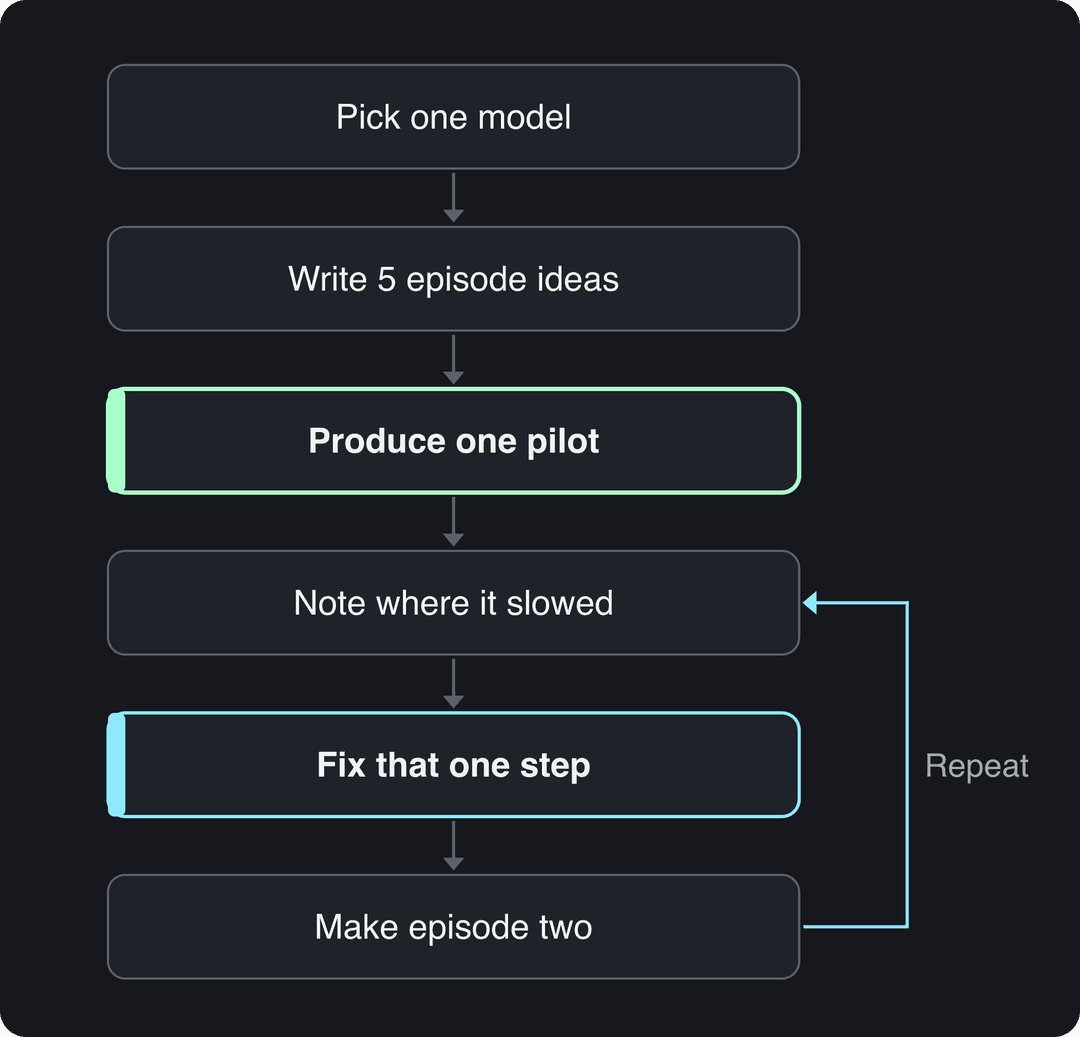
Start concretely this week. Pick one model from this list, write five episode ideas that fit its structure without modification, and produce a single pilot before judging anything. Note where production slowed you down, fix that one step, and only then make episode two.
Tools can compress the slow parts once the format is settled. With revid.ai, we offer Viral Search to surface formats getting attention in your niche, a script writer that studies the hook, structure, and pacing of a proven video before drafting yours, and Auto-Mode to create and post fresh videos on a schedule from a prompt or content source. Use automation to repeat a format that already works, not to search for one. The channels worth studying earned their audiences by making the same good decision hundreds of times. Your pilot is decision one.
Ready to turn one of these formats into your own pilot without filming or hiring an editor? With faceless narrated videos, viral format research, and scheduled Auto-Mode posting, revid.ai helps you go from episode idea to published video in one workflow. Start with a free account, study what's working in your niche, and publish your first episode this week.
FAQ
What makes a faceless YouTube channel successful?
Lasting faceless channels are built on systems, not personalities: a consistent voice, a repeatable visual language and a narrow promise that gives viewers a reason to come back. Kurzgesagt promises a complex idea made clear, Lofi Girl a mood that won't break and WatchMojo a ranking with a verdict. Pick a promise you can deliver identically ten times in a row.
How many subscribers does a faceless YouTube channel need to make money?
Full advertising revenue in the YouTube Partner Program requires 1,000 subscribers plus either 4,000 valid public watch hours over the preceding 12 months or 10 million valid Shorts views within 90 days. A repeatable long form format builds watch hours steadily, while a Shorts only bet needs enormous concentrated reach.
Can a faceless compilation or countdown channel lose monetization?
Yes. YouTube evaluates reused content across the entire channel and can remove monetization when it cannot clearly tell that the creator made the content, even with permission to use the source material. Clip heavy formats also carry licensing and copyright exposure, so rank things you can film, screen record or chart yourself and make your commentary the reason the video exists.
Does fully automated AI content hurt a faceless channel?
It can. A Raptive survey of 3,000 U.S. adults found that perceived AI-generated content reduced trust by 50%. Add real editorial value through selection, ordering and commentary, and use automation to repeat a format that already works rather than to search for one.
How do I start my first faceless YouTube series?
Pick one model, write five episode ideas that fit its structure without modification and produce a single pilot before judging anything. Note where production slowed you down, fix that one step, then make episode two. Tools like revid.ai can then speed up the slow parts with narrated faceless videos, format research and scheduled posting.
Sources
- Revid TikTok index: 2,377,477 TikToks with AI labels per video, snapshot of Sep 15, 2026. Median views estimated from view buckets.
- YouTube Help, YouTube Partner Program overview & eligibility (October 2026)
Charts and figures checked on November 11, 2026.