Creators publish 30,000+ videos a month with Revid
Prompt to Video AI Generator
Prompt to Video turns a written description into a finished video. Describe the scene, the story and the style you want, and Revid writes the narration, generates the visuals as AI video or animated AI images, then adds a voiceover, music, sound effects and captions. Pick any length from 8 seconds to 5 minutes.
**Recommended preset: Ultra Realism**
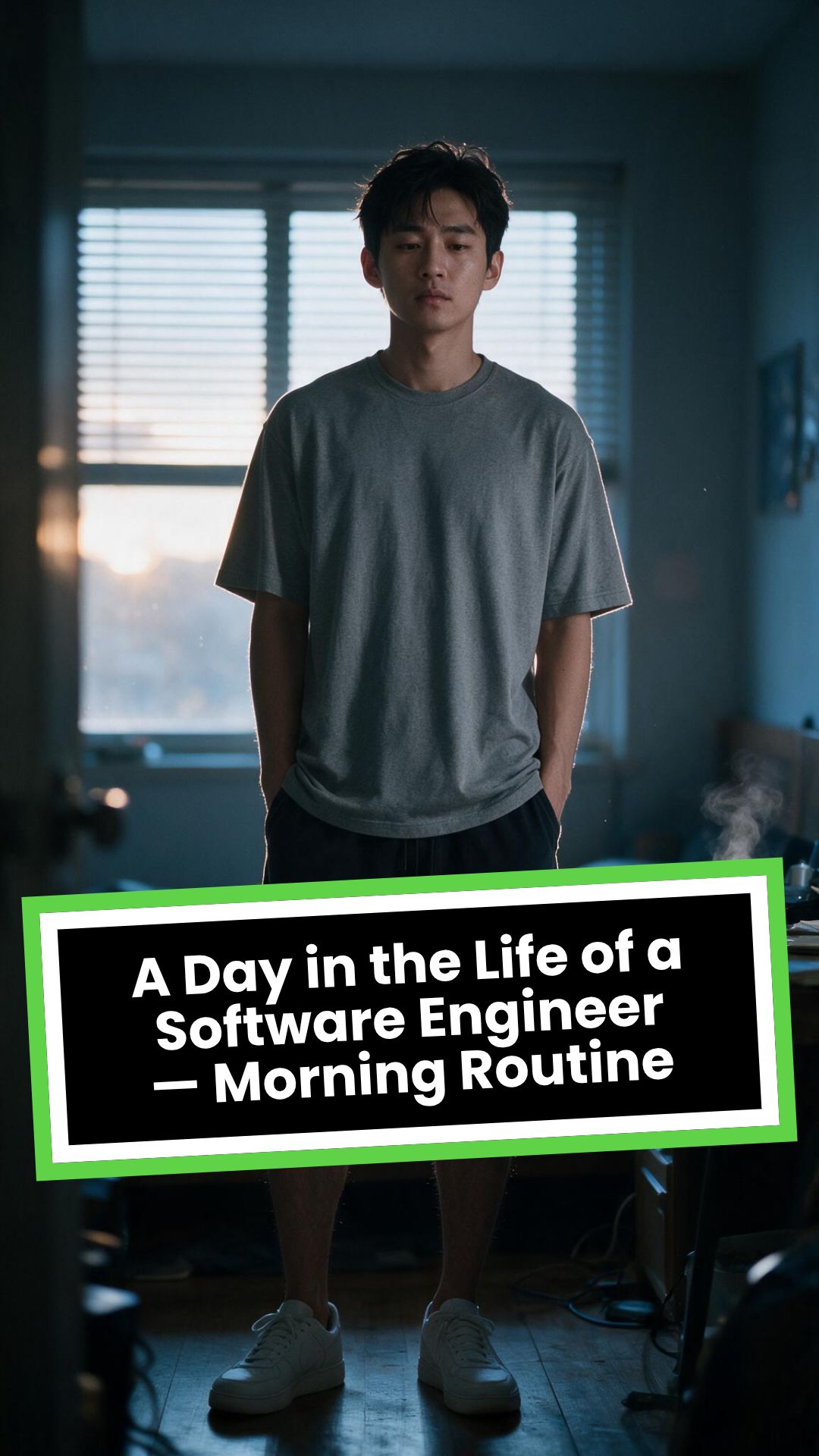
# A Day in the Life of a Software Engineer — Morning Routine
## STARTING FRAME
Extreme macro close-up of a smartphone resting face-up on a dark wooden bedside table in a quiet apartment bedroom before sunrise. The alarm reads **6:30 AM** in crisp white digits. The edge of the phone, tiny dust particles on the table, and the faint reflection of the screen are sharply detailed.
Several feet behind it, a young Asian man in his late twenties lies asleep beneath slightly rumpled bedding. He is only a soft, indistinct silhouette because of the extremely shallow depth of field. Cool blue-grey morning light leaks through partially closed curtains, creating faint horizontal shadows across the room.
A closed laptop, sleeping monitor, mechanical keyboard, notebook, headphones, water bottle, and hoodie resting over a desk chair are visible only as subdued background shapes.
The room is completely still.
Animate forward from this exact frame.
---
## [0s–3s] — THE ALARM
The camera remains extremely low, almost level with the bedside table.
For the first moment, nothing moves.
Then the alarm begins ringing.
The smartphone vibrates against the wooden surface in short mechanical pulses. One corner taps faintly against the table with each vibration. The glow from the screen reflects subtly across the wood grain.
Keep the sleeping man fully blurred in the background.
Do not reveal his face yet.
The curtains move almost imperceptibly from a weak draft. Distant traffic hums outside. A soft electrical ambience comes from the sleeping computer monitor.
Allow the alarm to interrupt the quiet rather than immediately triggering a reaction.
---
## [3s–6s] — THE FIRST REACTION
Begin a very slow rack focus away from the phone.
The alarm digits gradually soften.
The sleeping man’s shoulder, face, pillow, and blanket slowly resolve into focus.
He does not immediately wake.
His eyebrows contract slightly.
His head presses deeper into the pillow as though instinctively trying to escape the sound.
One hand shifts beneath the blanket.
His fingers curl faintly against the fabric.
The bedding moves only a few centimetres as his body reacts before his mind is fully awake.
The voice-over begins quietly:
> “Most days aren’t my best days.”
The delivery is close, restrained, personal, and slightly tired. It should sound like a private thought rather than narration for an audience.
---
## [6s–10s] — WAKING
His eyes open slowly.
They remain unfocused.
He blinks once.
A longer pause.
Then he blinks again.
His gaze drifts toward the sound without turning his head completely.
One hand emerges from beneath the blanket and reaches toward the bedside table. His arm moves heavily, dragging slightly across the mattress.
His fingers miss the phone on the first attempt.
They brush against the charging cable, slide across the table, then finally reach the screen.
He presses the alarm off.
The sound stops abruptly.
The room becomes quiet again.
Let the silence remain for a full beat.
His hand stays resting beside the phone rather than instantly returning to bed.
He exhales slowly through his nose.
The camera makes an almost imperceptible push toward him.
No dramatic expression. No exaggerated yawn.
Only the slow recognition that the day has started.
---
## [10s–14s] — SITTING UP
He turns onto one side.
The blanket pulls across his torso and gathers naturally around his waist.
His elbow presses into the mattress.
The mattress compresses visibly beneath his weight as he pushes himself upward.
His head rises last.
His hair is slightly flattened on one side and falls unevenly across his forehead.
He moves both legs toward the edge of the bed.
One foot searches for the floor.
Then the other.
His bare toes make contact first, followed by the rest of each foot.
He remains seated at the edge of the mattress.
His back curves slightly.
His shoulders hang low.
His hands rest loosely beside his thighs.
He stares at the floor without really looking at anything.
Hold this moment.
The creased bedding behind him should remain compressed where his body had been.
The voice-over continues after a natural pause:
> “But I remember why I do this…”
---
## [14s–17s] — STANDING
He shifts his feet slightly farther apart.
His weight moves forward.
His elbows press lightly against his thighs before he pushes himself upright.
His hips rise first, followed by his shoulders.
Show realistic balance adjustment as his body settles onto both feet.
He stands still for a brief moment.
His loose neutral-coloured T-shirt falls naturally back into place. His shoulders remain slightly lowered. His breathing is calm but heavy with sleep.
The camera stays behind him at approximately waist-to-shoulder height, observing rather than presenting him.
He takes two slow steps toward the bedroom wall.
His bare feet make soft contact with the floor.
He runs his fingers along the wall for a moment before finding the light switch.
He presses it.
A warm bedside or ceiling practical light turns on.
Do not flood the entire room with brightness.
The warm light should gradually reveal wood, bedding, fabric, and skin while the cool morning light remains visible through the curtains.
His eyes narrow slightly in response.
---
## [17s–20s] — TOWARD THE BATHROOM
He turns toward the bathroom doorway and begins walking.
The camera follows several steps behind with restrained handheld drift.
His pace is slow and partially automatic.
He does not acknowledge the camera.
His arms hang naturally beside him.
His shirt moves subtly across his back with each step.
Use the bathroom doorway as a natural frame around his body.
As he crosses the threshold, briefly hold the bedroom in the background:
* the unmade bed;
* the silent phone;
* the closed laptop;
* the dark monitor;
* the hoodie over the chair;
* cool daylight still entering through the curtains.
The voice-over completes:
> “…and I get up anyway.”
The line should not swell emotionally. It should land quietly, almost as though he is reminding himself.
---
## [20s–25s] — THE BATHROOM
Follow him into a small, modern, lived-in bathroom.
Use one hidden natural transition as the camera passes behind the doorframe if necessary, but preserve the feeling of one continuous shot.
He reaches toward the bathroom light switch.
A soft neutral overhead light turns on.
The camera settles into a side angle where both his real profile and part of his reflection are visible. He never looks directly into the lens.
His face in the mirror appears tired but composed.
He reaches toward a simple toothbrush holder.
His fingers close around the toothbrush.
He turns the tap handle.
Water begins flowing into the basin with a steady, natural sound.
Small droplets strike the ceramic surface and collect around the drain.
He briefly passes the toothbrush beneath the water.
He picks up the toothpaste with his other hand.
His thumb flips open the cap.
He positions the tube above the brush and squeezes slowly.
The tube compresses naturally between his fingers.
A small line of toothpaste settles across the bristles.
He releases pressure, places the toothpaste beside the sink, and brings the toothbrush to his mouth.
He begins brushing with slow, absent-minded movements.
His free hand rests against the edge of the basin.
The water continues running softly for a moment before he reaches over and turns it off.
End with him brushing his teeth in silence while early-morning ambience fills the room.
No smile.
No inspirational pose.
No sudden burst of energy.
The morning has simply begun.
---
# CAMERA DIRECTION
* One continuous observational sequence whenever possible.
* Extreme macro lens for the opening alarm.
* Very shallow depth of field during the first six seconds.
* Slow rack focus from the alarm to the sleeping man.
* Subtle push-in while he wakes.
* Low bedside camera placement.
* Gentle handheld drift only after he stands.
* Restrained tracking movement toward the bathroom.
* Use the bedroom and bathroom doorframes as natural foreground obstruction.
* Slight parallax as the camera follows him.
* Side-angle bathroom composition with a partial mirror reflection.
* Camera movement must feel physically operated by a patient documentary filmmaker.
* No orbiting around the character.
* No floating camera.
* No passing through walls.
* No dramatic sweeps or crane movements.
* No rapid cuts.
* One concealed doorway transition is permitted for stability.
---
# CHARACTER PERFORMANCE
Use one consistent young Asian man in his mid-to-late twenties.
He should appear like a normal working software engineer rather than a fashion model.
Maintain:
* slightly messy morning hair;
* naturally tired eyes;
* realistic skin texture;
* ordinary body proportions;
* loose neutral T-shirt;
* comfortable shorts or pyjama trousers;
* bare feet;
* understated, believable posture.
His sleepiness should be communicated through timing and body weight.
He should:
* blink heavily;
* pause before each major movement;
* keep his shoulders slightly lowered;
* move his hands without perfect coordination immediately after waking;
* shift his weight realistically;
* walk quietly;
* remain unaware of the camera;
* never perform the voice-over on screen.
Do not make him appear severely exhausted, unwell, intoxicated, miserable, or emotionally distressed.
---
# ENVIRONMENTAL DETAIL
The apartment should feel modest, modern, believable, and personally inhabited.
Bedroom details may include:
* closed laptop;
* monitor in sleep mode;
* mechanical keyboard;
* notebook with a pen;
* headphones;
* charging cable;
* water bottle;
* desk chair;
* hoodie over the chair;
* soft curtains;
* plain bedding;
* digital alarm or smartphone.
These objects must remain secondary.
Avoid excessive RGB lighting, futuristic interfaces, glowing code, multiple giant monitors, hacker imagery, or stereotypical technology props.
The bathroom should include:
* small ceramic sink;
* ordinary mirror;
* toothbrush holder;
* toothpaste;
* hand towel;
* simple shelf;
* subtle tile reflections;
* minor signs of everyday use.
Avoid a spotless luxury hotel bathroom.
---
# LIGHTING AND COLOUR
* Begin with soft, cool, low-contrast dawn light.
* Use blue-grey illumination passing naturally through curtains or blinds.
* Let the alarm screen create a small local glow.
* Introduce warm practical light when he presses the bedroom switch.
* Preserve the contrast between cool exterior daylight and warm interior light.
* Use soft neutral or slightly warm bathroom lighting.
* Maintain natural skin tones.
* Use gentle cinematic contrast and realistic shadow falloff.
* Keep the overall palette muted, intimate, and grounded.
Avoid:
* neon colours;
* heavy teal-and-orange grading;
* artificial lens flares;
* dramatic rim lighting;
* fantasy glow;
* excessive darkness;
* overexposed bathroom lighting;
* motivational-commercial brightness.
---
# SOUND DESIGN
Keep the soundscape quiet, layered, and tactile.
### Bedroom ambience
* distant city traffic;
* faint room tone;
* soft electrical hum;
* subtle curtain movement;
* alarm vibration against wood;
* charging cable shifting;
* bedding sliding;
* mattress compression;
* breathing;
* bare feet touching the floor;
* quiet fabric movement;
* light-switch click;
* soft footsteps.
### Bathroom ambience
* bathroom switch;
* toothbrush lifted from the holder;
* tap handle turning;
* water striking the basin;
* toothbrush touching water;
* toothpaste cap opening;
* tube compressing;
* toothpaste settling on the bristles;
* slow brushing;
* subtle room echo.
The voice-over should sit gently above these sounds rather than overpowering them.
---
# VOICE-OVER
Use a young adult male voice.
Delivery must be:
* quiet;
* sincere;
* close-microphone;
* slightly tired;
* reflective;
* conversational;
* emotionally restrained.
Do not use trailer narration, motivational-speaker cadence, inspirational music swelling, or exaggerated pauses.
Voice-over text:
> “Most days aren’t my best days.
> But I remember why I do this…
> and I get up anyway.”
Begin the first sentence during the focus shift.
Deliver the second sentence while he sits at the edge of the bed.
Complete the final phrase as he walks into the bathroom.
---
# PHYSICAL REALISM
Every movement must show weight, resistance, and consequence.
Include:
* smartphone vibrating against wood;
* blanket tension as he moves;
* pillow compression;
* mattress deformation beneath his elbow and hips;
* feet searching for the floor;
* realistic centre-of-gravity changes while standing;
* natural cloth movement;
* proper hand contact with the switch;
* believable walking rhythm;
* accurate grip on the toothbrush and toothpaste;
* realistic water flow;
* toothpaste tube deformation;
* correct mirror behaviour;
* natural brushing motion.
Objects must not move unless physically touched or affected by the environment.
---
# CONTINUITY REQUIREMENTS
Maintain exactly the same:
* face;
* hairstyle;
* clothing;
* body proportions;
* skin tone;
* bedroom arrangement;
* bathroom arrangement;
* phone;
* bedding;
* toothbrush;
* toothpaste;
* lighting direction;
* time of morning.
The bathroom must feel directly connected to the bedroom.
The character must not change appearance between spaces.
The mirror reflection must match his real movement precisely.
---
# NEGATIVE CONSTRAINTS
* No direct eye contact with the camera.
* No on-screen dialogue.
* No lip-syncing to the voice-over.
* No influencer presentation.
* No vlog gestures.
* No smiling at the audience.
* No fast montage.
* No opening the laptop.
* No typing or coding.
* No breakfast sequence.
* No shower.
* No getting dressed.
* No leaving the apartment.
* No dramatic stretching.
* No exaggerated yawning.
* No energetic wake-up.
* No instant movement from bed to bathroom.
* No teleportation.
* No unrelated extra scenes.
* No rapid edits.
* No impossible camera paths.
* No random camera shake.
* No warped mirror reflection.
* No changing facial features.
* No changing clothes.
* No malformed hands.
* No extra fingers.
* No floating objects.
* No disappearing props.
* No changing room layout.
* No excessive slow motion.
* No text overlays.
* No captions.
* No logos.
* No watermark.
* No artificial motivational-commercial tone.
Visual FormatAI Video
Visual StylePhotography
FINAL VIDEO
Create Stunning Videos from Text Prompts in 3 Easy Steps
1 Describe Your Video Vision
Start by typing a descriptive text prompt into the field. Detail the scene, characters, actions, mood, and desired style (e.g., 'A cinematic aerial shot of a mysterious, foggy forest with ancient glowing trees, fantasy style'). The more specific your prompt, the better our AI can bring your idea to life as a video.
2 Choose Your Visual & Audio Settings
Select your preferred media type: choose from AI-generated video, dynamic moving AI images, stock footage, static images, or even upload your own media. Our AI will also generate relevant sound effects and can create a voiceover based on your prompt or settings. You can also select background music.
3 Generate and Refine Your AI Video
Click 'Generate Video' and let our powerful AI video generator work its magic. In minutes, you'll have a unique video complete with visuals, sound, and animation based on your text prompt. You can then use Revid's built-in editor to make any final adjustments, add captions, or enhance your creation before sharing.
Describe Any Scene and Watch It Become a Published Video
Prompt to video is the most direct creative format Revid offers. Write a description of the video you want to see, including the visuals, the mood, the characters, and the story, and the AI generates a complete video with matched footage or AI-generated imagery, voiceover narration, background music, and captions. There is no template to navigate and no multiple-step configuration. The prompt is the entire creative brief. It works for fiction, documentary-style content, product showcases, explainer videos, social media posts, and anything else you can describe in words.
02
What the Prompt-to-Video Engine Does with Your Description
After receiving your prompt, Revid's AI analyzes the intended genre, tone, subject matter, and key visual moments, then builds a scene-by-scene video structure around them. It selects or generates visuals for each moment, writes the narration to match the described content, chooses a music track from a curated library, and times everything into a cohesive short video. The tool supports AI-generated imagery at three quality levels, base, pro, and ultra, allowing you to match output quality to the purpose of the content.
03
Prompt to Video for Creators, Marketers, and Educators
Content creators use it to test new ideas quickly before investing in polished production. Marketers use it to generate product and brand videos from campaign briefs without briefing an agency. Educators use it to create illustrative videos for complex topics where existing footage does not match the specific explanation needed. Because the entire workflow starts from a text description, there is no skill prerequisite beyond being able to articulate what you want to see. For character-driven storytelling built on the same prompt format, the POV video generator applies a first-person immersive lens to the same input.
Watch & Learn
How to Get the Most Out of our Prompt to Video?
Discover how to use our Prompt to video to create content in a smart and effective way.
I Typed One Sentence and AI Made This Entire Video (Prompt to Video Tutorial)
Target Audience
Who is this tool for?
Independent content creators
Move from idea to published video without the production overhead that normally sits between a creative concept and a finished piece, posting new content as fast as you generate ideas.
Marketing teams and agencies
Transform written campaign briefs into video assets for social media, ads, and presentations without adding video production work to a team that already has a full schedule.
Narrative storytellers
Test fictional worlds, characters, and story arcs in video form before committing to a full production, iterating quickly on the creative direction with each generation.
Educators and trainers
Create custom illustrative videos for any concept that existing footage cannot adequately demonstrate, giving students visual context that written explanations alone cannot provide.
Comparison
Why Choose Revid for Prompt-to-Video Generation?
Traditional video production starts with a brief and ends weeks later with a finished video. Prompt-to-video eliminates every step between the creative description and the output.
Input
Revid Prompt to VideoWrite a text description and generate immediately
Traditional Video ProductionRequires scripting, storyboarding, and production planning before filming begins
Visuals
Revid Prompt to VideoAI generates or sources visuals matched to every scene description
Traditional Video ProductionRequires filming, purchasing stock footage, or commissioning motion graphics
Voiceover
Revid Prompt to VideoAI narration generated and synced to the visual content automatically
Traditional Video ProductionRequires recording or hiring a voiceover artist for each project
Music
Revid Prompt to VideoBackground music selected from a curated library and added automatically
Traditional Video ProductionMusic must be licensed and edited to fit the video timeline manually
Production time
Revid Prompt to VideoComplete video ready in minutes from a text prompt
Traditional Video ProductionDays or weeks from brief to delivered final video
Iteration speed
Revid Prompt to VideoGenerate a new version from an updated prompt in minutes
Traditional Video ProductionEach revision requires re-editing, re-recording, or re-shooting footage
Feature / Benefit
Revid Prompt to Video
Traditional Video Production
Input
Write a text description and generate immediately
Requires scripting, storyboarding, and production planning before filming begins
Visuals
AI generates or sources visuals matched to every scene description
Requires filming, purchasing stock footage, or commissioning motion graphics
Voiceover
AI narration generated and synced to the visual content automatically
Requires recording or hiring a voiceover artist for each project
Music
Background music selected from a curated library and added automatically
Music must be licensed and edited to fit the video timeline manually
Production time
Complete video ready in minutes from a text prompt
Days or weeks from brief to delivered final video
Iteration speed
Generate a new version from an updated prompt in minutes
Each revision requires re-editing, re-recording, or re-shooting footage
Example Videos
See What You Can Create with Prompt to Video
Explore different styles and possibilities with our Prompt to Video
Prompt to Video AI Generator for Creators
Transform text prompts into stunning videos with our prompt to video AI generator. Simply describe your vision and watch as advanced AI creates professional videos with dynamic visuals, perfect timing, and engaging content.
Advanced AI prompt to video generation technology
Text-to-video conversion with professional quality
Dynamic visuals and perfect timing from descriptions
Perfect for content creators and storytellers
Creative Video Generation from Text Prompts
Unleash your creativity with our prompt to video generator. Turn any text description into captivating video content with AI-powered visual storytelling, perfect for social media, marketing, and entertainment.
Creative prompt-to-video AI technology
Visual storytelling from text descriptions
Social media optimized video generation
Perfect for marketing and entertainment content
Impressive Prompt to Video Creation
Create professional-quality videos from simple text prompts using cutting-edge AI technology. Our prompt to video generator handles complex visual concepts and produces broadcast-ready content for any purpose.
Professional prompt to video AI generation
Broadcast-quality video production from text
Complex visual concept handling
Suitable for corporate and professional use
More Tools
Explore Similar Video Creation AI Video Tools
Discover more ways to create engaging videos with our AI-powered tools
FAQs
Frequently Asked Questions
What is prompt to video?
Prompt to video is AI video generation from a text description. On Revid you type a prompt such as "a fox exploring a snowy forest at dawn, cinematic" and get a complete video: scenes, narration, music, sound effects and captions, ready to post on TikTok, YouTube Shorts or Instagram Reels.
How do I turn a prompt into a video?
Type your prompt, pick the media type (AI video, animated AI images, motion graphics, stock videos or your own media), set the length and the format, then click Generate. Revid splits the idea into scenes, generates the visuals and the voiceover, and opens the result in the editor so you can adjust it before exporting.
What is a video prompt?
A video prompt is the text an AI video generator works from. A good one says what we see (subject and action), where it happens, the visual style, the mood and, if it matters, the camera: for example "slow aerial shot over neon Tokyo streets in the rain, cyberpunk style, calm mood".
How do I write a good video prompt?
Be specific about the subject, the action, the setting, the style and the mood, and keep one idea per scene. Click Examples in the composer for ready-made prompts, or Prompt Generator to turn a rough idea into a detailed one. You can also write prompts with the free AI video prompt generator.
Which visuals can Prompt to Video generate?
AI video, where characters act and the camera moves (Base, Pro or Ultra quality), animated AI images, motion graphics, stock footage, or your own uploads. You can also attach images to the prompt as visual references, and apply a style preset such as anime or 3D animation.
How long can a video made from a prompt be?
Anywhere from 8 seconds to 5 minutes. Leave the duration on Auto and Revid sizes the video to your prompt, or set an exact target. Videos are vertical 9:16 by default and can also be 16:9, 1:1 or 4:5.
Is prompt to video free?
AI video scenes need a paid Revid plan; animated AI images, motion graphics and stock footage are not limited to subscribers. Every generation uses credits, and the exact cost shows before you generate.
Can I edit the video after it is generated?
Yes. Every video opens in the Revid editor, where you can rewrite the narration, regenerate any scene from a new prompt, change the voice, the music or the captions, then export in 720p, 1080p or 4K.
What is the difference between Prompt to Video and the AI Movie Maker?
Prompt to Video works for any kind of video and narrates it with a voiceover. The AI movie maker builds a multi-scene story where the characters speak on screen. For a fixed look, start from a styled version of this tool like the AI cartoon video generator or the AI anime video generator.
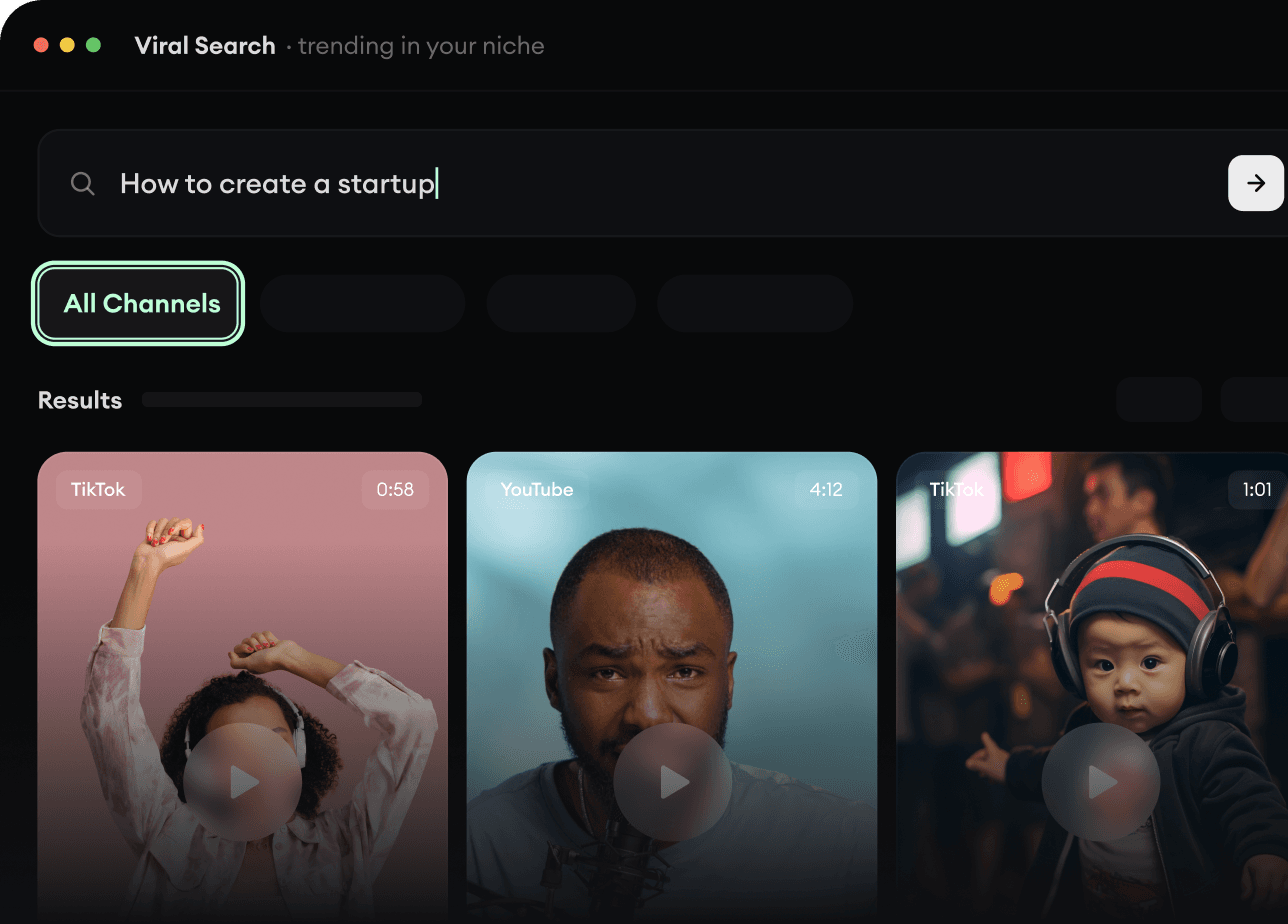
RevidAI's Viral Search and Channel Watcher surface the formats, creators, and trends getting attention right now, then help you turn them into ideas of your own.
Discover winning video formats in your niche
Follow creators and channels that matter
Start with proven ideas instead of guessing
2
Turn An Idea Into A Story.
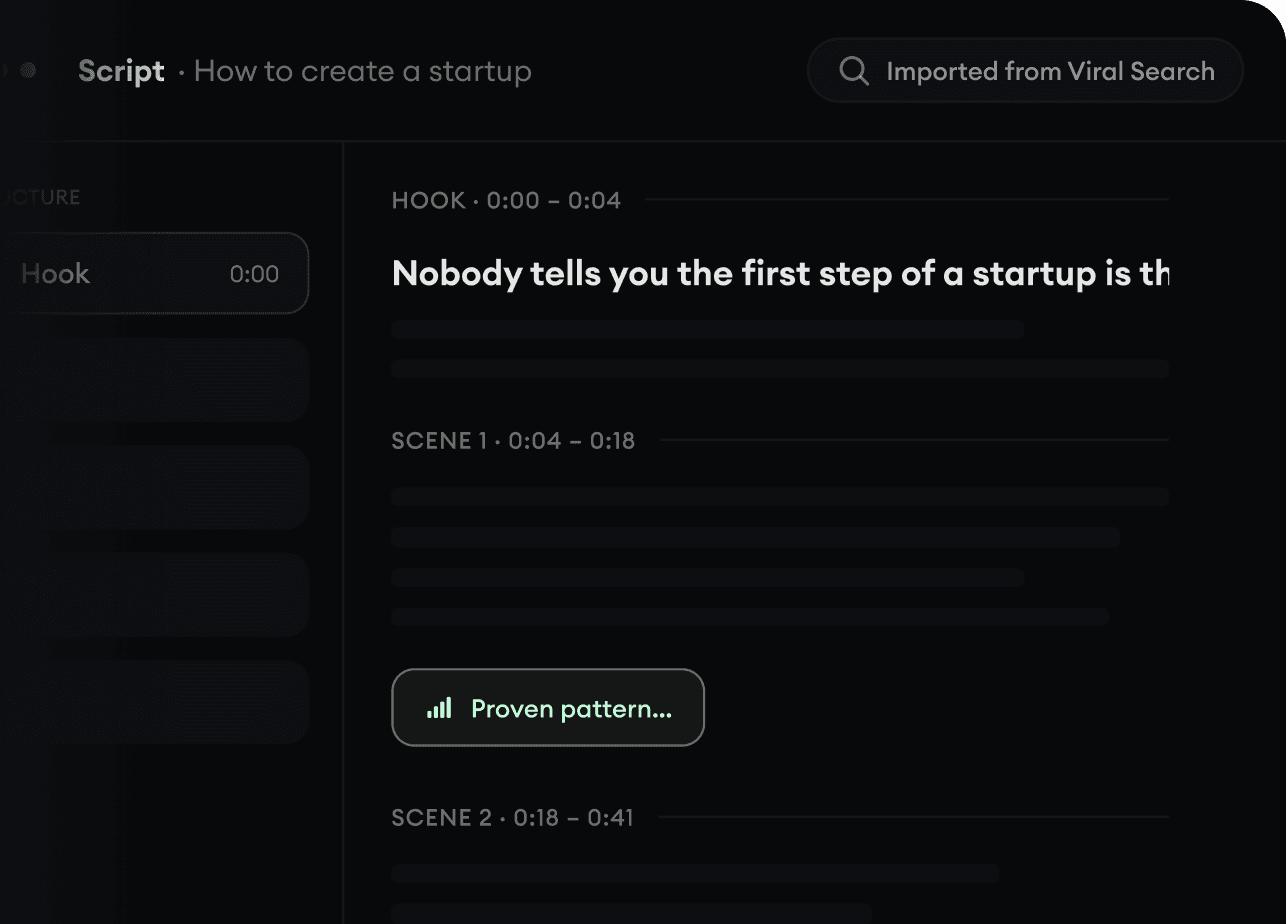
Found something worth making? Revid AI writes the script, suggests the structure, and turns links, prompts, or topics into complete video concepts.
Start with a prompt, topic, or URL
Generate scripts inspired by proven patterns
Build stories designed to keep people watching
3
Generate The Finished Video.
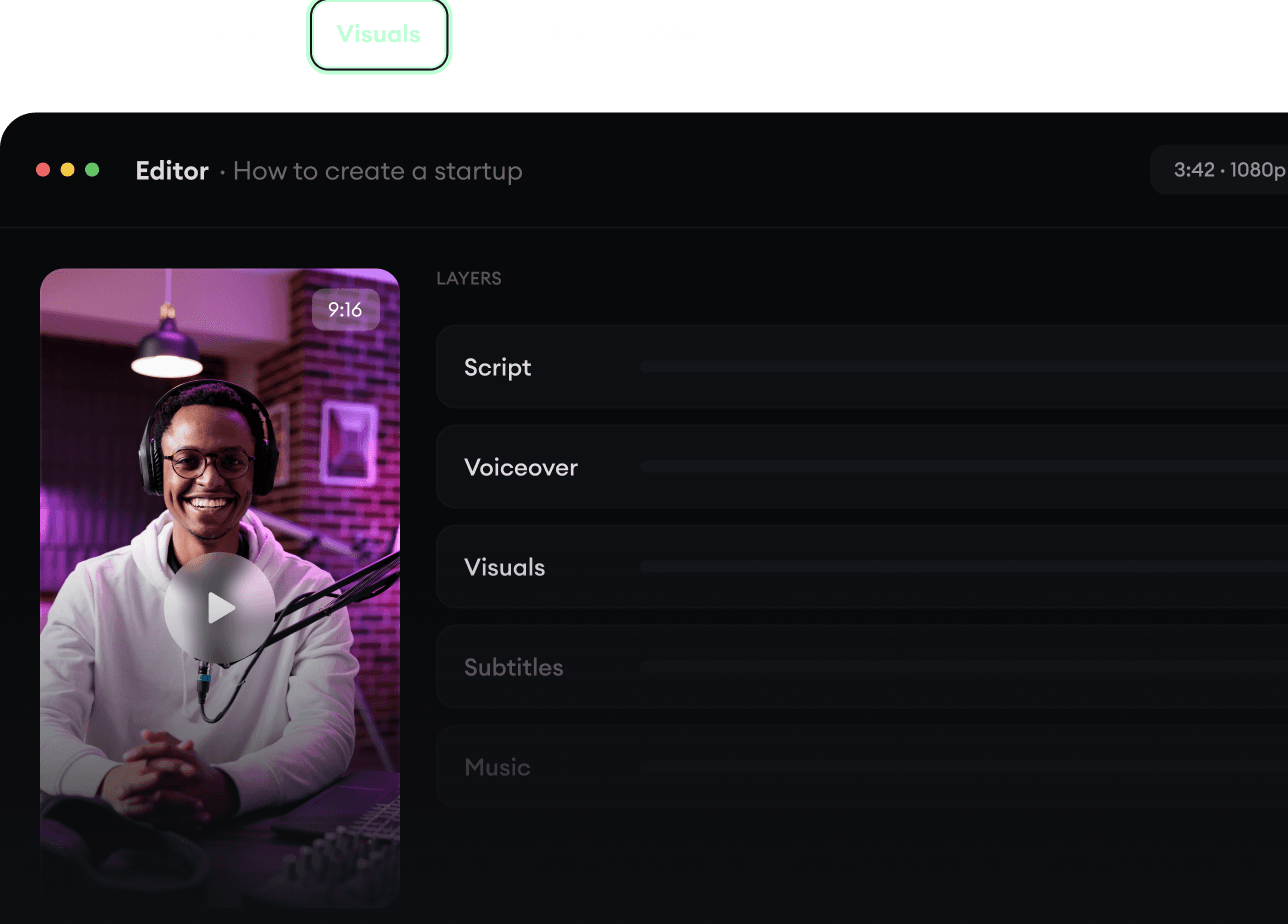
Script, voiceover, visuals, subtitles, and editing all come together in one workflow. No stitching together five different tools.
Turn text into complete, multi-minute videos
Generate everything in one place
Refine the result in the editor
4
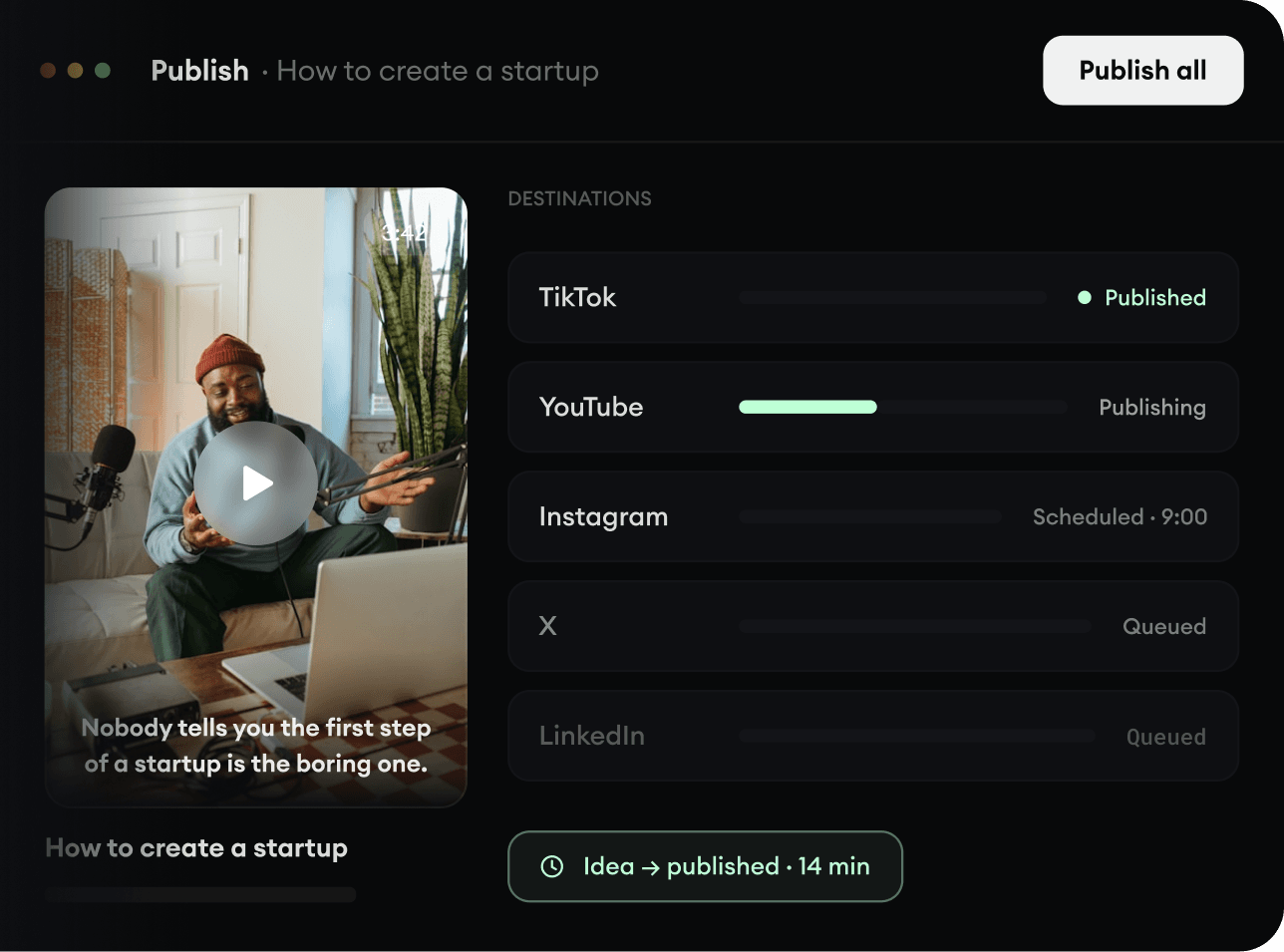
Publish Everywhere.
Share your videos to TikTok, YouTube, Instagram, and wherever your audience is.