On this page
You can earn money from YouTube without AdSense through sponsorships, affiliate links, merch, digital products, Patreon-style fan funding and video licensing. None of these need the YouTube Partner Program (YPP). AdSense only matters for money YouTube pays you itself: ad revenue, Premium revenue, channel memberships, Super Thanks and YouTube Shopping.
The ad route is getting harder. From February 1, 2027, new YPP applicants need 1,000 subscribers plus 8,000 qualified watch hours in the last 365 days or 20 million qualified Shorts views in the last 90 days, twice today's bar (the current numbers are in our YouTube Shorts statistics). Channels that build income outside AdSense get paid without waiting for that threshold.
Do you need AdSense to make money on YouTube?
No. AdSense for YouTube is the payment account YouTube uses for YPP earnings. Joining YPP requires a linked AdSense for YouTube account, along with living in an eligible country, 2-Step Verification and no active Community Guidelines strikes. Money that brands, affiliate programs, your store or your fans pay you never goes through it.
"Without AdSense" can mean two different things:
- No YPP at all. You earn from sponsorships, affiliate links, your own products, Patreon and licensing. All of these work from your first video.
- YPP without ad revenue. The lower YPP tier (500 subscribers, 3 valid public uploads in the last 90 days, plus 3,000 qualified watch hours in the last year or 3 million qualified Shorts views in the last 90 days) opens fan funding, YouTube Creator Partnerships and YouTube Shopping, but not ad revenue. You still link AdSense to receive that money.
How creators make money on YouTube without ads: 7 options compared
| Method | Needs YPP or AdSense? | When you can start | Who pays you |
|---|---|---|---|
| Sponsorships and brand deals | No | Once you have a defined niche | The brand |
| Affiliate marketing | No | From your first video | The affiliate program |
| Merch | No (YouTube Shopping does) | Once viewers recognize your channel | Your store |
| Digital products and services | No | From your first video | Your customers |
| Patreon, Ko-fi, Buy Me a Coffee | No | Once you have repeat viewers | Your fans, via the platform |
| Video licensing | No | When you own a clip others want | The licensing company |
| Per-view programs on other platforms | No YouTube requirement | When you meet each platform's bar | TikTok, Facebook or X |
| Channel memberships, Super Thanks, Super Chat | Yes (lower YPP tier) | 500 subscribers plus watch hours or Shorts views | YouTube, through AdSense |
| Ad and Premium revenue | Yes | 1,000 subscribers plus watch hours or Shorts views | YouTube, through AdSense |
The first seven rows are the methods below. The last two are YouTube's own programs, listed so you can see where AdSense starts.
Why AdSense alone rarely pays the bills
YouTube defines RPM as your earnings per 1,000 views after its revenue share, and it publishes no standard RPM, because the number swings with your niche and your audience's country. On Shorts it is low: in AIR Media-Tech's September 2026 analysis of 274 channels, Shorts RPM was 3% to 14% of long-form RPM in almost every niche, and US audiences paid $0.328 per 1,000 Shorts views against $0.166 for the UK. For most of those channels, Shorts brought in less than 2% of revenue while generating 1% to 35% of views.
Three rules cut into ad income further:
- Content ID. Any Short longer than one minute with an active Content ID claim is blocked globally and cannot be monetized. On long videos, a claim can send the ad money to the rights holder.
- Monetization policies. Mass-produced AI content made from generic templates, and videos that only read out text you didn't write, are not allowed to monetize, and the reused content policy applies to the whole channel.
- The 2027 Shorts rule. From February 1, 2027, earning Shorts ad revenue in a given month requires 10 million qualified Shorts views in the last 90 days, even for channels already in YPP.
For what ads and Shorts actually pay at different sizes, see how much YouTubers make.
1. Sponsorships and brand deals
Sponsorships are usually the largest income stream that never touches AdSense. Brands are moving money toward creators: in LTK's September 2025 CMO study with Northwestern University's Retail Analytics Council, 97% of CMOs said they will expand creator marketing budgets in 2026 (more in our UGC statistics). In a Google and Kantar study of US video viewers, 78% agreed that YouTube has the most trusted creators for product recommendations.
How to land your first deal:
- List brands your viewers already buy from. Check your comments and, if you use affiliate links, which products get clicks.
- Build a one-page media kit. Your niche, audience countries and ages from YouTube Studio analytics, your recent average views per video, and two or three past videos that fit the brand.
- Pitch a specific idea, not your stats. Brands answer pitches that show where their product fits in a video you were going to make anyway.
- Use YouTube's own marketplace when you qualify. The lower YPP tier gives access to YouTube Creator Partnerships, YouTube's program for connecting brands with creators.
- Price usage rights separately. In Aspire's 2026 research, 67% of brands included paid usage rights in the creator's initial contract or rate, and many creators price usage at 15% to 35% of their base rate per 30 days. Aspire also found 77% of brands repurpose creator content in their paid ads, so assume your segment may become an ad.
A pitch you can adapt:
Subject: [Channel] x [Brand]: a [video format] idea for [product]
Hi [name], I run [channel], where [who your viewers are] watch [your topic]. My recent videos average [views] views, mostly from [top countries]. I'm planning a video on [topic], and [product] fits the part where I [specific moment]. I'd show it in use, not read a script. Media kit attached. Open to a quick call this week?
When a deal goes live, turn on the paid promotion setting in YouTube Studio and say the partnership out loud in the video. Disclosure protects you with viewers and with advertising rules.
2. Affiliate marketing
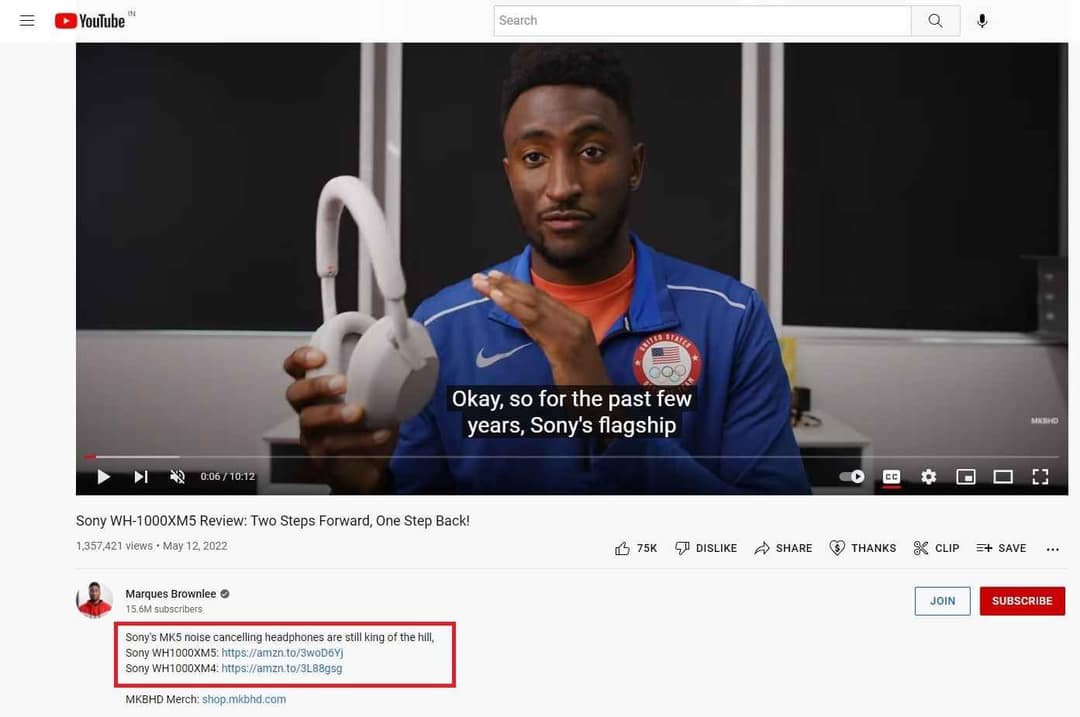
Affiliate marketing pays you a commission when a viewer buys through your tracked link. It works from your first video, because the program pays per sale, not per subscriber.
How to set it up:
- Join programs that match your content. Amazon Associates for physical products, Wise for money transfers, ClickBank for digital products, or the in-house program of a brand you already use.
- Put links in the first lines of the description, where they show before viewers expand it. Add a pinned comment with the same link.
- Mention the product when you use it on screen, not in a list at the end.
- Disclose that you earn a commission in the description and in the video.
The formats that convert are the ones viewers watch right before buying: reviews, comparisons, "what I use" setups and tutorials. If you sell physical products yourself, Revid's product video generator turns a product page into a short demo video using the page's real photos.
Prompt to try
Create a 45-second vertical review video comparing two budget wireless earbuds for students. Open with the hook "I tested both for a month, and only one is worth $50." Use clean close-up product shots, on-screen pros and cons, and end by pointing viewers to the links in the description.
3. Selling merch
Merch turns your most loyal viewers into customers and works without YPP, as long as you sell from your own store. Print-on-demand platforms such as Spring (formerly Teespring), Shopify apps and Spreadshop handle printing and shipping, so you only design and promote.
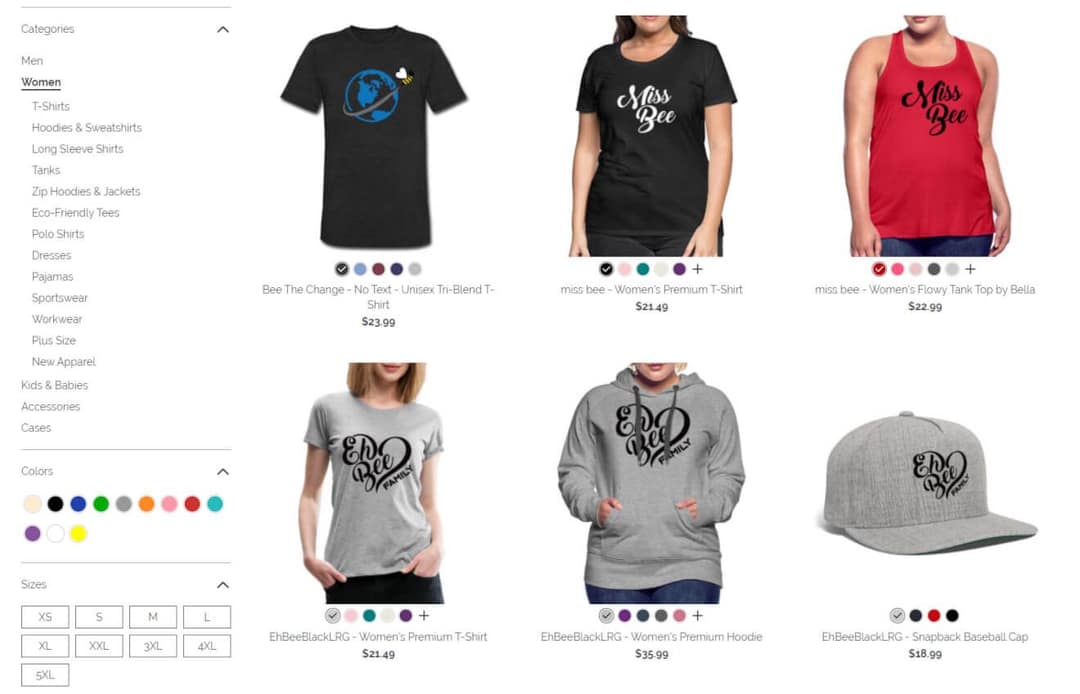
Design around your channel's inside jokes, catchphrases and recurring characters rather than a plain logo: viewers buy what signals they belong to the audience. Link the store in your descriptions and pinned comments. YouTube Shopping, which shows products inside YouTube, needs the lower YPP tier.
4. Digital products, courses and services
If your channel teaches something, your own product usually earns more per buyer than merch or affiliate links. Options that work without YPP:
- Templates, presets and checklists for viewers who want your exact setup.
- Courses that go deeper than your free videos.
- Coaching, consulting or done-for-you services for viewers who would rather pay you to do it.
- Your business's own product. For founders and small business owners, the channel is a sales channel: one customer can be worth more than months of ad revenue.
Decision rule: if viewers keep asking the same question in your comments, that question is your first product.
Prompt to try
Make a 30-second vertical video promoting a free Notion budgeting template for freelancers. Start with the hook "You keep asking how I track my income, so here is my exact setup." Show the template in a calm, minimal motion graphics style and close with where to download it.
5. Fan funding: Patreon, Ko-fi and channel memberships
Patreon, Ko-fi and Buy Me a Coffee let viewers pay you directly every month or as a one-off tip, with no YouTube requirement. They pay off once you have a core of repeat viewers who would miss your videos.
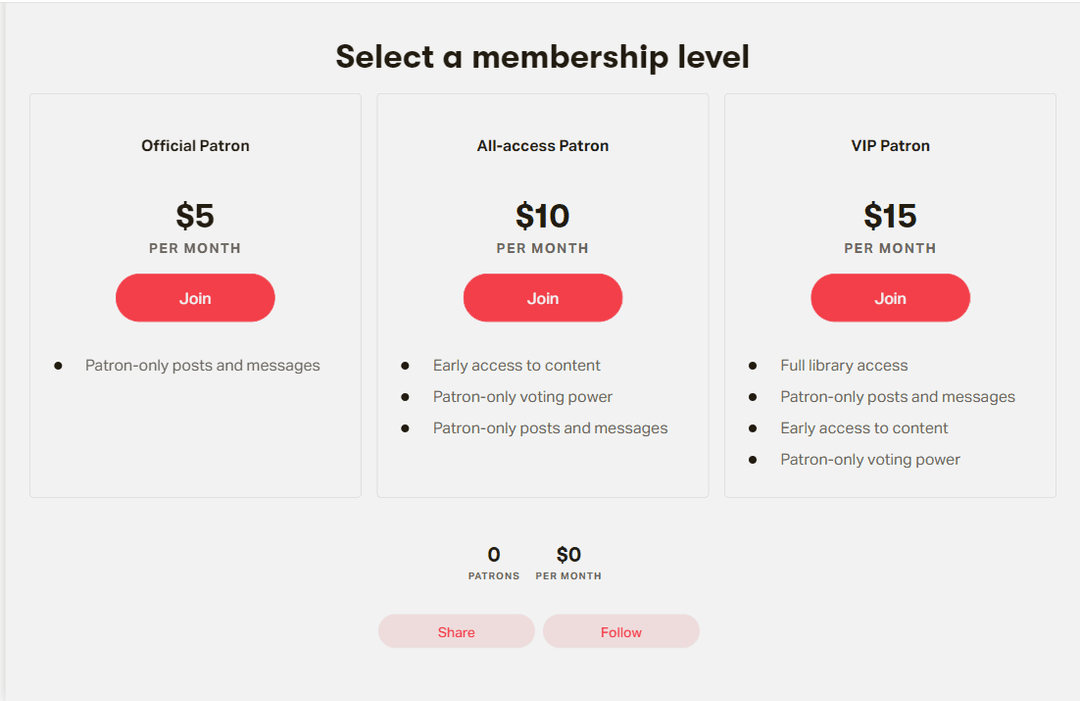
A simple three-tier structure:
| Tier | What members get |
|---|---|
| Supporter | Patron-only posts and a thank-you |
| Insider | Early access to videos and a vote on upcoming topics |
| Inner circle | Everything above, plus bonus videos or your full archive |
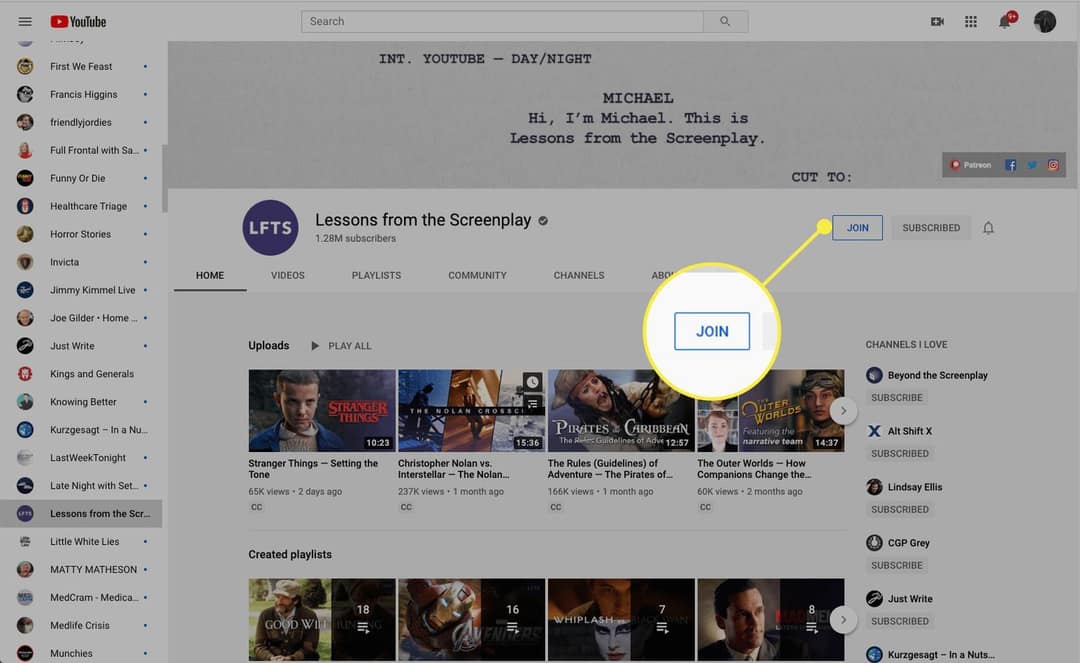
YouTube's own version is channel memberships, along with Super Thanks and Super Chat. Viewers join with the Join button on your channel page, but these are YPP fan funding features: they need the lower YPP tier and pay out through AdSense.
6. License your videos
If you film something unexpected, funny or newsworthy, media companies may pay to use it. Licensing companies such as ViralHog and Jukin Media sign the rights to your clip, sell it to news outlets, TV shows and publishers, and pay you a share of the fees.
This fits original, real-world footage: animals, stunts, weather, events you happened to catch. It does not fit commentary or compilations built on other people's clips. Before you sign, check whether the agreement is exclusive and for how long, because an exclusive deal can stop you from licensing the same clip elsewhere.
7. Repurpose your videos for platforms that pay per view
Your YouTube videos can earn on platforms with their own creator programs, none of which involve AdSense. Cut each long video into vertical clips and post them where views pay:
- TikTok Creator Rewards Program: you must be 18 or older, have a personal account, 10,000 followers and 100,000 video views in the last 30 days. Only videos at least one minute long earn, a video starts earning after 1,000 qualified For You feed views, and TikTok publishes no fixed rate. Details in our guide to TikTok monetization for small creators.
- Facebook Content Monetization: invite-only, paying for reels, Stories, and photo and text posts. Facebook's Creator Fast Track, launched in March 2026, pays $1,000 a month for 3 months to creators with at least 100,000 followers on Instagram, TikTok or YouTube ($3,000 a month above one million), plus immediate access to Content Monetization.
- X Original Content Rewards: according to reports, X replaced Creator Revenue Sharing with this program on September 7, 2026. It requires Premium, 500 verified followers and 500,000 home timeline views from verified users in 90 days.
Turn one long video into clips with Revid
- Paste your YouTube link into Revid's YouTube Clip Maker. The AI picks the strongest moments and cuts them into vertical clips.
- Pick one of 30 caption styles and adjust each clip in the timeline editor, so every clip opens on its own hook.
- Export in 1080p or 4K, or publish and schedule straight to TikTok, Instagram and YouTube from one queue.
For a single destination, the YouTube to TikTok converter and the YouTube to Instagram converter do the same job. New accounts get free credits to try clip creation, and regular use then runs on a paid plan's monthly credits, from $39/month.
How to monetize video content without ads: a revenue model by stage
A revenue model for a YouTube channel stacks income streams as the audience grows, instead of waiting for ad eligibility.
| Stage | Add this income stream | Why it fits now |
|---|---|---|
| No audience yet | Affiliate links on reviews and tutorials | Pays per sale, not per subscriber |
| Steady views in one niche | Sponsorships and a first digital product | Brands and buyers want a defined audience |
| A core of repeat viewers | Patreon or Ko-fi tiers, merch | Fans pay to support you directly |
| Lower YPP tier reached | Channel memberships, Super Thanks, Creator Partnerships | YouTube's fan funding and brand deals open |
| Full YPP reached | Ad and Premium revenue on top | Ads become one stream among several |
Decision rules:
- If your videos answer buying questions ("best X for Y", "X vs Y"), lead with affiliate links.
- If your audience shares a profession or a problem, sell a product or service.
- If you capture unusual real-world moments, submit them for licensing.
- If you already have long videos, clip them for TikTok and Facebook before making anything new.
If you would rather not appear on camera or film at all, see ways to make money on YouTube without making videos.
FAQ
Can you make money on YouTube without ads?
Yes. Sponsorships, affiliate commissions, merch, digital products, Patreon and licensing all pay without a single ad on your videos, and most work before you qualify for YPP.
Is AdSense the same as the YouTube Partner Program?
No. YPP is the program that shares ad and Premium revenue and opens fan funding; AdSense for YouTube is the account YPP pays you through. You need both for YouTube's own payouts and neither for direct deals with brands or fans.
Who pays creators directly for short video views without brand deals?
TikTok's Creator Rewards Program, YouTube's Shorts revenue sharing (inside YPP), Facebook Content Monetization (invite-only) and X's Original Content Rewards pay based on views or performance. Each has its own thresholds, and TikTok and YouTube publish no fixed rate per 1,000 views.
Can a small channel get sponsorships?
Yes. Brands pay for access to a specific audience, so a small channel with a clear niche and an engaged comment section can land deals, especially with brands its viewers already use. Lead with a concrete video idea rather than your subscriber count.
Can you make money on YouTube Shorts without AdSense?
Shorts ad revenue needs YPP and AdSense, but Shorts can carry sponsor integrations and send viewers to your long videos, store or Patreon. More in our guide on whether you can make money off YouTube Shorts.