Da prompt a video trasforma una descrizione scritta in un video finito. Descrivi la scena, la storia e lo stile che vuoi, e Revid scrive la narrazione, genera le immagini come video IA o immagini IA animate, poi aggiunge voce fuori campo, musica, effetti sonori e sottotitoli. Scegli una durata qualsiasi da 8 secondi a 5 minuti.
Il tuo prompt video
💡 Descrivi con parole tue cosa vuoi vedere nel video. L'IA genererà uno script in base al tuo prompt.
2,516 video creati con Revid nelle ultime 24h
Pronto in pochi minuti · Modifica tutto prima di pubblicare
Esempi di risultati
Media: Stock videosRatio: 9:16
Altri strumenti da provare:
o esplora gli oltre 42 altri strumenti per creare esattamente il video che vuoi
**Recommended preset: Ultra Realism**
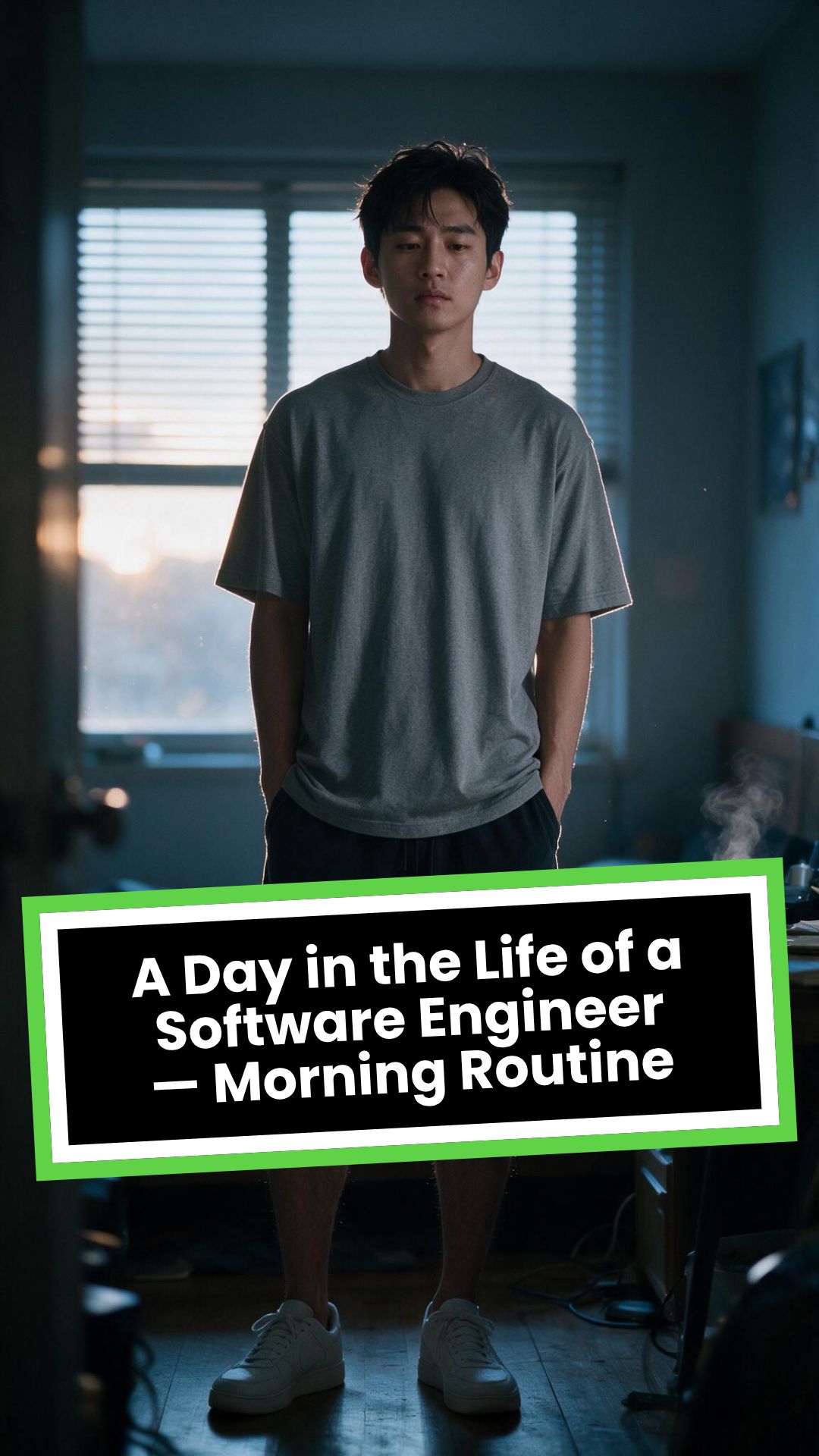
# A Day in the Life of a Software Engineer — Morning Routine
## STARTING FRAME
Extreme macro close-up of a smartphone resting face-up on a dark wooden bedside table in a quiet apartment bedroom before sunrise. The alarm reads **6:30 AM** in crisp white digits. The edge of the phone, tiny dust particles on the table, and the faint reflection of the screen are sharply detailed.
Several feet behind it, a young Asian man in his late twenties lies asleep beneath slightly rumpled bedding. He is only a soft, indistinct silhouette because of the extremely shallow depth of field. Cool blue-grey morning light leaks through partially closed curtains, creating faint horizontal shadows across the room.
A closed laptop, sleeping monitor, mechanical keyboard, notebook, headphones, water bottle, and hoodie resting over a desk chair are visible only as subdued background shapes.
The room is completely still.
Animate forward from this exact frame.
---
## [0s–3s] — THE ALARM
The camera remains extremely low, almost level with the bedside table.
For the first moment, nothing moves.
Then the alarm begins ringing.
The smartphone vibrates against the wooden surface in short mechanical pulses. One corner taps faintly against the table with each vibration. The glow from the screen reflects subtly across the wood grain.
Keep the sleeping man fully blurred in the background.
Do not reveal his face yet.
The curtains move almost imperceptibly from a weak draft. Distant traffic hums outside. A soft electrical ambience comes from the sleeping computer monitor.
Allow the alarm to interrupt the quiet rather than immediately triggering a reaction.
---
## [3s–6s] — THE FIRST REACTION
Begin a very slow rack focus away from the phone.
The alarm digits gradually soften.
The sleeping man’s shoulder, face, pillow, and blanket slowly resolve into focus.
He does not immediately wake.
His eyebrows contract slightly.
His head presses deeper into the pillow as though instinctively trying to escape the sound.
One hand shifts beneath the blanket.
His fingers curl faintly against the fabric.
The bedding moves only a few centimetres as his body reacts before his mind is fully awake.
The voice-over begins quietly:
> “Most days aren’t my best days.”
The delivery is close, restrained, personal, and slightly tired. It should sound like a private thought rather than narration for an audience.
---
## [6s–10s] — WAKING
His eyes open slowly.
They remain unfocused.
He blinks once.
A longer pause.
Then he blinks again.
His gaze drifts toward the sound without turning his head completely.
One hand emerges from beneath the blanket and reaches toward the bedside table. His arm moves heavily, dragging slightly across the mattress.
His fingers miss the phone on the first attempt.
They brush against the charging cable, slide across the table, then finally reach the screen.
He presses the alarm off.
The sound stops abruptly.
The room becomes quiet again.
Let the silence remain for a full beat.
His hand stays resting beside the phone rather than instantly returning to bed.
He exhales slowly through his nose.
The camera makes an almost imperceptible push toward him.
No dramatic expression. No exaggerated yawn.
Only the slow recognition that the day has started.
---
## [10s–14s] — SITTING UP
He turns onto one side.
The blanket pulls across his torso and gathers naturally around his waist.
His elbow presses into the mattress.
The mattress compresses visibly beneath his weight as he pushes himself upward.
His head rises last.
His hair is slightly flattened on one side and falls unevenly across his forehead.
He moves both legs toward the edge of the bed.
One foot searches for the floor.
Then the other.
His bare toes make contact first, followed by the rest of each foot.
He remains seated at the edge of the mattress.
His back curves slightly.
His shoulders hang low.
His hands rest loosely beside his thighs.
He stares at the floor without really looking at anything.
Hold this moment.
The creased bedding behind him should remain compressed where his body had been.
The voice-over continues after a natural pause:
> “But I remember why I do this…”
---
## [14s–17s] — STANDING
He shifts his feet slightly farther apart.
His weight moves forward.
His elbows press lightly against his thighs before he pushes himself upright.
His hips rise first, followed by his shoulders.
Show realistic balance adjustment as his body settles onto both feet.
He stands still for a brief moment.
His loose neutral-coloured T-shirt falls naturally back into place. His shoulders remain slightly lowered. His breathing is calm but heavy with sleep.
The camera stays behind him at approximately waist-to-shoulder height, observing rather than presenting him.
He takes two slow steps toward the bedroom wall.
His bare feet make soft contact with the floor.
He runs his fingers along the wall for a moment before finding the light switch.
He presses it.
A warm bedside or ceiling practical light turns on.
Do not flood the entire room with brightness.
The warm light should gradually reveal wood, bedding, fabric, and skin while the cool morning light remains visible through the curtains.
His eyes narrow slightly in response.
---
## [17s–20s] — TOWARD THE BATHROOM
He turns toward the bathroom doorway and begins walking.
The camera follows several steps behind with restrained handheld drift.
His pace is slow and partially automatic.
He does not acknowledge the camera.
His arms hang naturally beside him.
His shirt moves subtly across his back with each step.
Use the bathroom doorway as a natural frame around his body.
As he crosses the threshold, briefly hold the bedroom in the background:
* the unmade bed;
* the silent phone;
* the closed laptop;
* the dark monitor;
* the hoodie over the chair;
* cool daylight still entering through the curtains.
The voice-over completes:
> “…and I get up anyway.”
The line should not swell emotionally. It should land quietly, almost as though he is reminding himself.
---
## [20s–25s] — THE BATHROOM
Follow him into a small, modern, lived-in bathroom.
Use one hidden natural transition as the camera passes behind the doorframe if necessary, but preserve the feeling of one continuous shot.
He reaches toward the bathroom light switch.
A soft neutral overhead light turns on.
The camera settles into a side angle where both his real profile and part of his reflection are visible. He never looks directly into the lens.
His face in the mirror appears tired but composed.
He reaches toward a simple toothbrush holder.
His fingers close around the toothbrush.
He turns the tap handle.
Water begins flowing into the basin with a steady, natural sound.
Small droplets strike the ceramic surface and collect around the drain.
He briefly passes the toothbrush beneath the water.
He picks up the toothpaste with his other hand.
His thumb flips open the cap.
He positions the tube above the brush and squeezes slowly.
The tube compresses naturally between his fingers.
A small line of toothpaste settles across the bristles.
He releases pressure, places the toothpaste beside the sink, and brings the toothbrush to his mouth.
He begins brushing with slow, absent-minded movements.
His free hand rests against the edge of the basin.
The water continues running softly for a moment before he reaches over and turns it off.
End with him brushing his teeth in silence while early-morning ambience fills the room.
No smile.
No inspirational pose.
No sudden burst of energy.
The morning has simply begun.
---
# CAMERA DIRECTION
* One continuous observational sequence whenever possible.
* Extreme macro lens for the opening alarm.
* Very shallow depth of field during the first six seconds.
* Slow rack focus from the alarm to the sleeping man.
* Subtle push-in while he wakes.
* Low bedside camera placement.
* Gentle handheld drift only after he stands.
* Restrained tracking movement toward the bathroom.
* Use the bedroom and bathroom doorframes as natural foreground obstruction.
* Slight parallax as the camera follows him.
* Side-angle bathroom composition with a partial mirror reflection.
* Camera movement must feel physically operated by a patient documentary filmmaker.
* No orbiting around the character.
* No floating camera.
* No passing through walls.
* No dramatic sweeps or crane movements.
* No rapid cuts.
* One concealed doorway transition is permitted for stability.
---
# CHARACTER PERFORMANCE
Use one consistent young Asian man in his mid-to-late twenties.
He should appear like a normal working software engineer rather than a fashion model.
Maintain:
* slightly messy morning hair;
* naturally tired eyes;
* realistic skin texture;
* ordinary body proportions;
* loose neutral T-shirt;
* comfortable shorts or pyjama trousers;
* bare feet;
* understated, believable posture.
His sleepiness should be communicated through timing and body weight.
He should:
* blink heavily;
* pause before each major movement;
* keep his shoulders slightly lowered;
* move his hands without perfect coordination immediately after waking;
* shift his weight realistically;
* walk quietly;
* remain unaware of the camera;
* never perform the voice-over on screen.
Do not make him appear severely exhausted, unwell, intoxicated, miserable, or emotionally distressed.
---
# ENVIRONMENTAL DETAIL
The apartment should feel modest, modern, believable, and personally inhabited.
Bedroom details may include:
* closed laptop;
* monitor in sleep mode;
* mechanical keyboard;
* notebook with a pen;
* headphones;
* charging cable;
* water bottle;
* desk chair;
* hoodie over the chair;
* soft curtains;
* plain bedding;
* digital alarm or smartphone.
These objects must remain secondary.
Avoid excessive RGB lighting, futuristic interfaces, glowing code, multiple giant monitors, hacker imagery, or stereotypical technology props.
The bathroom should include:
* small ceramic sink;
* ordinary mirror;
* toothbrush holder;
* toothpaste;
* hand towel;
* simple shelf;
* subtle tile reflections;
* minor signs of everyday use.
Avoid a spotless luxury hotel bathroom.
---
# LIGHTING AND COLOUR
* Begin with soft, cool, low-contrast dawn light.
* Use blue-grey illumination passing naturally through curtains or blinds.
* Let the alarm screen create a small local glow.
* Introduce warm practical light when he presses the bedroom switch.
* Preserve the contrast between cool exterior daylight and warm interior light.
* Use soft neutral or slightly warm bathroom lighting.
* Maintain natural skin tones.
* Use gentle cinematic contrast and realistic shadow falloff.
* Keep the overall palette muted, intimate, and grounded.
Avoid:
* neon colours;
* heavy teal-and-orange grading;
* artificial lens flares;
* dramatic rim lighting;
* fantasy glow;
* excessive darkness;
* overexposed bathroom lighting;
* motivational-commercial brightness.
---
# SOUND DESIGN
Keep the soundscape quiet, layered, and tactile.
### Bedroom ambience
* distant city traffic;
* faint room tone;
* soft electrical hum;
* subtle curtain movement;
* alarm vibration against wood;
* charging cable shifting;
* bedding sliding;
* mattress compression;
* breathing;
* bare feet touching the floor;
* quiet fabric movement;
* light-switch click;
* soft footsteps.
### Bathroom ambience
* bathroom switch;
* toothbrush lifted from the holder;
* tap handle turning;
* water striking the basin;
* toothbrush touching water;
* toothpaste cap opening;
* tube compressing;
* toothpaste settling on the bristles;
* slow brushing;
* subtle room echo.
The voice-over should sit gently above these sounds rather than overpowering them.
---
# VOICE-OVER
Use a young adult male voice.
Delivery must be:
* quiet;
* sincere;
* close-microphone;
* slightly tired;
* reflective;
* conversational;
* emotionally restrained.
Do not use trailer narration, motivational-speaker cadence, inspirational music swelling, or exaggerated pauses.
Voice-over text:
> “Most days aren’t my best days.
> But I remember why I do this…
> and I get up anyway.”
Begin the first sentence during the focus shift.
Deliver the second sentence while he sits at the edge of the bed.
Complete the final phrase as he walks into the bathroom.
---
# PHYSICAL REALISM
Every movement must show weight, resistance, and consequence.
Include:
* smartphone vibrating against wood;
* blanket tension as he moves;
* pillow compression;
* mattress deformation beneath his elbow and hips;
* feet searching for the floor;
* realistic centre-of-gravity changes while standing;
* natural cloth movement;
* proper hand contact with the switch;
* believable walking rhythm;
* accurate grip on the toothbrush and toothpaste;
* realistic water flow;
* toothpaste tube deformation;
* correct mirror behaviour;
* natural brushing motion.
Objects must not move unless physically touched or affected by the environment.
---
# CONTINUITY REQUIREMENTS
Maintain exactly the same:
* face;
* hairstyle;
* clothing;
* body proportions;
* skin tone;
* bedroom arrangement;
* bathroom arrangement;
* phone;
* bedding;
* toothbrush;
* toothpaste;
* lighting direction;
* time of morning.
The bathroom must feel directly connected to the bedroom.
The character must not change appearance between spaces.
The mirror reflection must match his real movement precisely.
---
# NEGATIVE CONSTRAINTS
* No direct eye contact with the camera.
* No on-screen dialogue.
* No lip-syncing to the voice-over.
* No influencer presentation.
* No vlog gestures.
* No smiling at the audience.
* No fast montage.
* No opening the laptop.
* No typing or coding.
* No breakfast sequence.
* No shower.
* No getting dressed.
* No leaving the apartment.
* No dramatic stretching.
* No exaggerated yawning.
* No energetic wake-up.
* No instant movement from bed to bathroom.
* No teleportation.
* No unrelated extra scenes.
* No rapid edits.
* No impossible camera paths.
* No random camera shake.
* No warped mirror reflection.
* No changing facial features.
* No changing clothes.
* No malformed hands.
* No extra fingers.
* No floating objects.
* No disappearing props.
* No changing room layout.
* No excessive slow motion.
* No text overlays.
* No captions.
* No logos.
* No watermark.
* No artificial motivational-commercial tone.
Formato visivoVideo IA
Stile visivoPhotography
VIDEO FINALE
Trasforma qualsiasi prompt in un video in 3 semplici passaggi
1 Scrivi il prompt del tuo video
Inizia scrivendo la descrizione nel nostro generatore IA da prompt a video. Un buon prompt video descrive la scena, l'azione, lo stile e l'atmosfera. Se non hai ancora un'idea, usa il Prompt Generator integrato per creare il prompt perfetto da testo a video.
2 Scegli stile visivo e contenuti multimediali
Scegli l'aspetto che vuoi dare al tuo video generato con l'IA. Il nostro strumento da prompt a video supporta diversi tipi di media: veri clip video IA, immagini IA animate, motion graphics dinamiche o video stock di alta qualità. Puoi anche scegliere il formato che preferisci, come 9:16 per TikTok e Reels, oppure 16:9 per YouTube.
3 Genera e modifica il tuo video IA
Clicca su genera e la nostra IA da testo a video trasformerà subito il tuo prompt in un video finito, completo di scene, voce fuori campo IA, musica di sottofondo e sottotitoli. Una volta generato, usa il nostro editor intuitivo per rifinire il tuo video IA creato dal testo, prima di scaricarlo e condividerlo sui tuoi canali social.
01
Descrivi una scena e guardala diventare un video pubblicato
Dal prompt al video è il formato creativo più diretto che offre Revid. Scrivi la descrizione del video che vuoi vedere, con immagini, atmosfera, personaggi e storia, e l'IA genera un video completo con filmati coerenti o immagini generate dall'IA, voce fuori campo, musica di sottofondo e sottotitoli. Non c'è nessun modello da scegliere e nessuna configurazione in più passaggi. Il prompt è l'intero brief creativo. Funziona per narrativa, contenuti in stile documentario, presentazioni di prodotto, video esplicativi, post per i social e tutto ciò che riesci a descrivere a parole.
02
Cosa fa il motore da prompt a video con la tua descrizione
Dopo aver ricevuto il prompt, l'IA di Revid analizza genere, tono, argomento e momenti visivi chiave, poi costruisce intorno a questi una struttura del video scena per scena. Seleziona o genera le immagini per ogni momento, scrive la narrazione in linea con i contenuti descritti, sceglie una traccia musicale da una libreria selezionata e sincronizza tutto in un breve video coerente. Lo strumento supporta immagini generate dall'IA a tre livelli di qualità, base, pro e ultra, così puoi adattare la qualità del risultato allo scopo del contenuto.
03
Da prompt a video per creator, marketer e insegnanti
I creator lo usano per testare rapidamente nuove idee prima di investire in una produzione curata. I marketer lo usano per generare video di prodotto e di brand a partire dai brief di campagna, senza dover coinvolgere un'agenzia. Gli insegnanti lo usano per creare video illustrativi su argomenti complessi, quando i filmati esistenti non corrispondono alla spiegazione necessaria. Poiché l'intero flusso parte da una descrizione testuale, non servono competenze particolari: basta saper esprimere ciò che vuoi vedere. Per uno storytelling guidato dai personaggi basato sullo stesso formato di prompt, il generatore di video POV applica lo stesso input con uno sguardo immersivo in prima persona.
Watch & Learn
Come sfruttare al meglio il nostro strumento da prompt a video?
Scopri come usare il nostro strumento da prompt a video per creare contenuti in modo intelligente ed efficace.
Ho scritto una sola frase e l'IA ha creato tutto questo video (tutorial da prompt a video)
Pubblico target
Per chi è questo strumento?
Creator di contenuti indipendenti
Passa dall'idea al video pubblicato senza il carico di produzione che di solito separa un concetto creativo dal lavoro finito, e pubblica nuovi contenuti veloce quanto generi idee.
Team marketing e agenzie
Trasforma i brief di campagna scritti in asset video per social media, annunci e presentazioni, senza aggiungere lavoro di produzione video a un team che ha già l'agenda piena.
Storyteller narrativi
Metti alla prova mondi di fantasia, personaggi e archi narrativi in formato video prima di impegnarti in una produzione completa, affinando rapidamente la direzione creativa a ogni generazione.
Insegnanti e formatori
Crea video illustrativi su misura per qualsiasi concetto che i filmati esistenti non riescono a mostrare in modo adeguato, offrendo agli studenti un contesto visivo che le sole spiegazioni scritte non possono dare.
Confronto
Perché scegliere Revid per generare video da prompt?
La produzione video tradizionale parte da un brief e finisce settimane dopo con un video finito. Da prompt a video elimina tutti i passaggi tra la descrizione creativa e il risultato.
Input
Revid da prompt a videoScrivi una descrizione testuale e genera subito
Produzione video tradizionaleRichiede sceneggiatura, storyboard e pianificazione della produzione prima di iniziare le riprese
Immagini
Revid da prompt a videoL'IA genera o trova immagini in linea con la descrizione di ogni scena
Produzione video tradizionaleRichiede riprese, acquisto di video stock o la commissione di motion graphics
Voce fuori campo
Revid da prompt a videoNarrazione IA generata e sincronizzata automaticamente con i contenuti visivi
Produzione video tradizionaleRichiede di registrare la voce o di ingaggiare un doppiatore per ogni progetto
Musica
Revid da prompt a videoMusica di sottofondo scelta da una libreria selezionata e aggiunta automaticamente
Produzione video tradizionaleLa musica va acquistata con licenza e adattata a mano alla timeline del video
Tempi di produzione
Revid da prompt a videoVideo completo pronto in pochi minuti a partire da un prompt di testo
Produzione video tradizionaleGiorni o settimane dal brief al video finale consegnato
Velocità di iterazione
Revid da prompt a videoGenera una nuova versione da un prompt aggiornato in pochi minuti
Produzione video tradizionaleOgni revisione richiede di rifare il montaggio, la registrazione o le riprese
Funzionalità / Vantaggio
Revid da prompt a video
Produzione video tradizionale
Input
Scrivi una descrizione testuale e genera subito
Richiede sceneggiatura, storyboard e pianificazione della produzione prima di iniziare le riprese
Immagini
L'IA genera o trova immagini in linea con la descrizione di ogni scena
Richiede riprese, acquisto di video stock o la commissione di motion graphics
Voce fuori campo
Narrazione IA generata e sincronizzata automaticamente con i contenuti visivi
Richiede di registrare la voce o di ingaggiare un doppiatore per ogni progetto
Musica
Musica di sottofondo scelta da una libreria selezionata e aggiunta automaticamente
La musica va acquistata con licenza e adattata a mano alla timeline del video
Tempi di produzione
Video completo pronto in pochi minuti a partire da un prompt di testo
Giorni o settimane dal brief al video finale consegnato
Velocità di iterazione
Genera una nuova versione da un prompt aggiornato in pochi minuti
Ogni revisione richiede di rifare il montaggio, la registrazione o le riprese
Video di esempio
Guarda cosa puoi creare con Convertitore da prompt a video
Esplora stili e possibilità diverse con Convertitore da prompt a video
Generatore IA da prompt a video per creator
Trasforma i prompt di testo in video straordinari con il nostro generatore IA da prompt a video. Descrivi la tua idea e guarda l'IA avanzata creare video professionali con immagini dinamiche, tempi perfetti e contenuti coinvolgenti.
Tecnologia IA avanzata per generare video da prompt
Conversione da testo a video con qualità professionale
Immagini dinamiche e tempi perfetti a partire dalle descrizioni
Perfetto per creator di contenuti e storyteller
Generazione creativa di video da prompt testuali
Libera la tua creatività con il nostro generatore da prompt a video. Trasforma qualsiasi descrizione testuale in un video accattivante grazie allo storytelling visivo basato sull'IA, perfetto per social media, marketing e intrattenimento.
Tecnologia IA creativa da prompt a video
Storytelling visivo a partire da descrizioni testuali
Generazione di video ottimizzata per i social media
Perfetto per contenuti di marketing e intrattenimento
Creazione impressionante da prompt a video
Crea video di qualità professionale da semplici prompt di testo con una tecnologia IA all'avanguardia. Il nostro generatore da prompt a video gestisce concetti visivi complessi e produce contenuti di qualità broadcast per qualsiasi scopo.
Generazione IA professionale da prompt a video
Produzione video di qualità broadcast a partire dal testo
Gestione di concetti visivi complessi
Adatto a un uso aziendale e professionale
Altri strumenti
Esplora strumenti video IA simili per Creazione video
Scopri altri modi per creare video coinvolgenti con i nostri strumenti basati sull'IA
FAQ
Domande frequenti
Che cos'è il da prompt a video?
Da prompt a video significa generare video con l'IA a partire da una descrizione testuale. Su Revid scrivi un prompt come "una volpe che esplora una foresta innevata all'alba, cinematografico" e ottieni un video completo: scene, narrazione, musica, effetti sonori e sottotitoli, pronto da pubblicare su TikTok, YouTube Shorts o Instagram Reels.
Come trasformo un prompt in un video?
Scrivi il prompt, scegli il tipo di media (video IA, immagini IA animate, motion graphics, video stock o i tuoi contenuti), imposta durata e formato, poi clicca su Genera. Revid divide l'idea in scene, genera le immagini e la voce fuori campo e apre il risultato nell'editor, così puoi modificarlo prima di esportarlo.
Che cos'è un prompt video?
Un prompt video è il testo da cui parte un generatore di video IA. Un buon prompt dice cosa si vede (soggetto e azione), dove accade, lo stile visivo, l'atmosfera e, se serve, la camera: per esempio "lenta ripresa aerea sulle strade di Tokyo al neon sotto la pioggia, stile cyberpunk, atmosfera calma".
Come scrivo un buon prompt video?
Sii specifico su soggetto, azione, ambientazione, stile e atmosfera, e tieni una sola idea per scena. Clicca su Esempi nel composer per trovare prompt già pronti, oppure su Prompt Generator per trasformare un'idea abbozzata in un prompt dettagliato. Puoi anche scrivere i prompt con il generatore di prompt video IA gratis.
Quali contenuti visivi può generare Da prompt a video?
Video IA, in cui i personaggi agiscono e la camera si muove (qualità Base, Pro o Ultra), immagini IA animate, motion graphics, filmati stock o i tuoi caricamenti. Puoi anche allegare immagini al prompt come riferimenti visivi e applicare un preset di stile, come anime o animazione 3D.
Quanto può durare un video creato da un prompt?
Da 8 secondi a 5 minuti. Lascia la durata su Auto e Revid adatta il video al tuo prompt, oppure imposta una durata precisa. I video sono in verticale 9:16 per impostazione predefinita e possono essere anche 16:9, 1:1 o 4:5.
Da prompt a video è gratis?
Le scene video IA richiedono un piano Revid a pagamento; immagini IA animate, motion graphics e filmati stock non sono riservati agli abbonati. Ogni generazione usa crediti e il costo esatto viene mostrato prima di generare.
Posso modificare il video dopo averlo generato?
Sì. Ogni video si apre nell'editor di Revid, dove puoi riscrivere la narrazione, rigenerare qualsiasi scena da un nuovo prompt, cambiare voce, musica o sottotitoli, poi esportare in 720p, 1080p o 4K.
Qual è la differenza tra Da prompt a video e AI Movie Maker?
Da prompt a video funziona per qualsiasi tipo di video e lo accompagna con una voce fuori campo. L'AI movie maker crea una storia in più scene in cui i personaggi parlano sullo schermo. Se vuoi uno stile preciso, parti da una versione di questo strumento con stile dedicato, come il generatore di video cartoon con IA o il generatore di video anime con IA.
Dal segnale al video pubblicato in quattro passaggi.
1
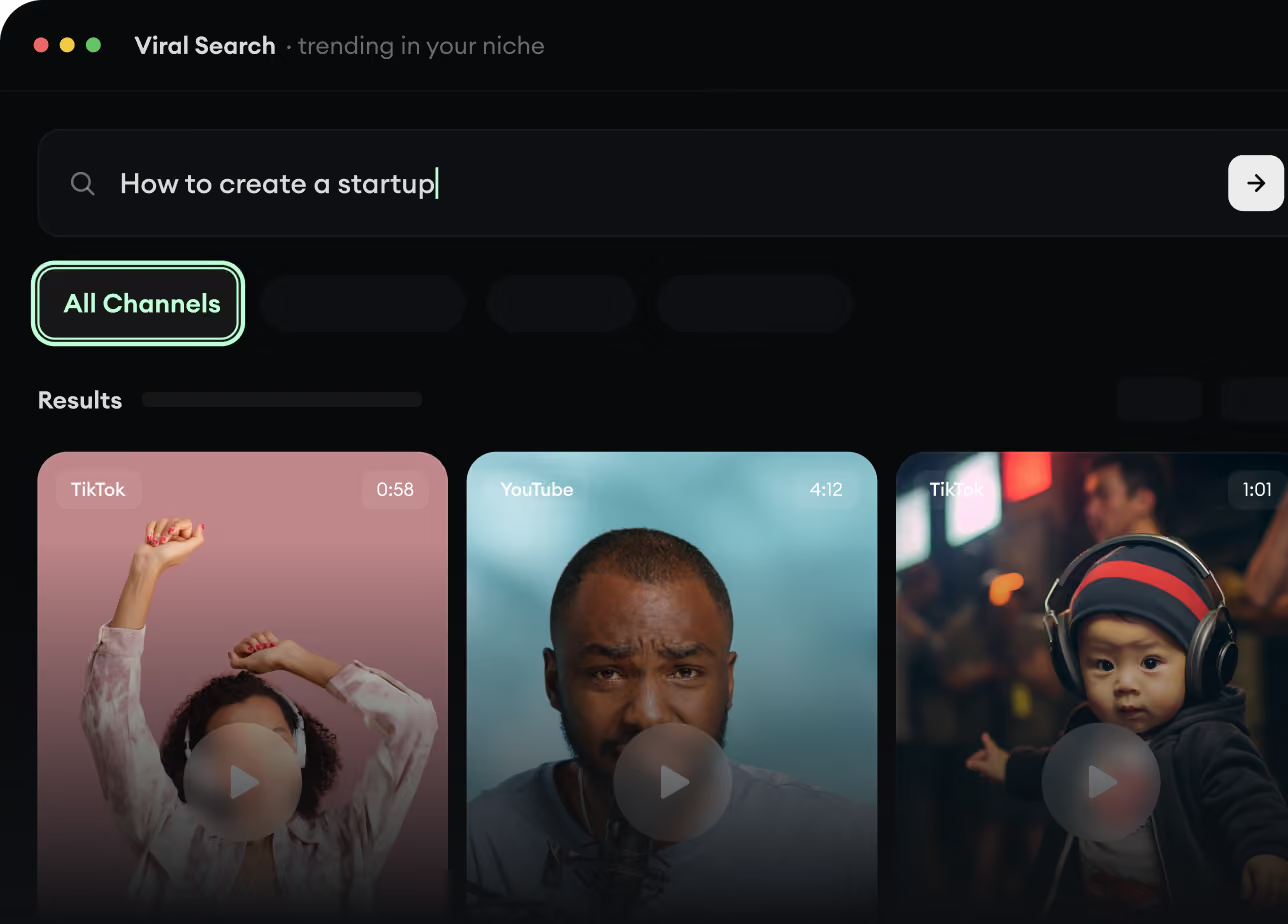
Trova video virali e tendenze.
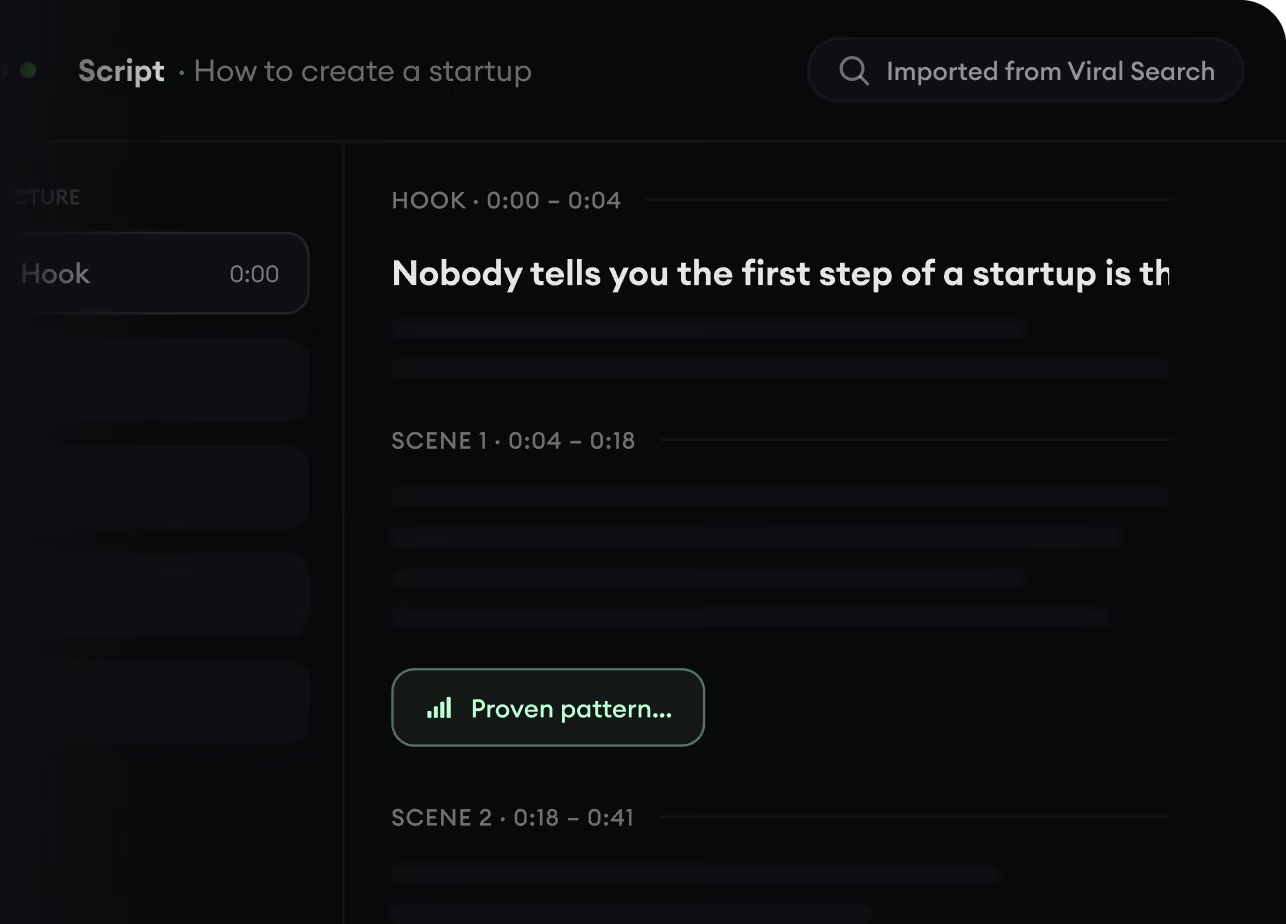
Viral Search e Channel Watcher di Revid AI fanno emergere i format, i creator e le tendenze che stanno attirando l'attenzione in questo momento, e ti aiutano a trasformarli in idee tue.
Scopri i format vincenti nella tua nicchia
Segui i creator e i canali che contano
Parti da idee collaudate invece di tirare a indovinare
2
Trasforma un’idea in una storia.
Hai trovato qualcosa che vale la pena realizzare? Revid AI scrive lo script, suggerisce la struttura e trasforma link, prompt o argomenti in concept video completi.
Parti da un prompt, un argomento o un URL
Genera script ispirati a schemi collaudati
Costruisci storie pensate per tenere incollato chi guarda
3
Genera il video finito.
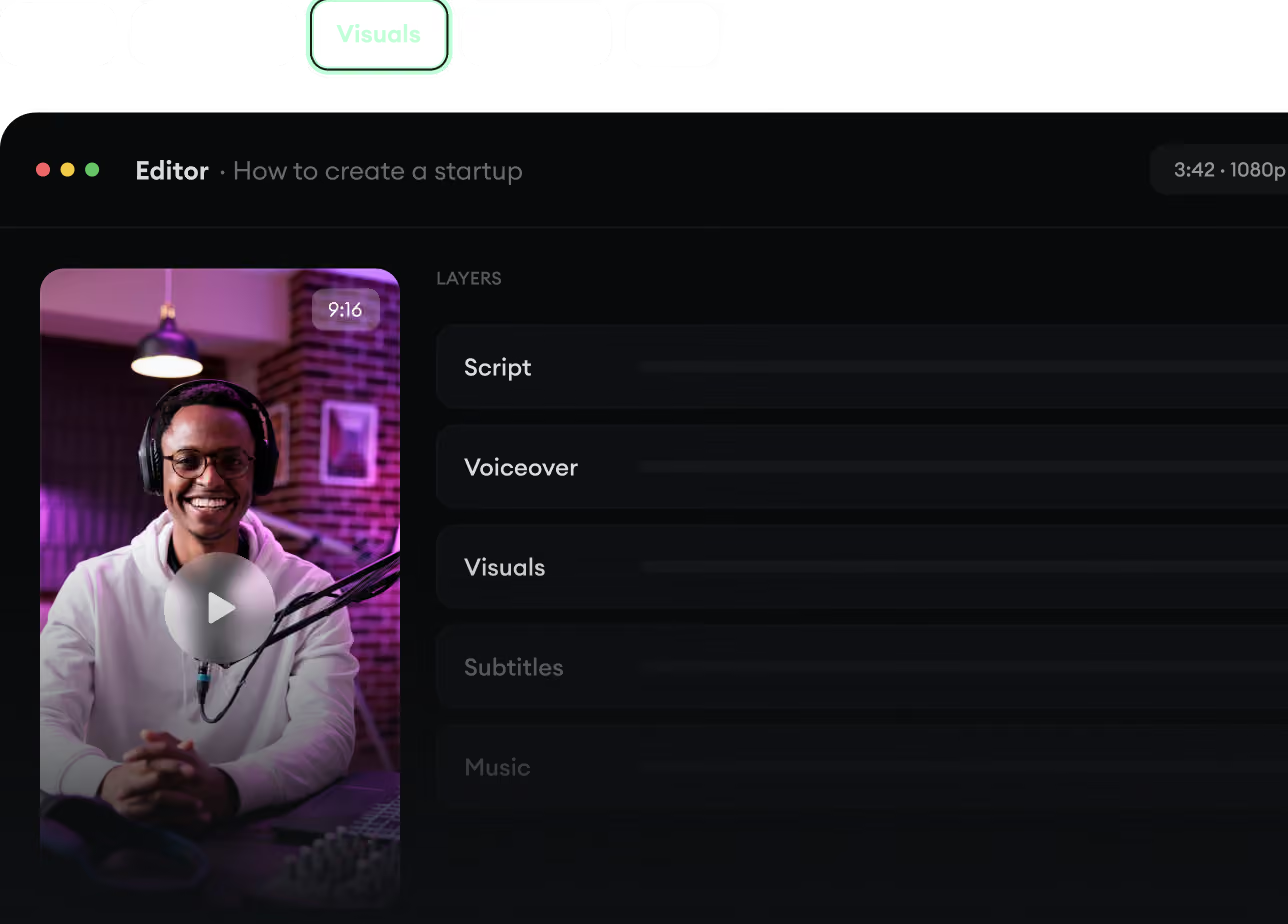
Script, voce fuori campo, immagini, sottotitoli e montaggio in un unico flusso di lavoro. Senza dover mettere insieme cinque strumenti diversi.
Trasforma il testo in video completi di più minuti
Genera tutto in un unico posto
Rifinisci il risultato nell’editor
4
Pubblica ovunque.
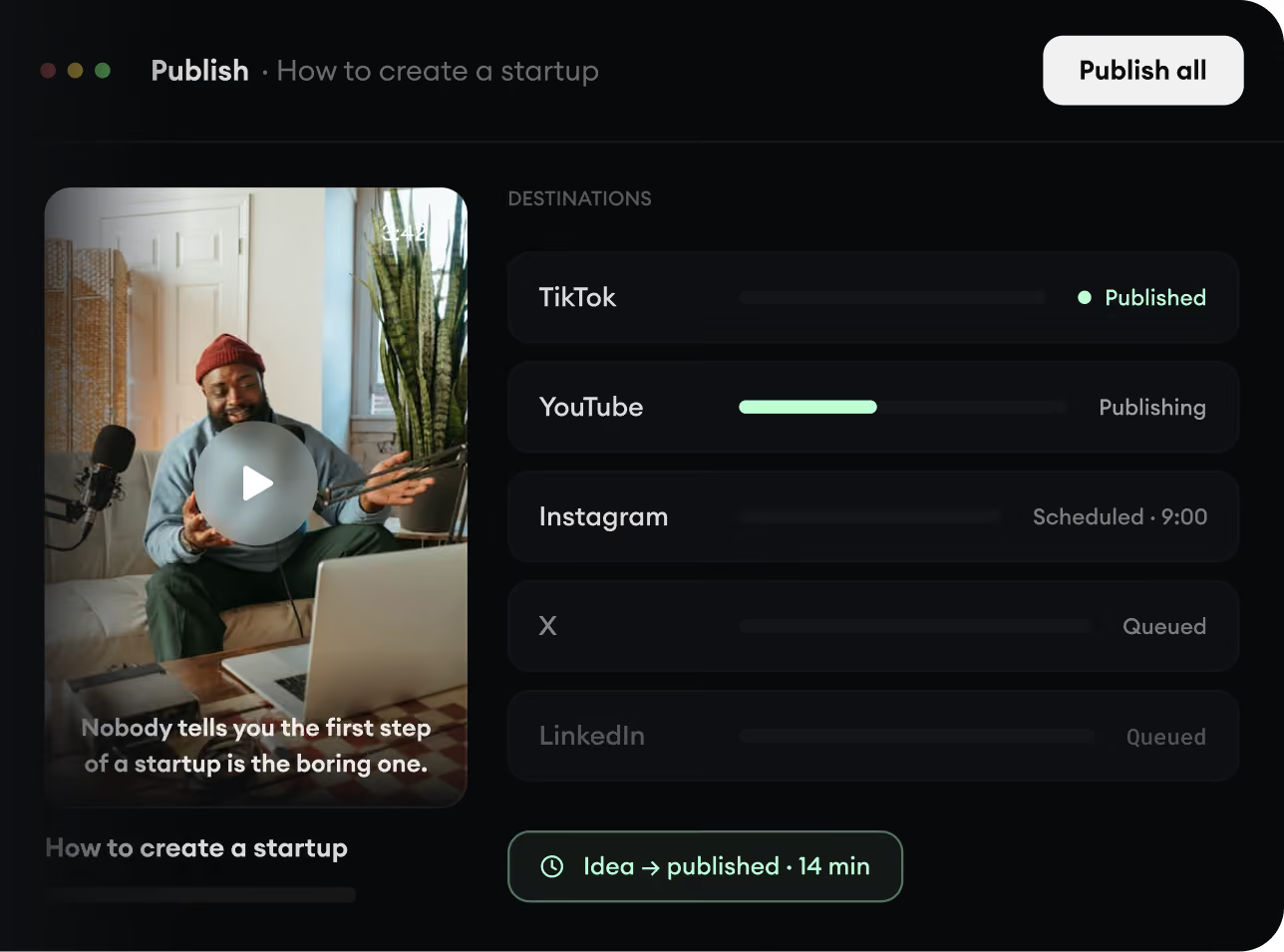
Condividi i tuoi video su TikTok, YouTube, Instagram e ovunque sia il tuo pubblico.