 1:00
raea: a 3D swamp, built from a task list
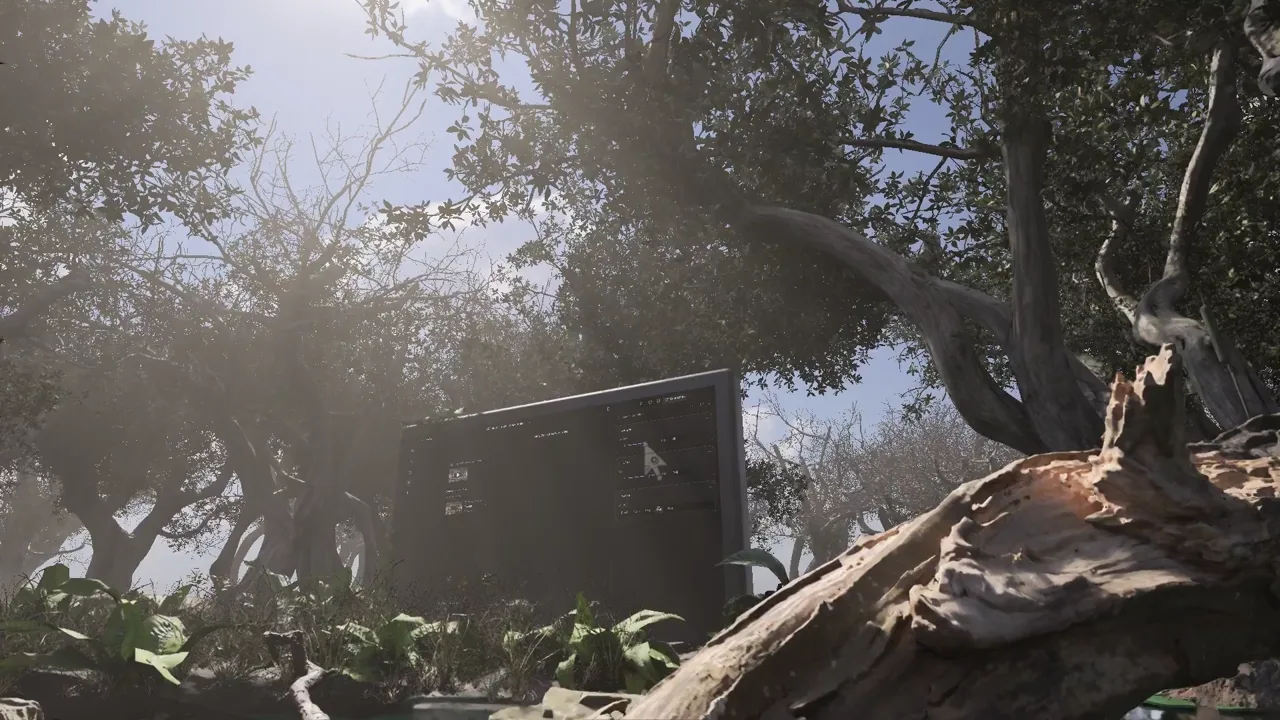
raea's author shows the desktop app: tasks for the agent, a 3D swamp scene rendered in the engine, then a review link to share the cut.
@shinyobjectz_ on X, Nov 17, 2026
Three ways to have a coding agent write your video, and one way to skip the code. Every fact below comes from the tools' own docs, licenses and pricing pages, checked November 22, 2026.
raea's clip comes from its author, HyperFrames' from its README. Remotion's README ships no demo video, so it has none here.
1:00raea's author shows the desktop app: tasks for the agent, a 3D swamp scene rendered in the engine, then a review link to share the cut.
@shinyobjectz_ on X, Nov 17, 2026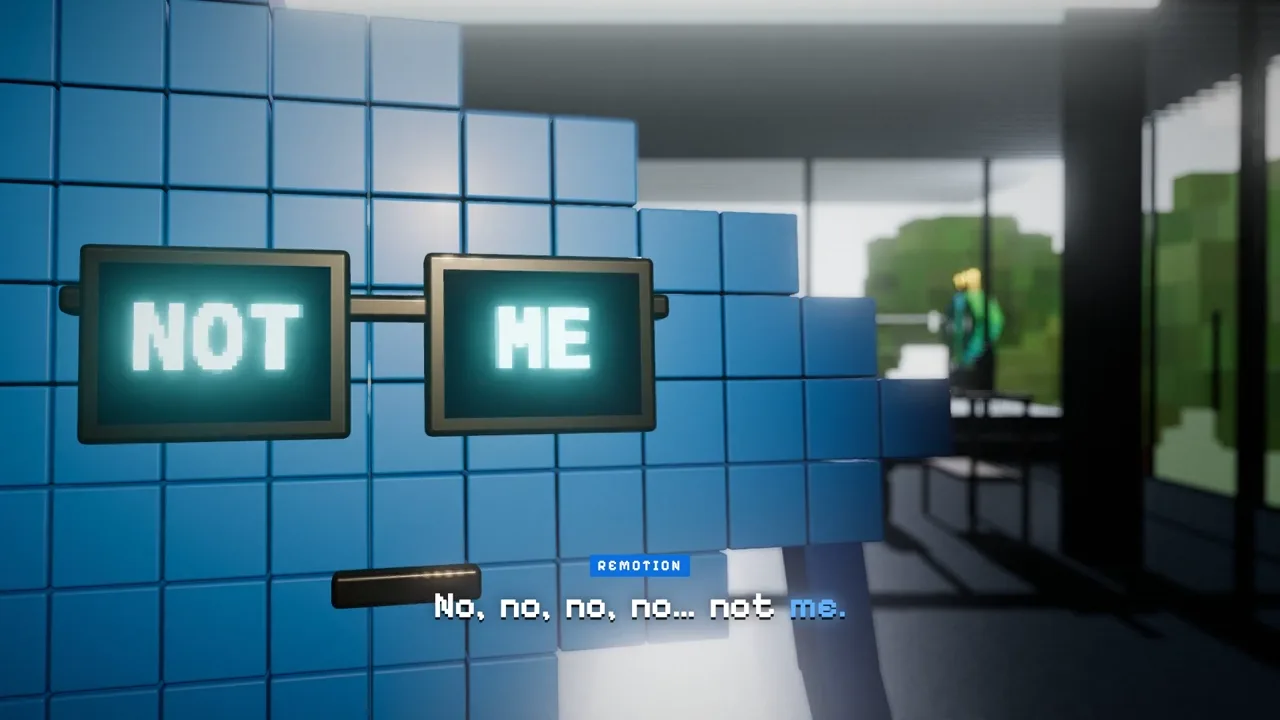 0:20
A voxel scene first made in Remotion, rebuilt in HyperFrames as HTML. HeyGen ships a skill that does this port for you.
HyperFrames README showcase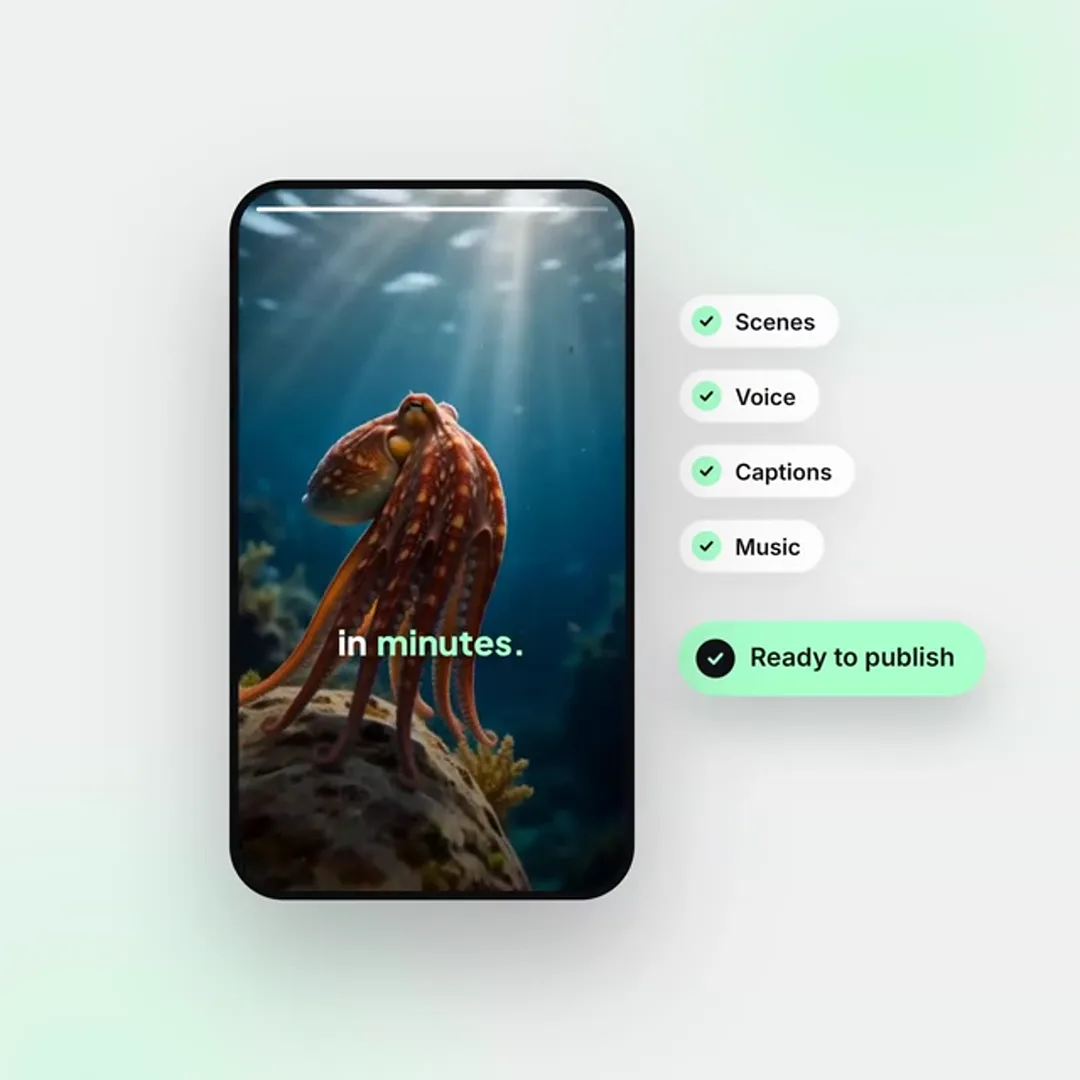 0:27
Revid's own intro, made in the motion graphics generator: a prompt box, two scenes, voice, captions and music, then the finished Short.
Made with RevidA render engine in Rust and Bevy that draws React and TypeScript video on your own GPU, without a browser.
The React video framework: components in, MP4 out, rendered in headless Chrome on your machine or in your cloud.
HeyGen's open-source framework: HTML, CSS and JavaScript in, MP4 out, rendered frame by frame in headless Chrome.
A browser app: describe the video, and its motion director (Claude Opus 5.5) writes, animates, voices and renders it for you.
| raea | Remotion | HyperFrames | Revid | |
|---|---|---|---|---|
| You write | React and TypeScript, with a Remotion-like API (Composition, Sequence, useCurrentFrame) | React components | HTML, CSS and JavaScript with data attributes for timing. GSAP, Lottie, Three.js and CSS all work. No React needed | Nothing. A sentence or a brief in plain words |
| Renders with | Its own engine on the GPU, no browser. Hardware encoding where the machine has it | Chrome Headless Shell, downloaded into node_modules | Headless Chrome (Puppeteer) seeks each frame, FFmpeg encodes | Revid's servers |
| GPU | Needed for 3D and the app (Metal, Vulkan or DirectX 12). Without one, only 2D video renders, on the CPU, more slowly | No GPU requirement listed | Not mentioned in the docs | None on your side |
| Runs on | macOS on Apple Silicon, Linux x86_64, Windows 10 and 11 (newest, least tested). No Intel Macs yet | macOS 15+, Windows x64, Linux x64 and arm64 (glibc 2.35+) | Mac, Windows and Linux, or in Docker | Any browser |
| Setup | One install script (curl on Mac and Linux, PowerShell on Windows). No account, no API key | npx create-video@latest. Node 16+ or Bun 1.0.3+ | npx hyperframes init. Node.js 22+ and FFmpeg | Sign up, type the brief |
| License | FSL-1.1-ALv2: free for anything but a competing product; each version turns Apache-2.0 two years after release | Remotion License: free for individuals, non-profits and companies of up to 3 people. Bigger companies need a Company License | Apache-2.0, no per-render fees or commercial thresholds | A Revid plan; you don't license a renderer |
| Price | Engine free, no per-render fees. Pro $15 a month and Studio $99 a month for sync and publishing (founding prices) | Free under the license above. Company License from $25 a month per seat, or $0.01 per render with a $100 monthly minimum | Free. The Studio app has a free plan with 5 cloud exports a month; Pro is $25 a month | Free credits on sign-up. A 30-second motion graphics video is up to about 178 credits |
| Speed, as claimed | raea's benchmark: 7.2 s vs 25 s for Remotion and 34.5 s for HyperFrames (1,079 frames, 720p, one M5 Pro Mac) | No speed claim on its own pages. Lambda example: a Hello World in 7.56 s warm | HyperFrames' FAQ: 300 frames at 1080p in 9.8 s | No benchmark. It renders on Revid's servers, so your machine stays free |
| Coding agents | The installer adds Claude Code skills; skills for Codex, Kimi and Gemini too | Official Agent Skills (npx remotion skills add) | 9 skills, a Claude Code plugin, an MCP connector and a Remotion-to-HyperFrames porting skill | Not needed. Revid also has an API and an MCP server |
| Cloud rendering | None. Renders locally | Remotion Lambda or Cloud Run on your own cloud account | HeyGen cloud render on credits, or your own Lambda, Cloud Run or Docker | Always in the cloud |
| Maturity | Version 0.1.8 (Nov 20, 2026). First release Nov 11. Its README says to expect rough edges | Version 4.0.545 (Nov 18, 2026), stable 4.x line | Version 0.9.80 (Nov 22, 2026). Browser editor marked as still evolving | A hosted product, updated continuously |
The “3.5x faster than Remotion” line comes from raea's own benchmark page. On November 8, 2026, on one Apple M5 Pro Mac, it rendered six MIT-licensed components (1,079 frames, 1280x720 at 30 fps) with each tool's defaults: raea took 7.2 seconds, Remotion 4.0.390 took 25 and HyperFrames 0.9.25 took 34.5, as the median of three warm runs.
raea lists what it did not measure: 3D, 1080p, 4K, Linux with NVIDIA and Windows. HyperFrames' FAQ gives its own figure, 300 frames at 1080p in 9.8 seconds, without naming the hardware. Remotion publishes no speed claim; its Lambda cost page times a Hello World at 7.56 seconds warm.
Kalaris Labs compared the three in a November 17 post and wrote that it had not found an independent reproduction of raea's numbers. Neither had we when this page was checked. Render one of your own projects in each before you switch.
raea (Render Anything Engine) renders videos, motion graphics, 3D scenes and games written in React and TypeScript. It draws each frame on the GPU in its own engine, built in Rust and Bevy, instead of screenshotting a browser. Its first release came out on November 11, 2026; version 0.1.8 was out by November 20.
On raea's own benchmark, yes: 7.2 seconds against 25 for Remotion and 34.5 for HyperFrames, rendering six React components (1,079 frames at 720p) on one Apple M5 Pro Mac. raea says 3D, 1080p, 4K, Linux with NVIDIA and Windows were not measured, and no independent test had reproduced the numbers when this page was checked.
The engine is free with no per-render fees. Paid plans cover sync and publishing: Pro at $15 a month and Studio at $99 a month, both founding prices. The code is under FSL-1.1-ALv2: you can use it for anything except a product that competes with raea, and each version becomes Apache-2.0 two years after its release.
raea uses the same component names as Remotion (Composition, Sequence, AbsoluteFill, interpolate, useCurrentFrame) and has a migration guide. HyperFrames ships a remotion-to-hyperframes skill that ports a Remotion project to HTML; the HyperFrames clip on this page is one such port.
Remotion's docs list no GPU requirement: it renders in Chrome Headless Shell on your CPU, on your own servers, or on AWS Lambda or Cloud Run. raea is the one of the three that needs a GPU for 3D and its app.
Both render a web page frame by frame in headless Chrome. Remotion is written in React and needs a Company License for teams above 3 people. HyperFrames, made by HeyGen, is written in plain HTML, CSS and JavaScript and is Apache-2.0 with no render fees.
Yes. Revid's motion graphics generator takes a plain-language brief and returns the finished video with voice and captions, rendered on Revid's servers. A 30-second video is up to about 178 credits, and new accounts get free credits.
Describe the video. Revid's motion director, running on Claude Opus 5.5, writes the script, designs and animates every scene, adds the voice and renders it on Revid's servers.
Revid is not affiliated with raea, Remotion or HeyGen. Prices, versions and stars change fast at this stage; tell us at hello@revid.ai if something here is out of date.